Microservices

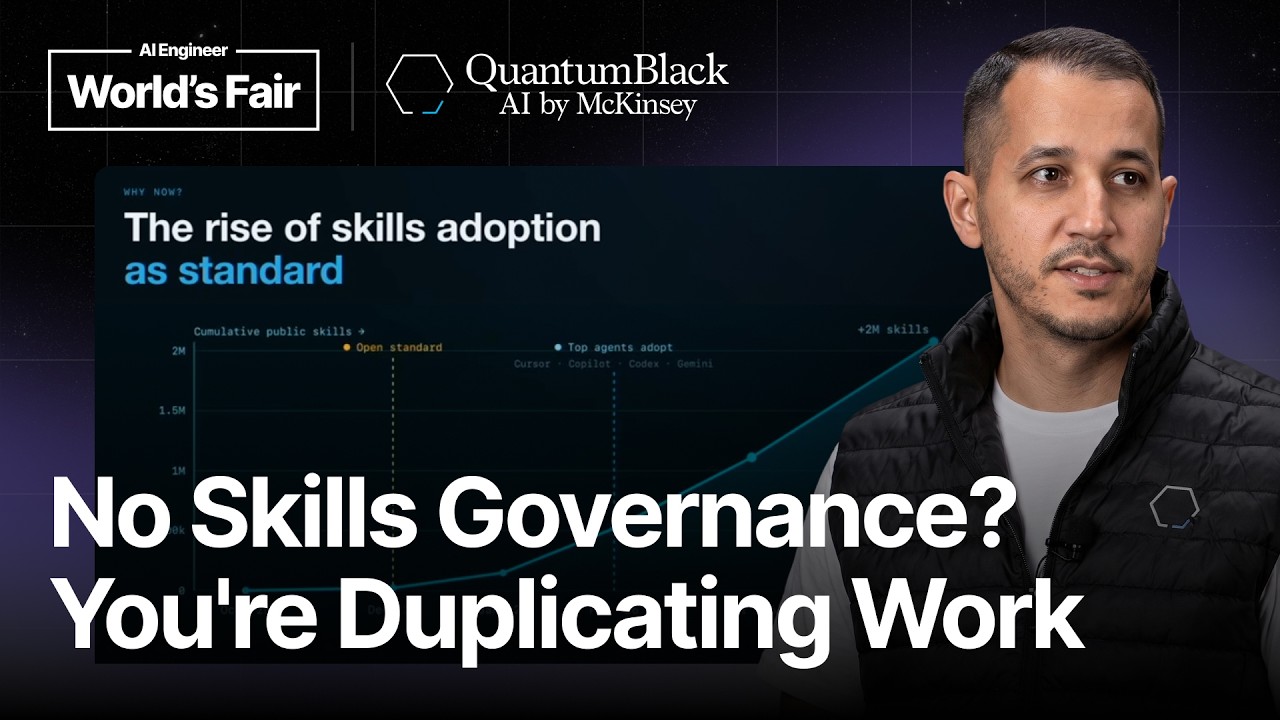
AI-Native Organisations Run on Skills: How to Structure and Scale Them — Imad Touil, QuantumBlack

AI-Native Organisations Run on Skills: How to Structure and Scale Them — Imad Touil, QuantumBlack

Imad Touil explores the critical need for governing AI skills within organizations, asserting that skills represent the true repository of enterprise know-how. He contrasts simplified coding agent loops with complex, real-world product lifecycles, demonstrating how ungoverned skills lead to technical debt—including duplication, quality degradation, security risks, and lack of discoverability. Proposing a microservices-inspired approach, Touil outlines a centralized skills platform and human-led governance model essential for achieving deterministic workflows, boosting productivity, and mitigating risks in AI-native enterprises.

Platform Engineering for Developers, Architects & the Rest of Us • Daniel Bryant • GOTO 2025

Platform Engineering for Developers, Architects & the Rest of Us • Daniel Bryant • GOTO 2025

Daniel Bryant discusses platform engineering for software developers and architects, emphasizing treating platforms as internal products with developers as customers. He outlines a three-layered architecture, the evolution from monolithic systems to microservices, and the importance of 'golden bricks' over 'golden paths' for composability. Key takeaways include API-first design, minimizing cognitive load, avoiding leaky abstractions, and measuring success through frameworks like DORA and DevEx to achieve speed, safety, and scale.

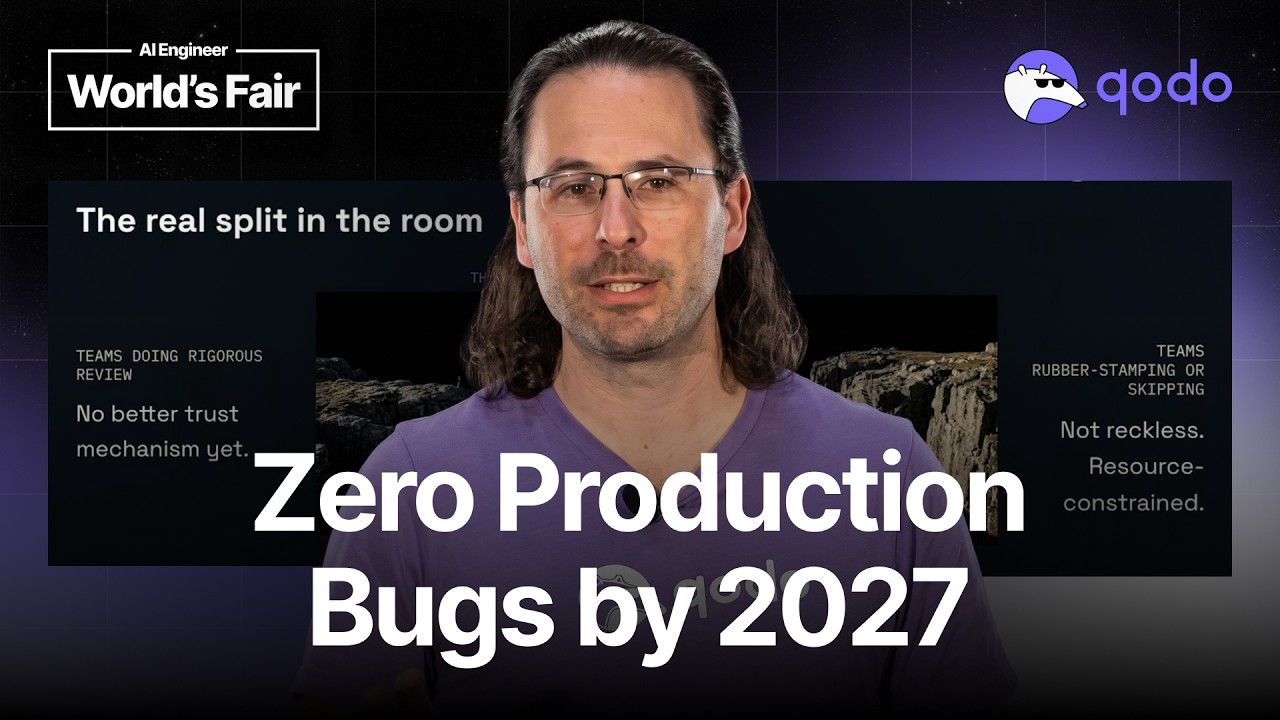
The Last Human Code Review: Building Trust in AI-Generated Code — Itamar Friedman, Qodo

The Last Human Code Review: Building Trust in AI-Generated Code — Itamar Friedman, Qodo

Itamar Friedman discusses how the bottleneck in AI-driven development has shifted from code generation to code review. He argues that current AI models are not the constraint; rather, it's the lack of codified, accessible context for AI agents. The solution involves building context engines that cater to both human and AI needs, integrating deep architectural knowledge and historical data to transition from reviewing individual pull requests to analyzing a comprehensive software graph, ultimately leading to automated code governance and "AI wisdom."

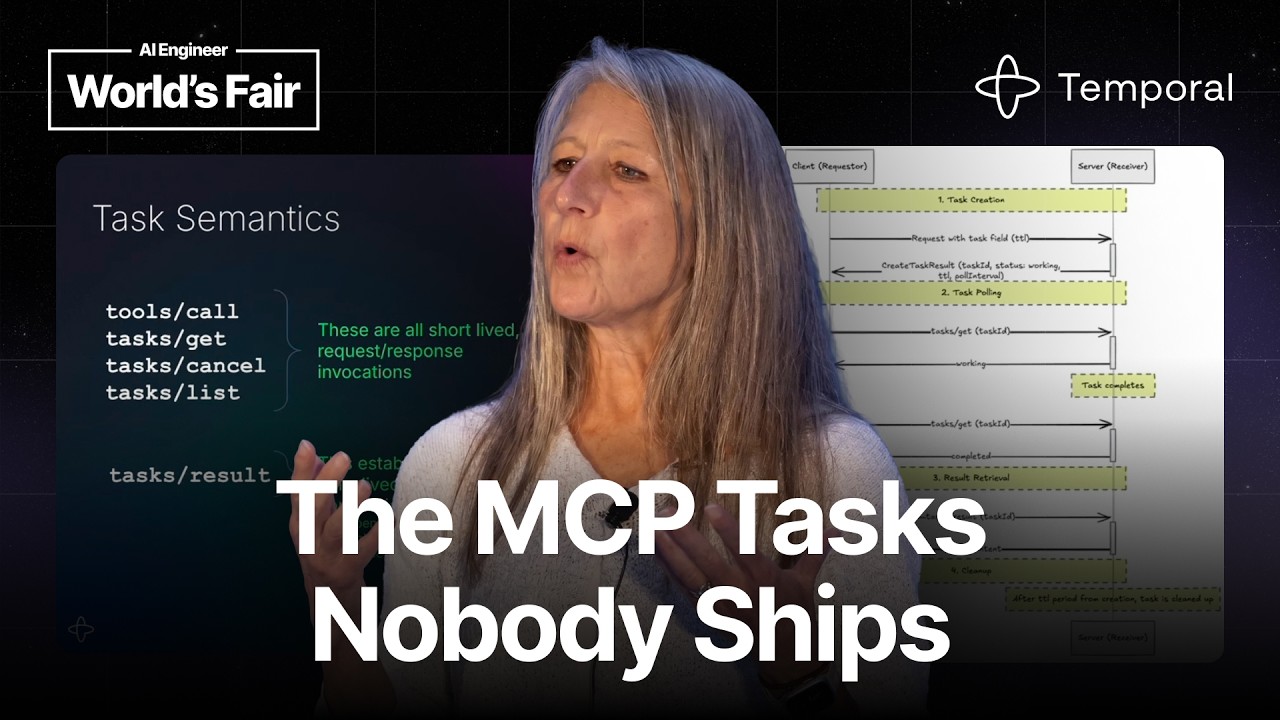
MCP Tasks (async): Why Aren't Any Agents Supporting Them? — Cornelia Davis, Temporal

MCP Tasks (async): Why Aren't Any Agents Supporting Them? — Cornelia Davis, Temporal

Cornelia Davis explains why the MCP tasks specification, designed for durable, long-running, and interactive operations, hasn't seen widespread adoption. She details V1's architectural flaws, particularly concerning scalability and stateful human-in-the-loop interactions, and introduces V2's shift to a stateless core, client-initiated updates, and a clearer path for client-side durability, while outlining future work on scaling and adoption.

Let's integrate AI Agents in Event-Sourced Systems — Divakar Kumar, FlyersSoft

Let's integrate AI Agents in Event-Sourced Systems — Divakar Kumar, FlyersSoft

This presentation explores integrating AI agents into existing event-sourced architectures to resolve ambiguous cases in real-time fraud detection. By leveraging a semantic layer built from various bounded contexts (transaction, device, account), specialized agents like Risk Analyzer and Behavior Analyzer use tools and short-term memory to reach a verdict, addressing the "gray zone" where traditional rule-based and ML systems fall short. The approach emphasizes layering agents without replacing existing infrastructure, enhancing judgment in production systems.

WebAssembly on Kubernetes • Nicolas Frankel • YOW! 2025

WebAssembly on Kubernetes • Nicolas Frankel • YOW! 2025

Nicolas Fränkel explores the evolution of WebAssembly (Wasm) beyond its web origins, showcasing its potential to revolutionize application deployment on Kubernetes. The talk demonstrates how Wasm enables incredibly small container sizes (down to 2MB for an HTTP server) by integrating specific Wasm runtimes with Kubernetes' extensible architecture. However, Fränkel also provides a candid assessment of the ecosystem's rapid, often unstable, development, recommending Wasm on Kubernetes for agile startups seeking competitive advantage but cautioning traditional enterprises due to the inherent risks and maintenance challenges.