Low resource languages

Beyond Swahili: Designing Inclusive AI for Bantu Languages

Beyond Swahili: Designing Inclusive AI for Bantu Languages

Alfred Malingo discusses the unique position of Swahili in AI, arguing that its structural similarities to other Bantu languages make it a far more effective pivot language than English for developing inclusive and accurate models. He deconstructs the failures of typologically mismatched transfer from Indo-European languages and presents a case study, AfriMT-a, to demonstrate how Swahili can serve as a technical bridge for machine translation and representation learning across the Bantu language family.
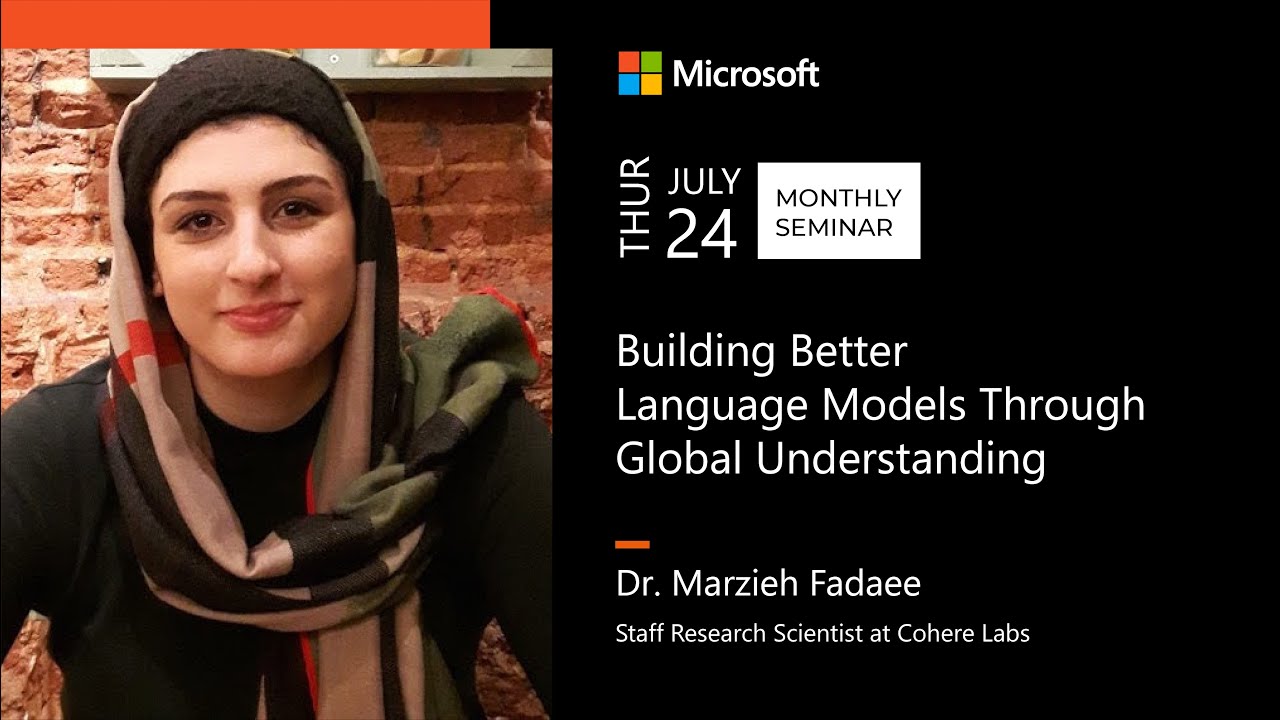
Building Better Language Models Through Global Understanding

Building Better Language Models Through Global Understanding

Dr. Mazi Fadai discusses the critical challenges in multilingual AI, including data imbalances and flawed evaluation methodologies. She argues that tackling these difficult multilingual problems is not only essential for global accessibility but also a catalyst for fundamental AI innovation, much like how machine translation research led to the Transformer architecture. The talk introduces new, more culturally aware evaluation benchmarks like Global MMLU and INCLUDE as a path toward building more robust and globally representative language models.