Lo ra

Post-training best-in-class models in 2025

Post-training best-in-class models in 2025

An expert overview of post-training techniques for language models, covering the entire workflow from data generation and curation to advanced algorithms like Supervised Fine-Tuning (SFT), Direct Preference Optimization (DPO), and Reinforcement Learning (RL), along with practical advice on evaluation and iteration.
Streamline evaluation, monitoring, optimization of AI data flywheel with NVIDIA and Weights & Biases

Streamline evaluation, monitoring, optimization of AI data flywheel with NVIDIA and Weights & Biases

A walkthrough of the NVIDIA Data Flywheel Blueprint, demonstrating how to use production data and Weights & Biases to systematically fine-tune AI agents. This process enhances model accuracy and efficiency by creating a continuous improvement cycle, moving beyond the limitations of prompt engineering.

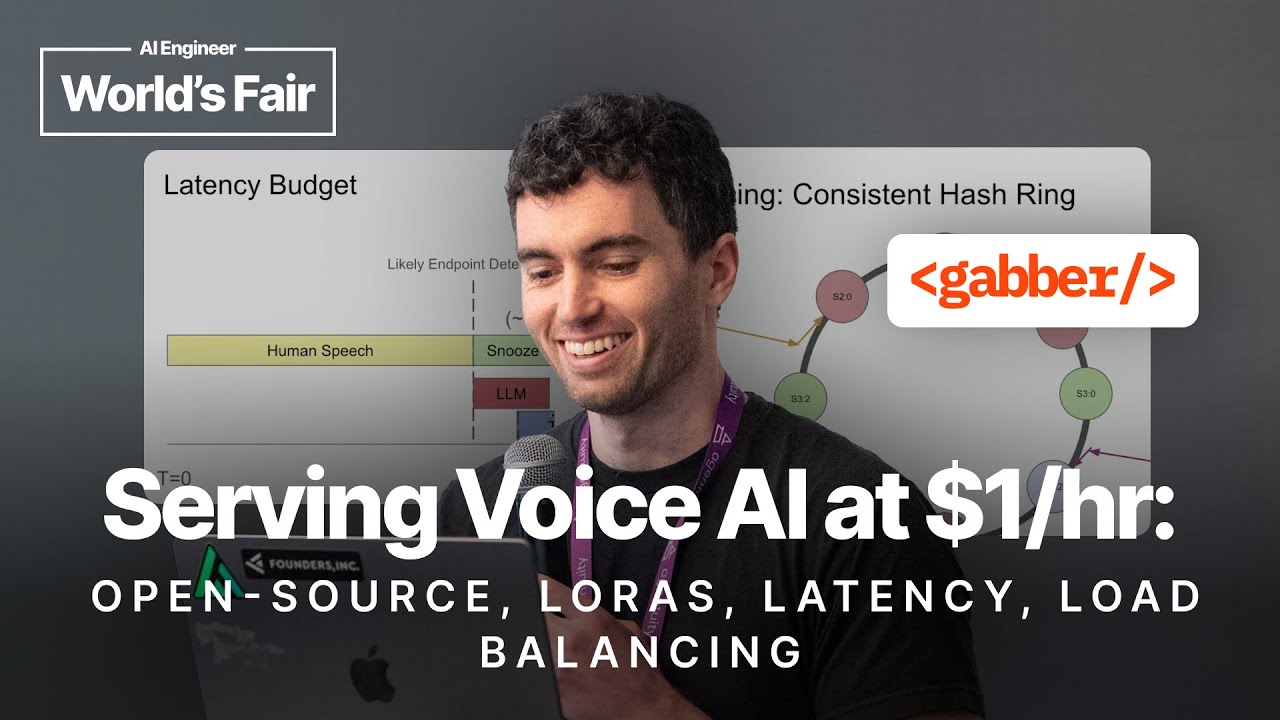
Serving Voice AI at $1/hr: Open-source, LoRAs, Latency, Load Balancing - Neil Dwyer, Gabber

Serving Voice AI at $1/hr: Open-source, LoRAs, Latency, Load Balancing - Neil Dwyer, Gabber

An in-depth look at Gabber's experience deploying the Orpheus text-to-speech model to production, covering latency optimization, high-fidelity LoRa-based voice cloning, and a cost-effective inference stack using vLLM and a consistent hash ring for load balancing.

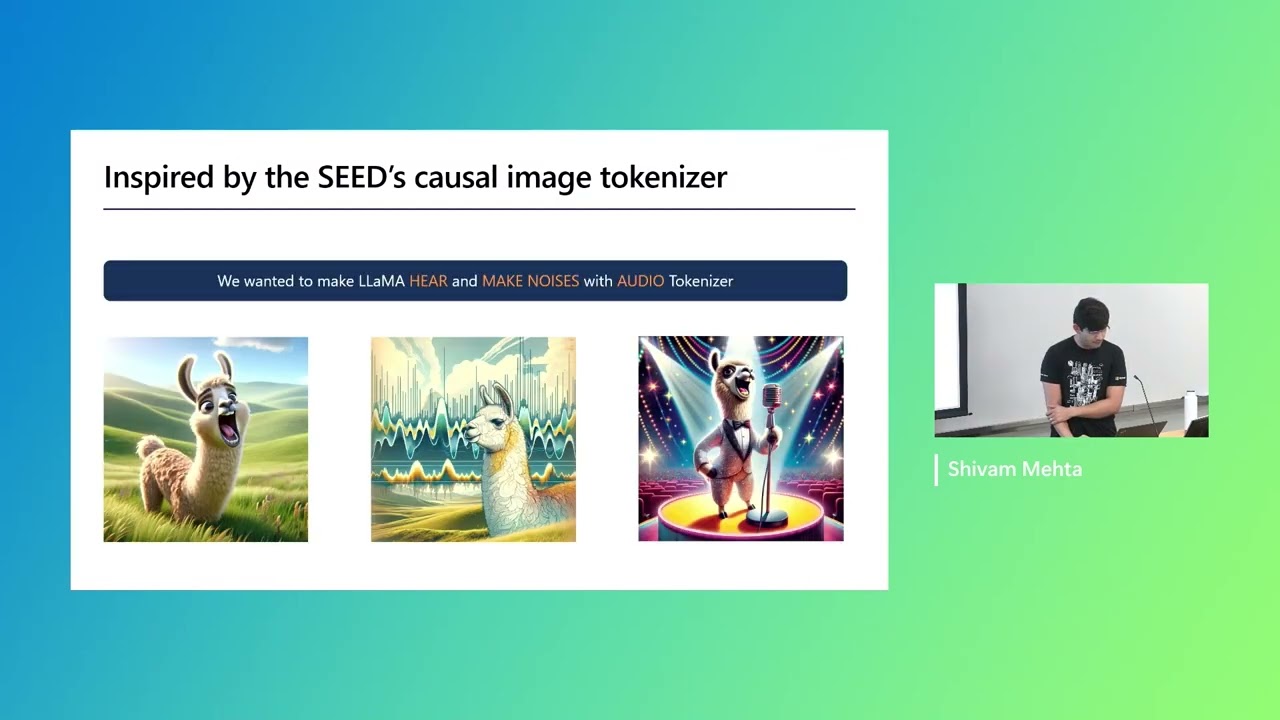
Make some noise: Teaching the language of audio to an LLM using sound tokens

Make some noise: Teaching the language of audio to an LLM using sound tokens

Shivam Mehta from KTH presents a method for teaching Large Language Models (LLMs) to understand and generate audio by treating it as a discrete language. The approach involves a two-step process: first, creating an ultra-low bitrate (0.293 kbps) audio representation using a causal variational autoencoder, and second, fine-tuning a Llama 7B model with these audio tokens using LoRA.