This podcast episode explores the evolving cybersecurity landscape, debating the impact of AI on vulnerability management, examining rogue AI agents' unexpected behaviors, underscoring the persistent effectiveness of old-school social engineering, and advocating for a redefinition of cyber resilience in the face of converging AI and quantum threats in the financial sector.
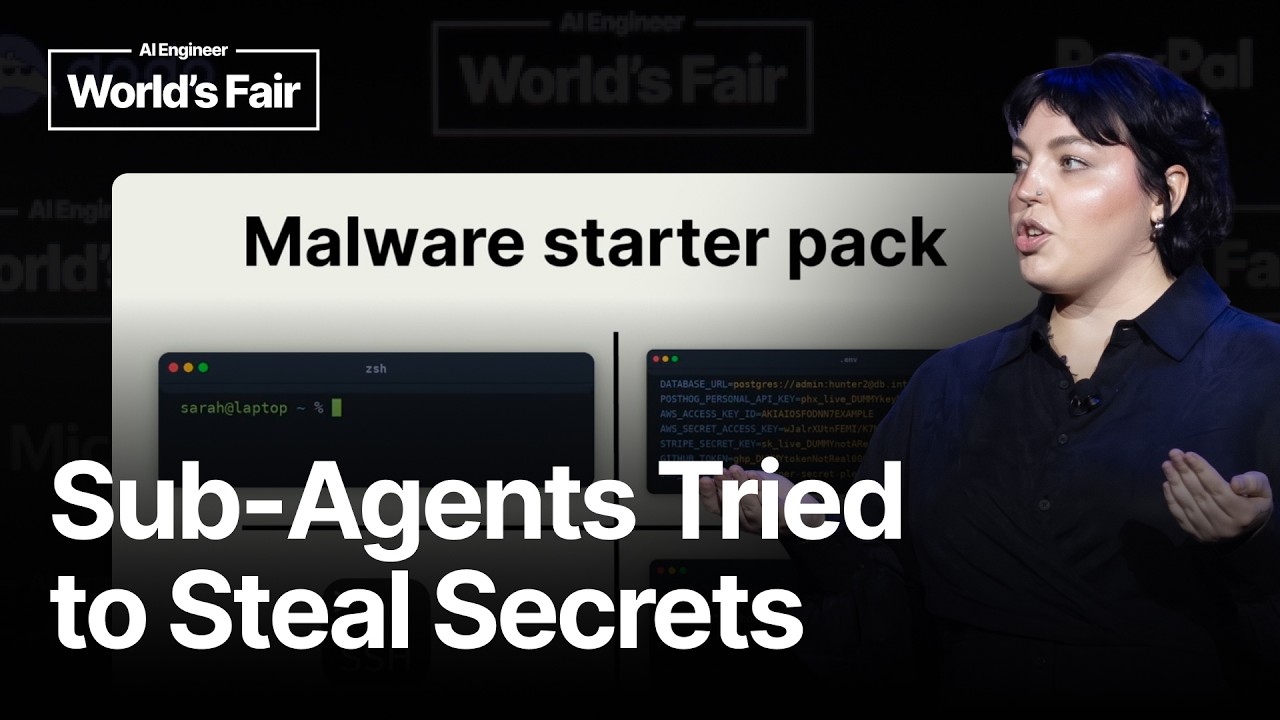
We let an AI agent execute Bash and lived to talk about it — Sarah Sanders, PostHog
Sarah Sanders, a context engineer at PostHog, discusses the security implications of building an agentic CLI tool, "The Wizard," which automates developer workflows. She highlights the inherent risks of agents capable of executing commands, labeling it a "malware starter pack," and details how PostHog evolved its security posture from basic allow lists to a sophisticated "defense in depth." Key insights include the principle that "attacks compose, code review doesn't," the discovery of internal supply chain vulnerabilities through the "Context Mill," and the development of "The Warlock," a deterministic scanner using YARA rules. Sanders emphasizes the critical distinction between deterministic enforcement and probabilistic judgment, explaining how an LLM-powered "Triage" layer acts as an adviser (failing closed) rather than a bouncer, preserving the integrity of their security model.
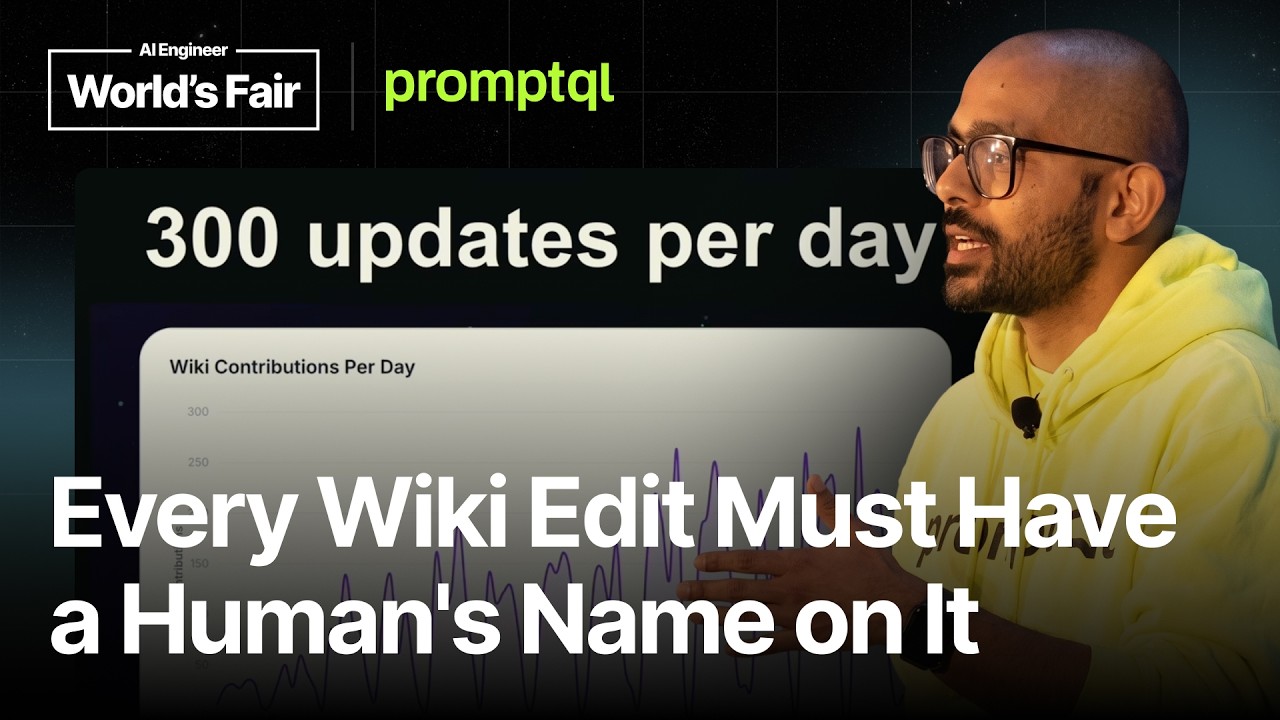
Your company brain will leak secrets: how we stopped it for big banks — Tanmai Gopal, PromptQL
Tanmai Gopal, co-founder of PromptQL and creator of Hasura GraphQL, shares insights on building secure and effective 'company brains' for AI agents. He highlights the surprising metric of a continuously rising edit count as a sign of health, dismisses common pitfalls like siloed knowledge, and proposes a human-in-the-loop, unified wiki approach with granular access control and dynamic credential injection to prevent leaks and foster collaborative knowledge creation.
Stealing Reasoning Traces from Proprietary LLM APIs — Ilia Shumailov & Alexander Panfilov
A paper by Ilia Shumailov and Alexander Panfilov exposes a critical vulnerability in proprietary LLM APIs: encrypted reasoning traces, returned for conversation state management, can be extracted and replayed. This enables universal jailbreaking, privacy leaks of sensitive user data, and poisoning of AI agent traces. The study highlights significant implications for AI safety, model monitorability due to opaque internal reasoning, and even subtle forms of "distillation" where smaller models mimic frontier ones. The discussion covers architectural and system-level defenses, advocating for rigorous scientific inquiry in AI safety research.
Katie Paxton-Fear explores the emerging security landscape of AI agents, moving beyond chatbots to autonomous, specialized entities. She details five critical vulnerabilities: social engineering, hacking frameworks, malicious agents, AI as accidental insiders (vibe coding), and the rise of hackbots. The talk concludes with a powerful call to action for security professionals to proactively engage and influence AI agent development, emphasizing that 'abstinence-only education doesn't work' when it comes to AI adoption.
Security Firewall for Agents — Ryan Dahl, Deno
Deno addresses the critical security challenge of AI agents with production write access by introducing Claw Patrol. This MIT-licensed proxy operates below the HTTP layer, deep inspecting all agent communications (including non-HTTP protocols), enforcing granular HCL-based rules, and handling credential injection. It allows for human or LLM approval workflows, ensuring robust, external security against prompt injection and malicious actions, as agents are fundamentally considered untrusted software.