Llm agents

Your Moat Is Your Data Model — Mike Phipps, Gates Foundation

Your Moat Is Your Data Model — Mike Phipps, Gates Foundation

Mike Phipps from the Gates Foundation details how they built a Strategic Intelligence Platform (SIP) using a Neo4j knowledge graph to serve AI agents. He argues that the true "moat" in an AI-commoditized world lies in an organization's unique data model and tacit knowledge, not in generic AI tools. The platform unifies 25 years of siloed grantmaking data, integrating structured and unstructured information through a rigorous curation pipeline, and is refined via continuous retrieval evaluations to ensure alignment with organizational reporting standards.

Active Graph Agent Runtime (BabyAGI 4) — Yohei Nakajima, Untapped Capital

Active Graph Agent Runtime (BabyAGI 4) — Yohei Nakajima, Untapped Capital

Yohei Nakajima, creator of BabyAGI, introduces ActiveGraph, a novel agent architecture that builds around an immutable event log rather than the LLM. This log-centric approach enables auditable agents with native replay, rollback, and self-improvement capabilities, drawing inspiration from blackboard systems and Kafka.

CrabRAG: Why Automated Assistants Need Graph Memory, Not More Tokens — Stephen Chin, Neo4j

CrabRAG: Why Automated Assistants Need Graph Memory, Not More Tokens — Stephen Chin, Neo4j

Stephen Chin demonstrates how current LLM agent memory systems, relying on markdown files or vector databases, lead to token inefficiency, hallucinations, and a lack of multi-hop reasoning. He showcases graph databases as a superior alternative, providing precise, explainable, and auditable answers for complex, large-scale problems through a live demo of a home lab digital twin.

Your agent architecture has a half-life of 6 months — Dan Farrelly, CTO, Inngest

Your agent architecture has a half-life of 6 months — Dan Farrelly, CTO, Inngest

Dan Farrelly, CTO of Inngest, addresses the rapid obsolescence of AI agent architectures (a 6-month half-life) caused by fast-evolving models and frameworks. He proposes a solution: decouple agent systems into three conceptual layers (Execution, Context, Compute) and prioritize a stable, durable Execution Layer. This 'brain' layer, responsible for flow, state, and retries, offers resumability, flexible invocation patterns, and comprehensive observability, allowing the 'knowledge' and 'hands' layers to change frequently without necessitating full architectural rewrites.

You Didn't Ship a Bug. You Just Wrote It for a Human. - Ravi Madabhushi, Scalekit

You Didn't Ship a Bug. You Just Wrote It for a Human. - Ravi Madabhushi, Scalekit

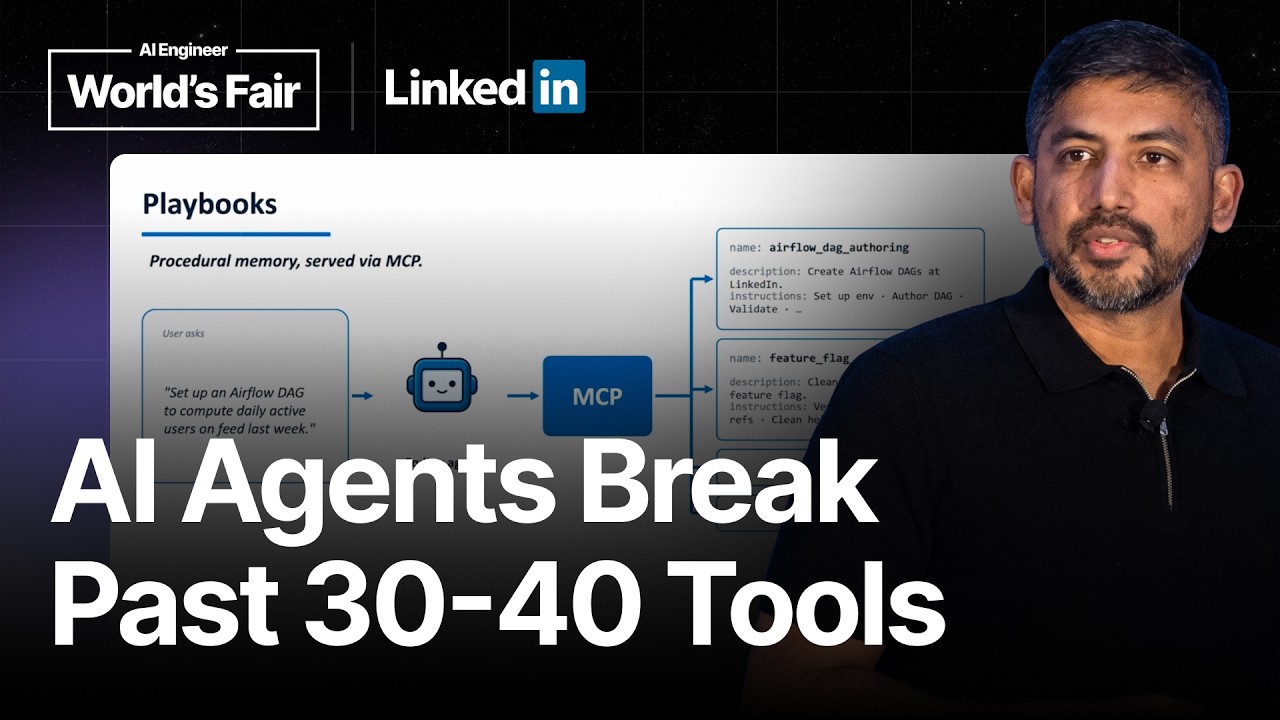
Ravi Madabhushi details how existing infrastructure, designed for human users, fails AI agents, leading to issues like rate limits and over-permissioning. He argues for treating agents as first-class principals with fine-grained, context-aware authorization and robust visibility to prevent non-deterministic and potentially rogue behaviors.

Fable 5 as Advisor: Anthropic's Two-Model Pattern for Smarter, Cheaper Agents (Ep. 1010)

Fable 5 as Advisor: Anthropic's Two-Model Pattern for Smarter, Cheaper Agents (Ep. 1010)

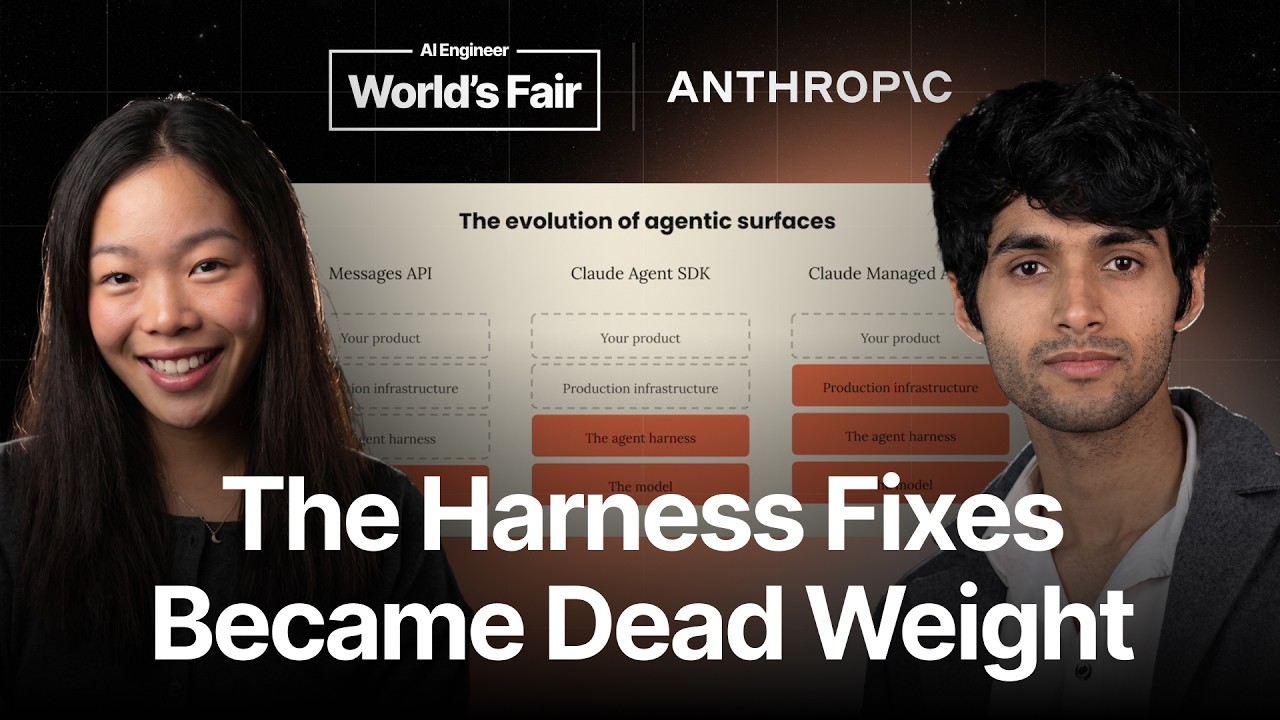
The episode explores Anthropic's "advisor strategy," a novel AI agent pattern that combines a fast, cheap "executor" model with a frontier-class "advisor" model. This allows for mid-task consultation within a single API call, resolving the tension between cost and capability. Benchmarks show simultaneous improvements in quality and cost reduction, demonstrating that AI progress is shifting towards intelligent model composition rather than just larger models.