Identity management

Why AI Agents Break Zero Trust at the Last Mile

Why AI Agents Break Zero Trust at the Last Mile

AI agents introduce a critical security gap when connecting to legacy enterprise systems, known as the 'agentic last mile identity problem'. This summary explains how losing user identity, context, and delegation breaks zero-trust principles and outlines a solution using a policy-driven vault to manage access and issue short-term credentials.

Agentic Consent Explained: How AI Agents Act Safely and Responsibly

Agentic Consent Explained: How AI Agents Act Safely and Responsibly

Grant Miller from IBM explains Agentic Consent, a dynamic framework for governing AI agents. The model moves beyond static permissions, using identity, context, and just-in-time user prompts to ensure AI agents act with, not instead of, their human counterparts, enabling trust and safety as autonomy scales.

Identity for AI Agents - Patrick Riley & Carlos Galan, Auth0

Identity for AI Agents - Patrick Riley & Carlos Galan, Auth0

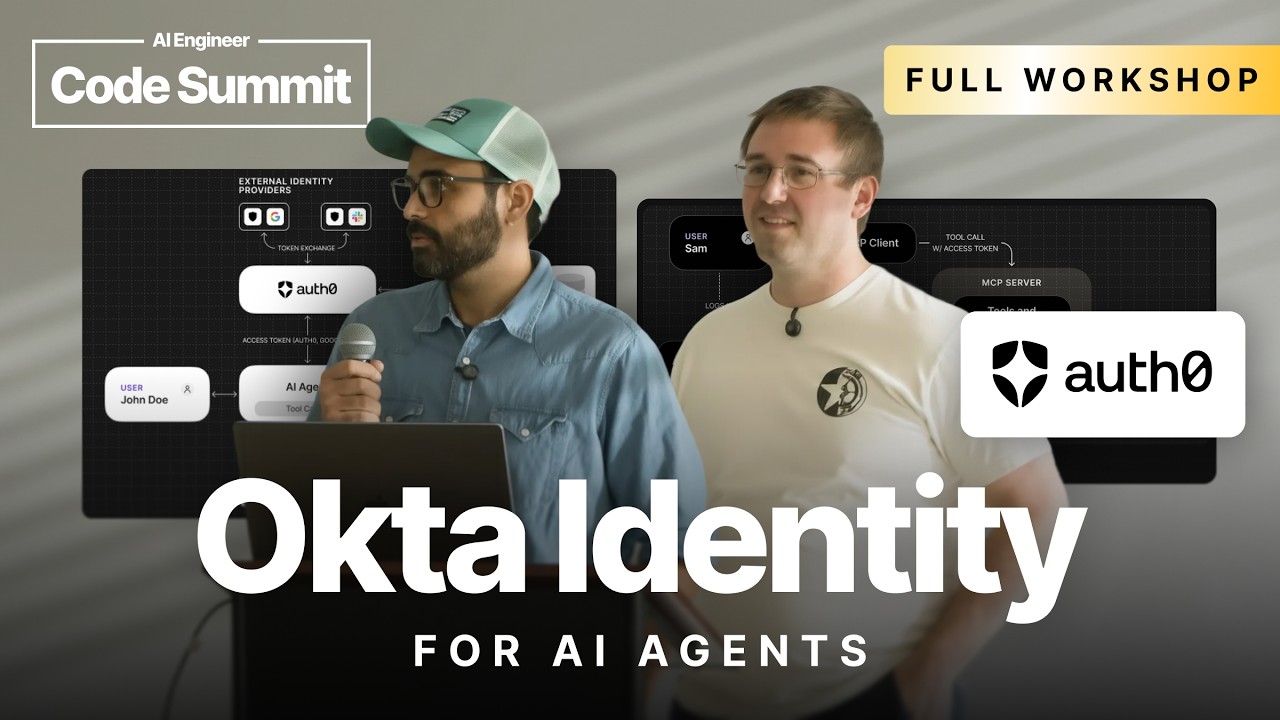
This session from Okta and Auth0 introduces a comprehensive framework for securing AI agents, covering identity establishment, delegated API access via Token Vault, user consent for risky operations using Asynchronous Authorization (CIBA), and integration with MCP servers.

MCP Security: What Happens When Your Agents Talk to Everything?

MCP Security: What Happens When Your Agents Talk to Everything?

A deep dive into the security vulnerabilities of Multi-Context Protocol (MCP) for AI agents. The talk explores how identity loss, "all-or-nothing" permissions, and disappearing audit trails create significant attack surfaces, and presents solutions like identity chain tracking, context-aware permissions, and intelligent auditing to secure agent-to-tool communication.