Feature

Should AI Engineers Still Read Code in 2026? The Z/L Continuum — Alex Volkov, ThursdAI

Should AI Engineers Still Read Code in 2026? The Z/L Continuum — Alex Volkov, ThursdAI

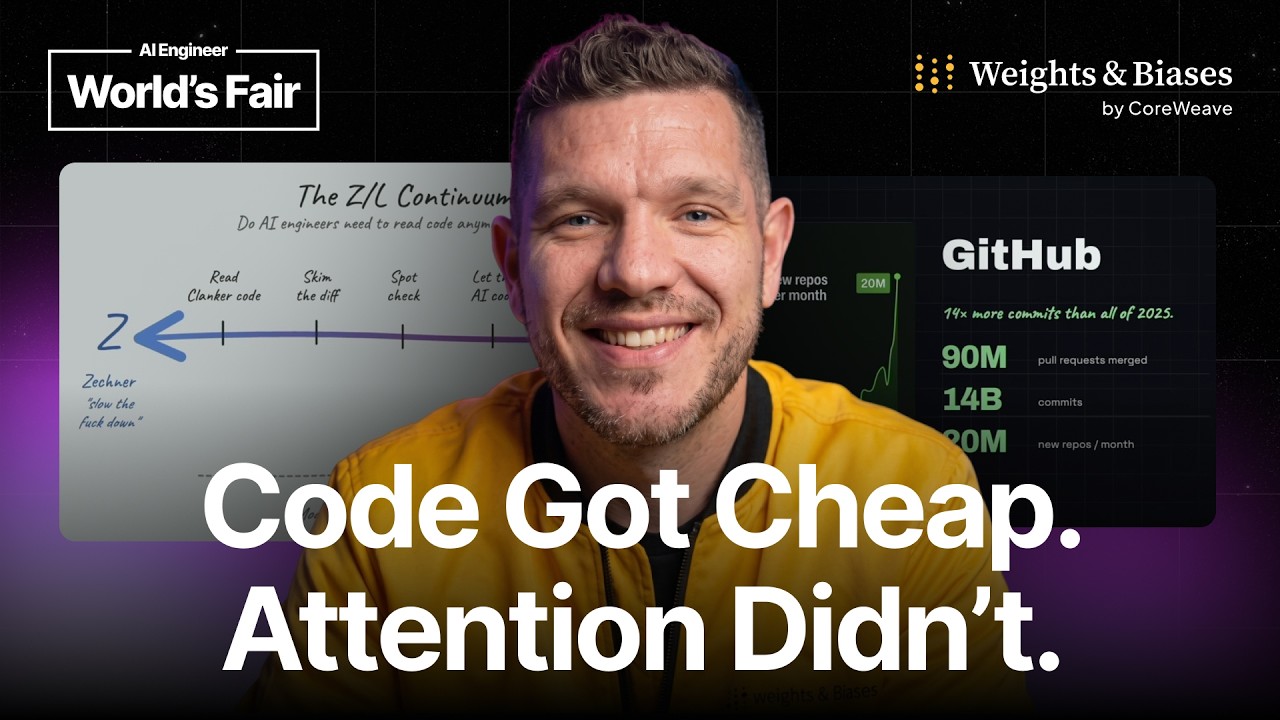
Alex Volkov introduces the "Z/L Continuum," a framework for navigating the tension between rapid AI-generated code production and the critical need for human review. He argues that the key lies in understanding that the continuum applies to tasks, not individuals, and presents a pragmatic routing table for verifying changes based on their criticality, highlighting the shift towards engineering systems that build and verify code, rather than meticulously inspecting every line. The talk also touches on emerging capabilities like Fable and "loops" and the importance of flexibility and human judgment in the evolving AI engineering landscape.
Understanding the inner thoughts of AI

Understanding the inner thoughts of AI

Neel Nanda, head of Google DeepMind's language model interpretability team, discusses the critical field of interpretability, likening it to the "neuroscience of AI." He explains why understanding the internal workings of "grown, not designed" neural networks is crucial for AI safety and scientific discovery. The episode explores cutting-edge techniques like Chain of Thought monitoring, mechanistic interpretability (steering and probing), and Sparse Autoencoders, highlighting their strengths and limitations in debugging, detecting deception, and uncovering hidden model objectives. Nanda emphasizes interpretability's role in building safe, aligned, and trustworthy AI as we approach AGI, acknowledging its pragmatic necessity despite inherent limits to full understanding.

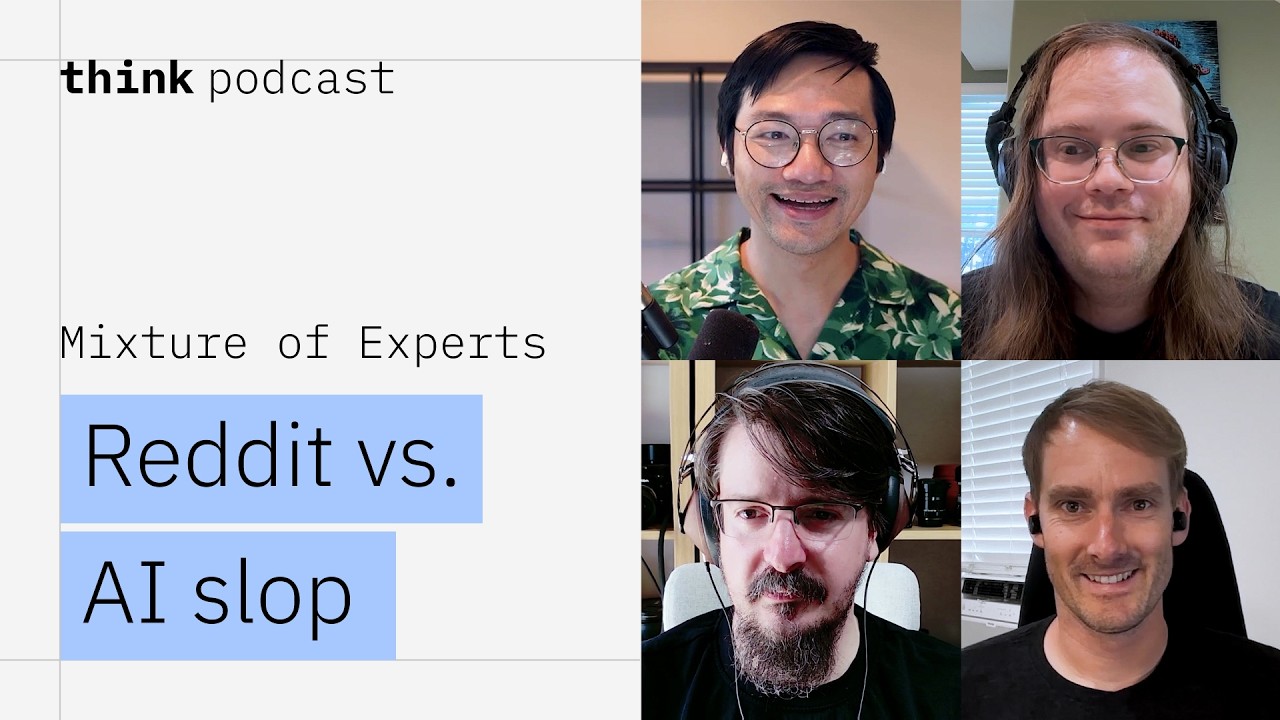
Reddit cracks down on AI slop & the future of AI compute

Reddit cracks down on AI slop & the future of AI compute

This episode explores Reddit's aggressive AI spam combat strategy, revealing AI's dual role in fighting malicious AI. It then dissects Anthropic's Economic Index, highlighting how Claude integrates into daily life despite significant user selection bias. The discussion also covers Orin's $33M raise for a GPU compute marketplace, debating the fungibility of compute and the technical hurdles. Finally, Anthropic's chip ambitions are analyzed as an economic strategy to optimize models, reduce NVIDIA dependency, and manage rising token costs, with comparisons to existing hardware ecosystems and NVIDIA's market position.

The AI-Native Startup Playbook (Ep. 1008 with Jon Krohn)

The AI-Native Startup Playbook (Ep. 1008 with Jon Krohn)

Anthropic's Founder's Playbook redefines startup building in the AI era, emphasizing that AI has removed traditional bottlenecks, making execution cheap and judgment the scarce resource. The playbook outlines four stages—Idea, MVP, Launch, and Scale—providing practical guidance on sharpening problem statements, using AI as a devil's advocate, combating agentic technical debt, achieving true product-market fit, and building defensible moats against incumbents. The overarching message: prioritize strategic sense-making over effortless building.

Agentic AI Frameworks Explained: Workflows, Multi-Agent, & Production

Agentic AI Frameworks Explained: Workflows, Multi-Agent, & Production

This video tackles the overwhelming choice of agentic AI frameworks by categorizing projects into five types: linear workflows, autonomous multi-agent systems, role-based AI, production orchestration, and rapid prototyping. It details each type with examples and recommends specific frameworks like LangChain, AutoGen, and CrewAI, guiding developers to select the optimal tool based on their system design and real-world needs.

Travel Through the Lens of AI with with Booking.com CEO Glenn Fogel

Travel Through the Lens of AI with with Booking.com CEO Glenn Fogel

Booking Holdings CEO Glenn Fogel discusses his journey from Priceline's early struggles to leading a global travel giant. He details Booking's strategic adoption of AI for agentic travel planning and customer service, exemplified by Priceline's 'Penny,' and its significant capital investment in technology. Fogel emphasizes continuous innovation over "moats" and shares insights on AI's impact on job displacement, advocating for proactive employee upskilling to navigate the rapidly changing technological landscape.