Feature

Connecting the Dots with Context Graphs — Stephen Chin, Neo4j

Connecting the Dots with Context Graphs — Stephen Chin, Neo4j

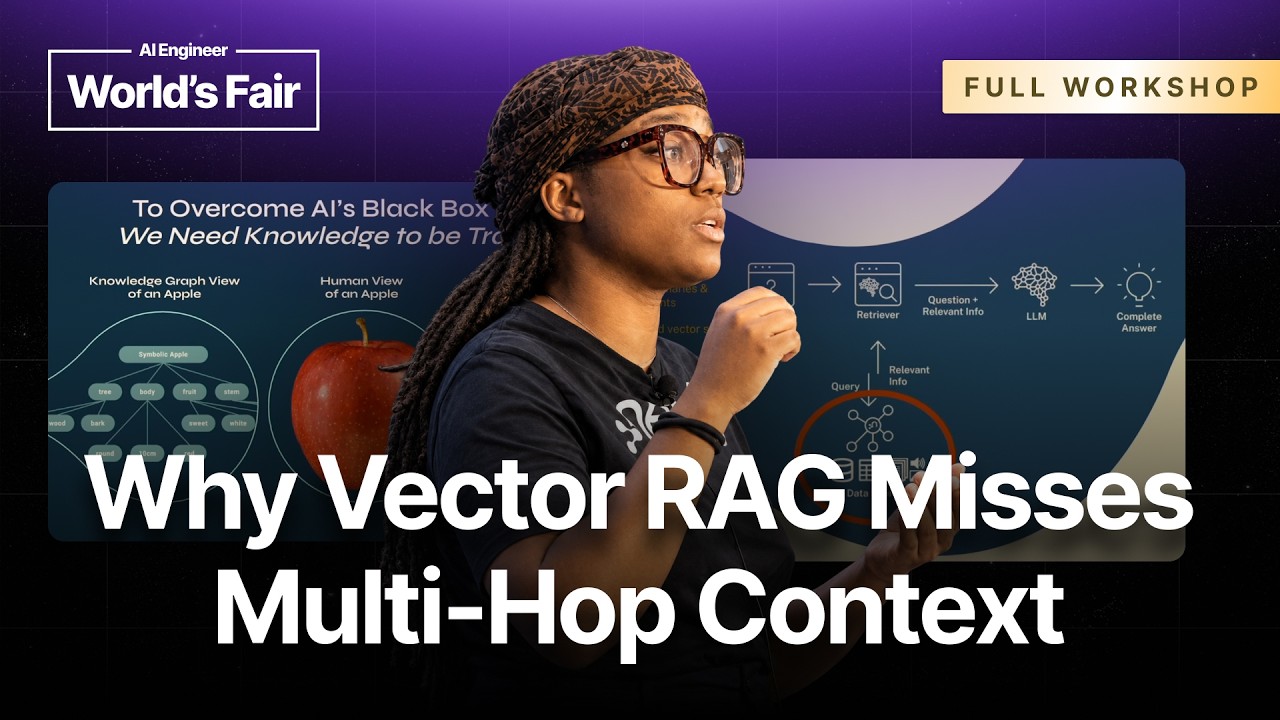
Stephen Chin of Neo4j argues that traditional RAG is insufficient because AI agents lose the reasoning behind past decisions. He introduces Context Graphs as a solution to capture the 'why' behind decisions, creating a queryable system of precedent that provides grounded, explainable, and auditable results.

Agents Don't Do Standups: Building the Post-Engineer Engineering Org — Mike Spitz, PFF

Agents Don't Do Standups: Building the Post-Engineer Engineering Org — Mike Spitz, PFF

A case study from PFF reveals how a two-engineer team, by leveraging AI agents, achieved a 25x increase in deployment frequency and 10x the output of a ten-engineer team. CTO Mike Spitz explains their core principle: shifting focus from making engineers faster to making AI agents faster. This talk deconstructs the resulting transformation, which eliminated traditional agile ceremonies like stand-ups and sprint planning in favor of an automated, spec-to-PR workflow, redefining the roles of engineers and processes in a modern software organization.

Combine Skills and MCP to Close the Context Gap — Pedro Rodrigues, Supabase

Combine Skills and MCP to Close the Context Gap — Pedro Rodrigues, Supabase

Pedro Rodrigues from Supabase shares key lessons from building an agent skill to work with Postgres and Supabase. He explains why critical security rules must go in the main skill file, the importance of pointing to living documentation, and how providing opinionated workflow guidance closes the reliability gap for agents in production systems.

Tokenmaxxing vs AI Hardware Bottlenecks — with Jon Krohn (@JonKrohnLearns)

Tokenmaxxing vs AI Hardware Bottlenecks — with Jon Krohn (@JonKrohnLearns)

While the 'tokenmaxxing' trend grows, the AI industry faces severe physical infrastructure bottlenecks. This summary explores the four key constraints choking AI compute: GPU packaging (CoWoS), high-bandwidth memory (HBM), the surprising surge in CPU demand from agentic AI, and critical electricity shortages, revealing how these challenges are shaping the future of AI development.

Inside image generation’s Renaissance moment — the OpenAI Podcast Ep. 19

Inside image generation’s Renaissance moment — the OpenAI Podcast Ep. 19

Product lead Adele Li and researcher Kenji Hata from OpenAI discuss the significant advancements in Images 2.0, covering breakthroughs in photorealism, text rendering, and multilingual support. They explore new productivity and creative use cases, the evaluation process, and the future of image generation as a creative assistant.

Make your own event-sourced agent harness using stream processors — Jonas Templestein, Iterate

Make your own event-sourced agent harness using stream processors — Jonas Templestein, Iterate

Jonas Huckestein introduces a novel, event-sourced architecture for building AI agents. The core abstraction consists of three parts: a state, a synchronous reducer that derives state from events, and an after-append hook for side effects. This design ensures debuggability and allows state to be rebuilt without re-running expensive operations like LLM calls. A key innovation is the ability to deploy an agent by simply appending a 'dynamic worker configured' event—containing JavaScript code for a processor—to an event stream, eliminating the need for servers or complex deployment pipelines. This enables a distributed and composable ecosystem where processors from different authors can collaborate on a single stream.