Developer experience

AI-Native Organisations Run on Skills: How to Structure and Scale Them — Imad Touil, QuantumBlack

AI-Native Organisations Run on Skills: How to Structure and Scale Them — Imad Touil, QuantumBlack

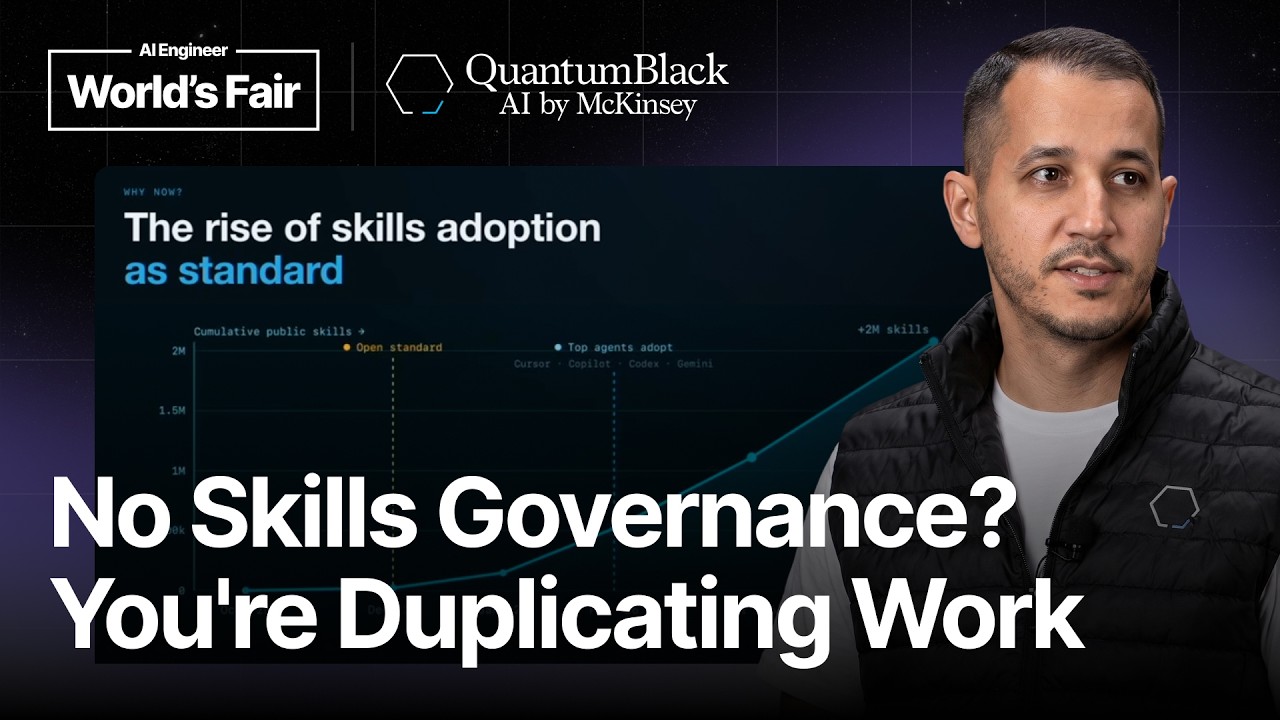
Imad Touil explores the critical need for governing AI skills within organizations, asserting that skills represent the true repository of enterprise know-how. He contrasts simplified coding agent loops with complex, real-world product lifecycles, demonstrating how ungoverned skills lead to technical debt—including duplication, quality degradation, security risks, and lack of discoverability. Proposing a microservices-inspired approach, Touil outlines a centralized skills platform and human-led governance model essential for achieving deterministic workflows, boosting productivity, and mitigating risks in AI-native enterprises.

How to Get Your Org to Adopt Coding Agents (Without Shipping Garbage) — Eyal Blum, Figma

How to Get Your Org to Adopt Coding Agents (Without Shipping Garbage) — Eyal Blum, Figma

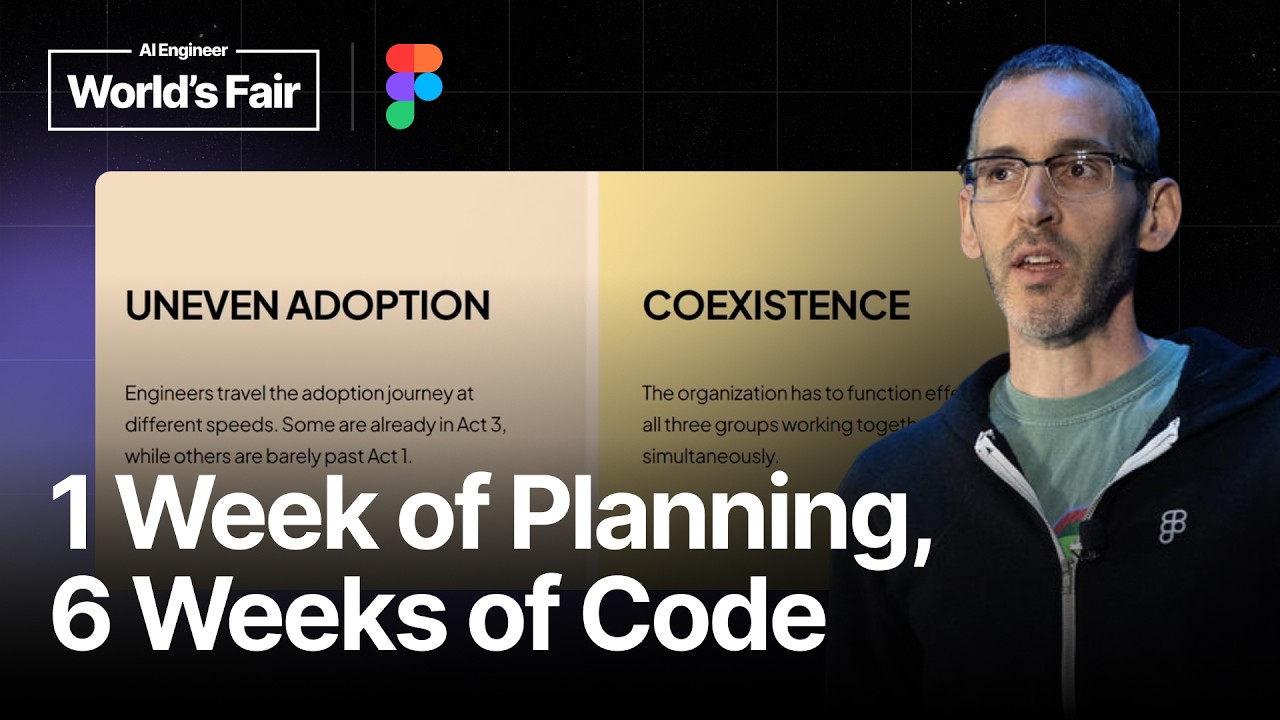
Figma's internal AI agent adoption journey faces challenges like reduced developer agency, skepticism from senior engineers, and communication inefficiency. Solutions include investing in verification, using a testing pyramid for agent review, prioritizing detailed planning over prompting, engaging skeptics to build AI safety roadmaps, and implementing attention-aware communication by clearly marking AI-generated content.

The Death of Developer Advocates — Stephanie Jarmak, Sourcegraph

The Death of Developer Advocates — Stephanie Jarmak, Sourcegraph

Stephanie Jarmak argues that Developer Relations (DevRel) isn't dead, but its audience has shifted to include AI agents. She introduces the "Agent Advocate" role, focusing on measuring agent experience (e.g., through CodeScaleBench), optimizing for "Generative Engine Optimization" (GEO), and adapting traditional DevRel principles like enablement and community for this new user. The core message is that designing for agents, like a curb cut, ultimately improves the experience for all human developers.

Platform Engineering for Developers, Architects & the Rest of Us • Daniel Bryant • GOTO 2025

Platform Engineering for Developers, Architects & the Rest of Us • Daniel Bryant • GOTO 2025

Daniel Bryant discusses platform engineering for software developers and architects, emphasizing treating platforms as internal products with developers as customers. He outlines a three-layered architecture, the evolution from monolithic systems to microservices, and the importance of 'golden bricks' over 'golden paths' for composability. Key takeaways include API-first design, minimizing cognitive load, avoiding leaky abstractions, and measuring success through frameworks like DORA and DevEx to achieve speed, safety, and scale.

Supabase: Cash Does Not Equal Success

Supabase: Cash Does Not Equal Success

Paul Copplestone, CEO of Supabase, discusses the company's rapid rise as a leading dev tool. He explains their strategic bet on open-source Postgres, the pivotal "Open Source Firebase" rebrand, and how three distinct "chapters" of AI — from vector databases and code generation to advanced AI agents — have dramatically accelerated Supabase's growth and forced a re-evaluation of developer experience and internal operations.

MCP Apps: Extending the Frontier — Ido Salomon & Liad Yosef

MCP Apps: Extending the Frontier — Ido Salomon & Liad Yosef

MCP Apps transforms chat and coding assistant interactions from text-heavy responses into rich, interactive user interfaces, preserving brand identity and enhancing user experience. It allows services to send "UI atoms" directly into assistants like Claude and ChatGPT, enabling a "write once, run anywhere" model across a massive user base. This standard defines how hosts render web components, manage user interactions, and shifts control of the user journey to the agent, ushering in a new era of the agentic web.