Context Engineering for AI Agents: 4 Failure Modes to Avoid
Martin Keen explains why bigger context windows can make AI agents less reliable. He introduces context rot, the four context failure modes of poisoning, distraction, confusion, and clash, and the context engineering fixes that work by removing information rather than adding it.
Total Recall: Agent Memory and Harness Engineering — Ignacio Martinez, Oracle
Ignacio Martinez's workshop delves into agent harness engineering, emphasizing that while LLMs are a 'frozen' reasoning core, the surrounding harness is where control and reliability are established. He outlines a seven-layer architecture for building robust agent harnesses, covering critical aspects like hybrid storage solutions, advanced memory engineering (including in-database embeddings and context card management), the semantic layer (Umwelt), agent loops, and context engineering. The session also explores continual learning through 'skill promotion' and addresses practical challenges like managing vast tool sets and optimizing model interactions.
CLAUDE.md, AGENTS.md, Skills, Hooks and Subagents: A Field Guide to Steering AI Agents (Ep. 1022)
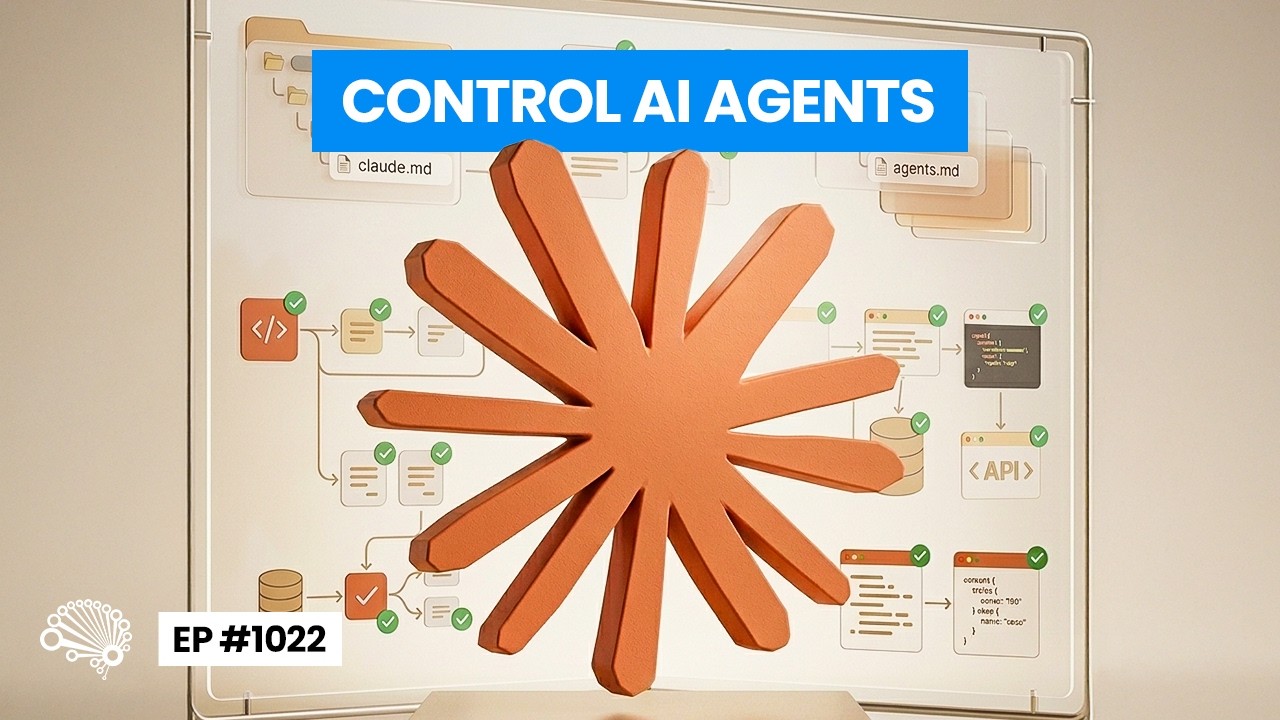
Episode 1022 dissects the crucial aspect of effectively steering AI agents by determining the optimal placement of instructions to ensure reliability and cost-efficiency. It explores seven distinct methods for instruction delivery, contrasting instructions as probabilities with hooks as guarantees, and highlights the industry-wide adoption of standards like `agents.md` and the importance of human-crafted guidance for superior agent performance.
The Miranda Hypothesis: How Hamilton Poisoned Persona Evals - Jacob E. Thomas, Results Gen
This talk exposes "Miranda distortion," a critical flaw in AI personas where models, influenced by modern cultural narratives, produce convincing but anachronistic outputs. Current evaluations fail to detect this, prioritizing fluency over fidelity. The speaker proposes "epistemic simulation"—a new paradigm grounded in corpus-bounded, temporally-anchored, and expert-evaluated reasoning—and introduces the "Prism Experiment." This rigorous, pre-registered protocol uses Abraham Lincoln to demonstrate how a weighted rubric, created by historians and de-emphasizing rhetorical fluency, can detect anachronism. It advocates for the "humanist in the loop" as a technical requirement to ensure AI personas are true to their documentary records, not just convincing.
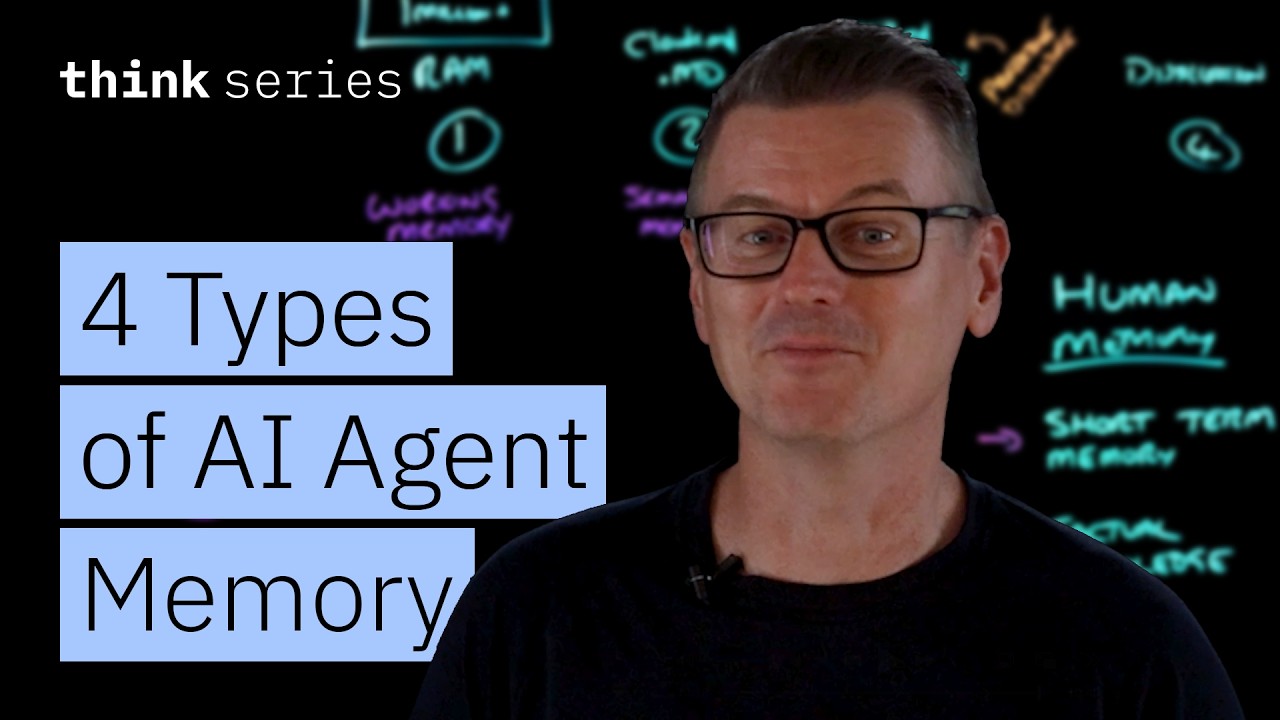
The Four Types of Memory Every AI Agent Needs
AI agents utilize four distinct types of memory, analogous to human cognition, to move beyond simple chatbot responses. This summary explores the CoALA framework, detailing working, semantic, procedural, and episodic memory and how they enable agents to learn, recall skills, and leverage past experiences.
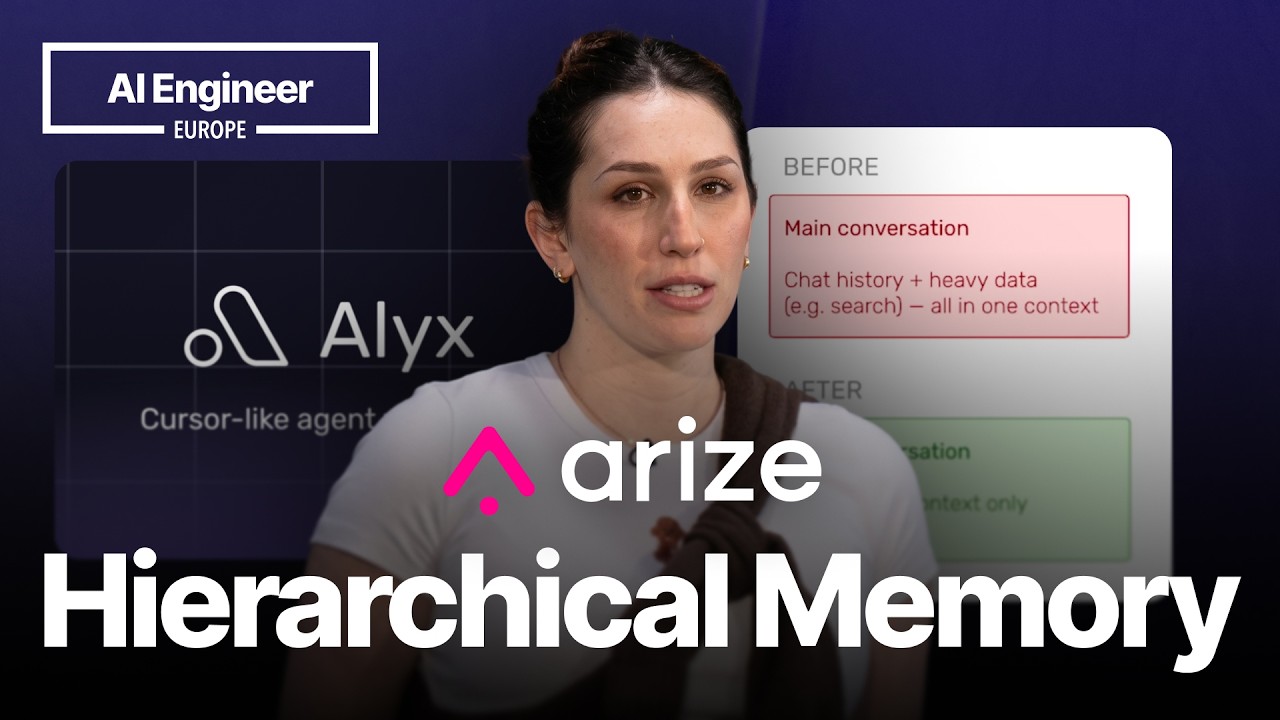
Hierarchical Memory: Context Management in Agents — Sally-Ann Delucia
The Arize team shares lessons from building their AI agent, Alyx, which analyzes its own trace data. They detail their journey from failed attempts like naive truncation and summarization to a successful strategy combining head/tail preservation with a retrievable memory store and using sub-agents to manage context complexity.