Consumer ai

Why Creativity Will Matter More Than Code

Why Creativity Will Matter More Than Code

a16z's Anish Acharya and Kevin Rose discuss how AI is fueling a renaissance in consumer technology. They explore the rise of emotional interfaces and AI companions, the importance of backing 'weird and working' founders, and how the modern AI development stack empowers solo creators to build, prototype, and launch products with unprecedented speed and craftsmanship.
The Top 100 Most Used AI Apps in 2025

The Top 100 Most Used AI Apps in 2025

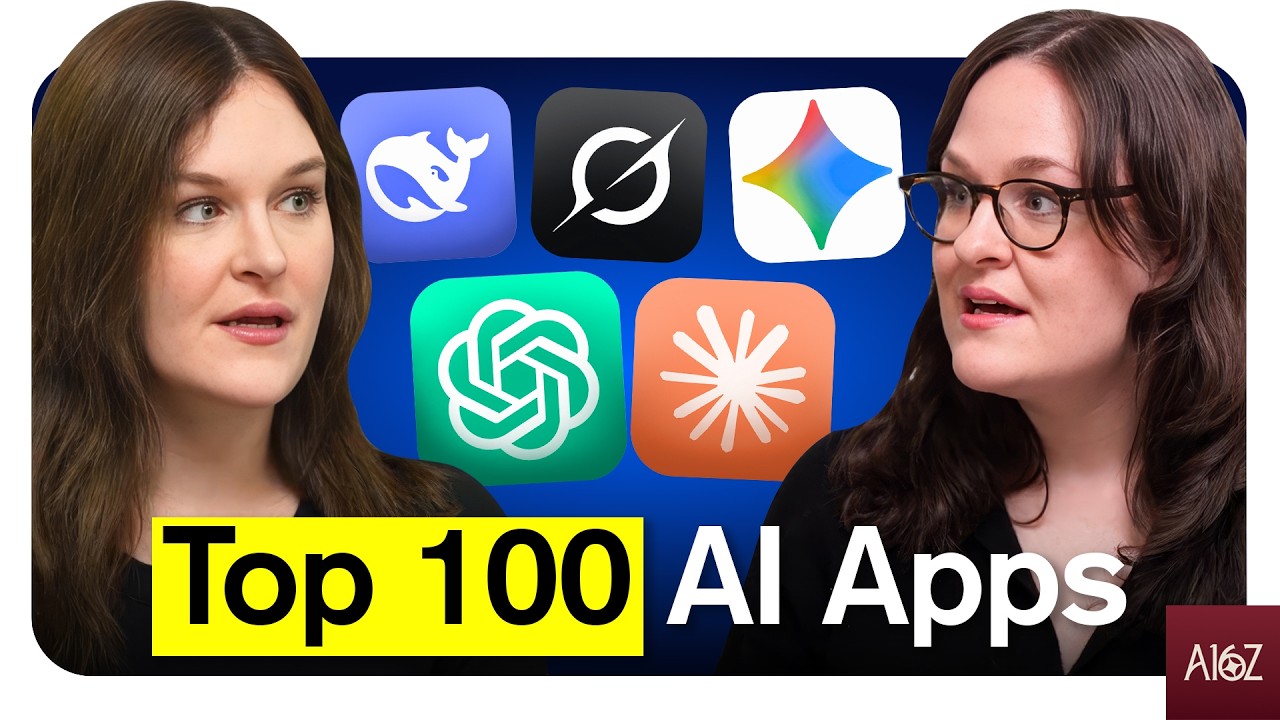
In the fifth edition of the a16z Consumer AI 100, an analysis of the most-used AI-native products reveals a market that is beginning to stabilize after a period of chaotic growth. Key trends identified include the continued dominance of AI companionship and creative tools, the significant market entry of major players like Google and xAI's Grok, the rise of Chinese AI companies on the global stage, and the emergence of a powerful new category: "vibe coding." The data suggests a future of increased verticalization, prosumer tool adoption, and the development of more sophisticated network effects beyond simple data acquisition.

Health Tech Founders: The Future of Care Is Personalized, Proactive—and AI-Powered

Health Tech Founders: The Future of Care Is Personalized, Proactive—and AI-Powered

Founders from Function Health and Slingshot AI discuss building consumer health products by shifting from digital-only context to a 'Human Experience' that brings biological and psychological data online. They explore new engagement paradigms beyond DAU, the role of AI in augmenting rather than replacing doctors, and the ethical imperative of preserving user autonomy.

Health Tech Founders: The Future of Care Is Personalized, Proactive—and AI-Powered

Health Tech Founders: The Future of Care Is Personalized, Proactive—and AI-Powered

Bryan Kim from a16z, Jonathan Swerdlin from Function Health, and Daniel Cahn from Slingshot AI / Ash discuss how AI is revolutionizing healthcare and mental health by focusing on deep human context rather than just digital behavior. They explore building consumer trust, augmenting rather than replacing professionals, and creating new engagement models like "hourly active use" for a more accessible, continuous, and personalized future of care.