API design

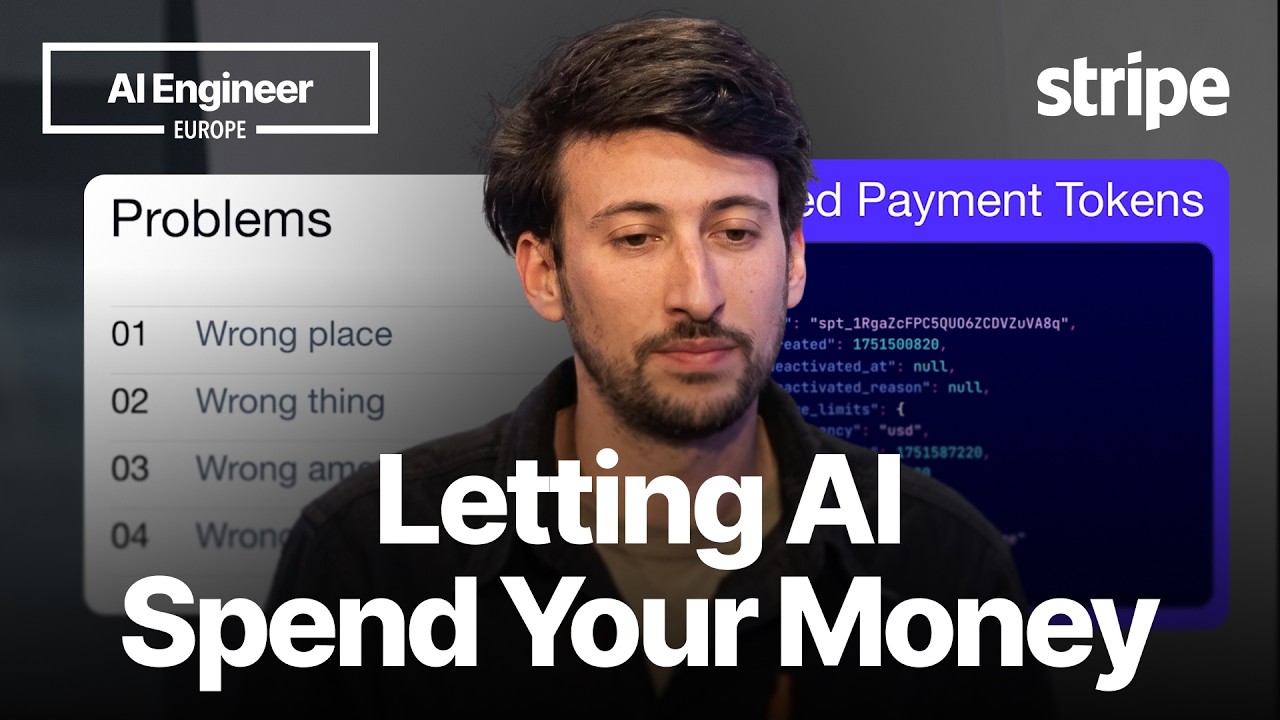
Building safe Payment Infrastructure for the autonomous economy — Steve Kaliski, Stripe

Building safe Payment Infrastructure for the autonomous economy — Steve Kaliski, Stripe

This talk addresses the challenge of enabling AI agents to spend money autonomously and safely. Steve Kaliski from Stripe presents a framework for separating non-deterministic discovery from deterministic transactions. He introduces three key components of Stripe's solution: Shared Payment Tokens for secure credential sharing with enforced spending limits, the Machine Payments Protocol for paying for API tool calls, and the Agent to Commerce Protocol (ACP) for structured, API-driven e-commerce checkouts. Through code examples, the talk demonstrates how these primitives create a secure and auditable payment infrastructure for the emerging autonomous economy.

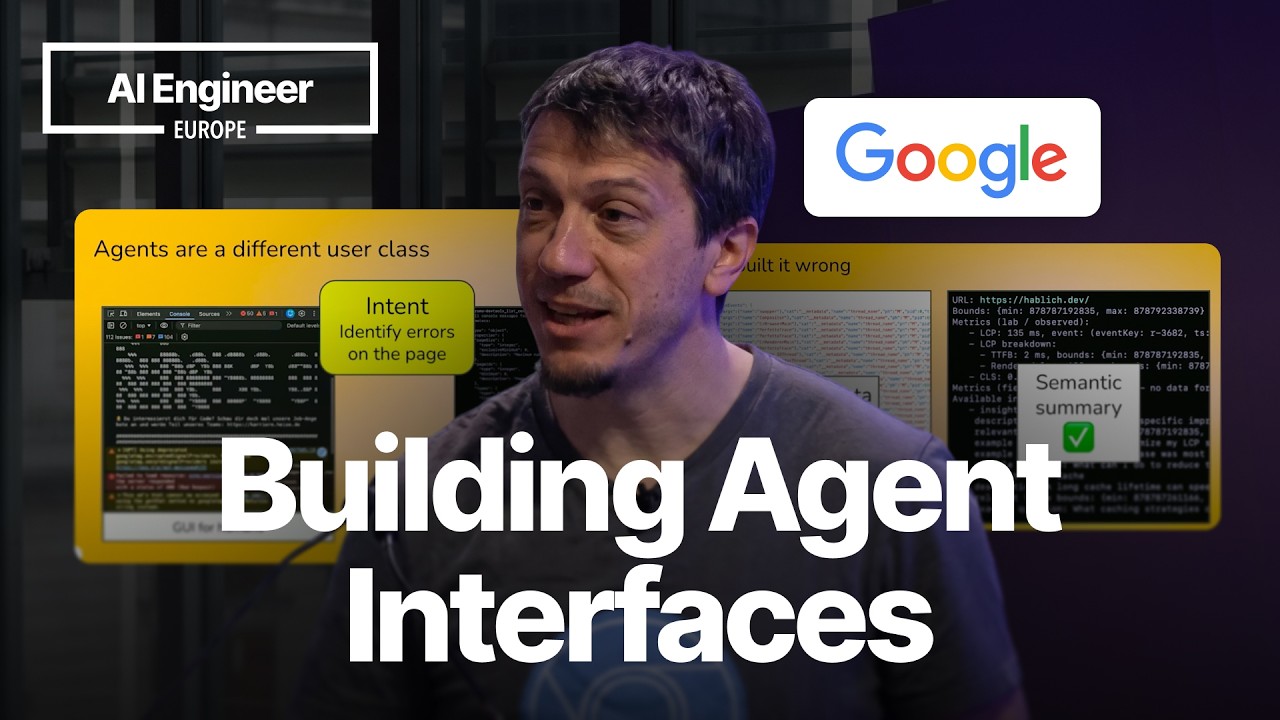
Building Agent Interfaces: Lessons from Chrome DevTools (MCP) for Agents — Michael Hablich, Google

Building Agent Interfaces: Lessons from Chrome DevTools (MCP) for Agents — Michael Hablich, Google

Michael Hablich from the Chrome DevTools team shares hard-won engineering lessons on building effective and secure interfaces for AI agents. The talk covers moving from raw data to semantic summaries, measuring interface efficiency with 'tokens per successful outcome', designing for error recovery, and the critical importance of trust boundaries and deliberate friction in UI design for agents.

Platforms for Humans and Machines: Engineering for the Age of Agents — Juan Herreros Elorza

Platforms for Humans and Machines: Engineering for the Age of Agents — Juan Herreros Elorza

This talk by Juan Herreros Elorza explores how to design internal developer platforms for a future where AI coding agents are first-class users. It argues that the same best practices that make platforms accessible to humans—self-service interfaces, well-defined APIs, local-first workflows, and rich observability—are now critical prerequisites for agents to autonomously build, debug, and ship software. The session provides concrete principles for platform design, discusses how to manage AI-assisted contributions, and emphasizes the need to measure the impact of these changes on developer productivity and system reliability.

Learning API Styles • Lukasz Dynowski & Sam Newman • GOTO 2026

Learning API Styles • Lukasz Dynowski & Sam Newman • GOTO 2026

This GOTO Book Club episode features an in-depth conversation between Sam Newman and Lukasz Dynowski, co-author of "Learning API Styles," exploring the foundational network layer of APIs, various API styles, critical trade-off decisions, and future trends like WebTransport and gRPC. The discussion emphasizes treating APIs as products, understanding consumer context, and the eight key characteristics of a well-designed API, complemented by a cautionary tale on database access.

Java Generics and Collections • Maurice Naftalin & Stuart Marks

Java Generics and Collections • Maurice Naftalin & Stuart Marks

Maurice Naftalin and Stuart Marks discuss the second edition of "Java Generics and Collections," 19 years after the first. They explore the evolution of Java from version 5 to 25, focusing on major shifts like the move toward immutability, the introduction of sequenced collections and streams, and the critical design principles of collection encapsulation. The conversation delves into the anemic domain model anti-pattern, the controversial `UnsupportedOperationException`, and the framework's inconsistent null handling, reflecting on decades of experience with the Java Collections Framework.

Building with MCP and the Claude API

Building with MCP and the Claude API

A discussion with Anthropic engineers Alex Albert, John Welsh, and Michael Cohen about the Model Context Protocol (MCP). They cover its origins as an open standard, best practices for tool design and prompt engineering, and the future of the ecosystem where high-quality MCP servers will become a key competitive advantage.