Anthropic

How to build products on a moving frontier | Dan Shipper (Every)

How to build products on a moving frontier | Dan Shipper (Every)

Dan Shipper, co-founder and CEO of Every, advocates for a dedicated 'labs team' to navigate the rapid evolution of AI capabilities. He argues that traditional product development struggles with the 'moving frontier,' proposing a model where a small, experimental lab explores new AI ideas and capabilities, while the main product team focuses on scaling existing offerings. Shipper outlines how to establish and run such a lab, from team composition ('pirates' and 'architects') to rigorous experimentation, dogfooding, and a structured pipeline for integrating successful innovations into the core product, enabling continuous disruption and growth.

Pacing the AI frontier, IBM Granite 4.2 & Meta’s Muse assistant

Pacing the AI frontier, IBM Granite 4.2 & Meta’s Muse assistant

This episode explores the critical debate around pacing frontier AI development, driven by Anthropic's CEO Dario Amodei's call for slowdowns amidst growing concerns over AI risks. It then delves into IBM's latest Granite 4.2 release, highlighting innovations in agentic models, speech recognition, and advanced training techniques like synthetic data and mid-training. Finally, the discussion pivots to Meta's new Muse agentic AI assistant, examining its technical design, the strategic rationale behind Meta's push into productivity, and the inherent privacy dilemmas and trade-offs between utility and user comfort that define the future of personal AI.

The Watchdogs of AGI — Rune Kvist of AI Underwriting Company

The Watchdogs of AGI — Rune Kvist of AI Underwriting Company

AIUC co-founder Rune Kvist discusses their $40M Series A, emphasizing that AI adoption's biggest constraint is trust, not capability. He details AIUC-1, their quarterly-updated standard for agent security and reliability, and their expansion into model certification to bridge the trust gap between frontier labs and governments. Kvist highlights the critical role of standards and insurance (partnering with Lloyds of London) in quantifying and mitigating AI risks, from agent liability to national security concerns, and preparing for future challenges in robotics and multi-agent systems.

AI models can now help run physical science experiments

AI models can now help run physical science experiments

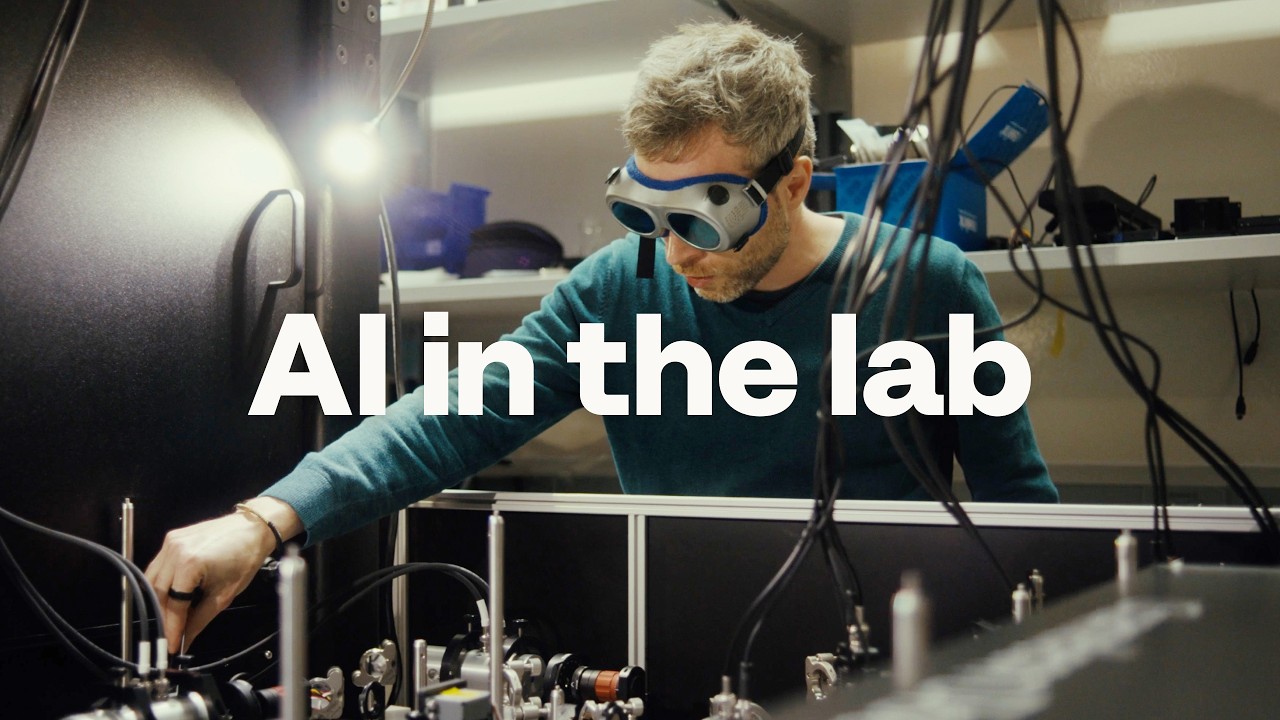
The Model Hardware Standard (MHS) is a pioneering framework developed by Anthropic and HHMI Janelia to enable AI, specifically Claude, to safely and intelligently operate diverse scientific and manufacturing hardware. By abstracting device-specific communication, MHS dramatically accelerates scientific discovery, from automating complex microscopy tasks and real-time tracking to optimizing high-throughput drug screening, empowering researchers to focus on core scientific questions.

How Anthropic Builds: Lessons from Labs — Mike Krieger, Anthropic

How Anthropic Builds: Lessons from Labs — Mike Krieger, Anthropic

Mike Krieger, a former CPO at Anthropic, details his transition to an IC role to build directly with AI, advocating for "unreasonable" asks like porting entire codebases. He shares lessons from Instagram on scaling and highlights Anthropic's internal use of Claude as a proactive teammate, flexible lab structure, and critical insights on AI product design, vertical applications, and mental health in the fast-paced AI industry.

Stealing Reasoning Traces from Proprietary LLM APIs — Ilia Shumailov & Alexander Panfilov

Stealing Reasoning Traces from Proprietary LLM APIs — Ilia Shumailov & Alexander Panfilov

A paper by Ilia Shumailov and Alexander Panfilov exposes a critical vulnerability in proprietary LLM APIs: encrypted reasoning traces, returned for conversation state management, can be extracted and replayed. This enables universal jailbreaking, privacy leaks of sensitive user data, and poisoning of AI agent traces. The study highlights significant implications for AI safety, model monitorability due to opaque internal reasoning, and even subtle forms of "distillation" where smaller models mimic frontier ones. The discussion covers architectural and system-level defenses, advocating for rigorous scientific inquiry in AI safety research.