Ai security

Exo: Harnesses should see their own code and logs — Alex Krentsel

Exo: Harnesses should see their own code and logs — Alex Krentsel

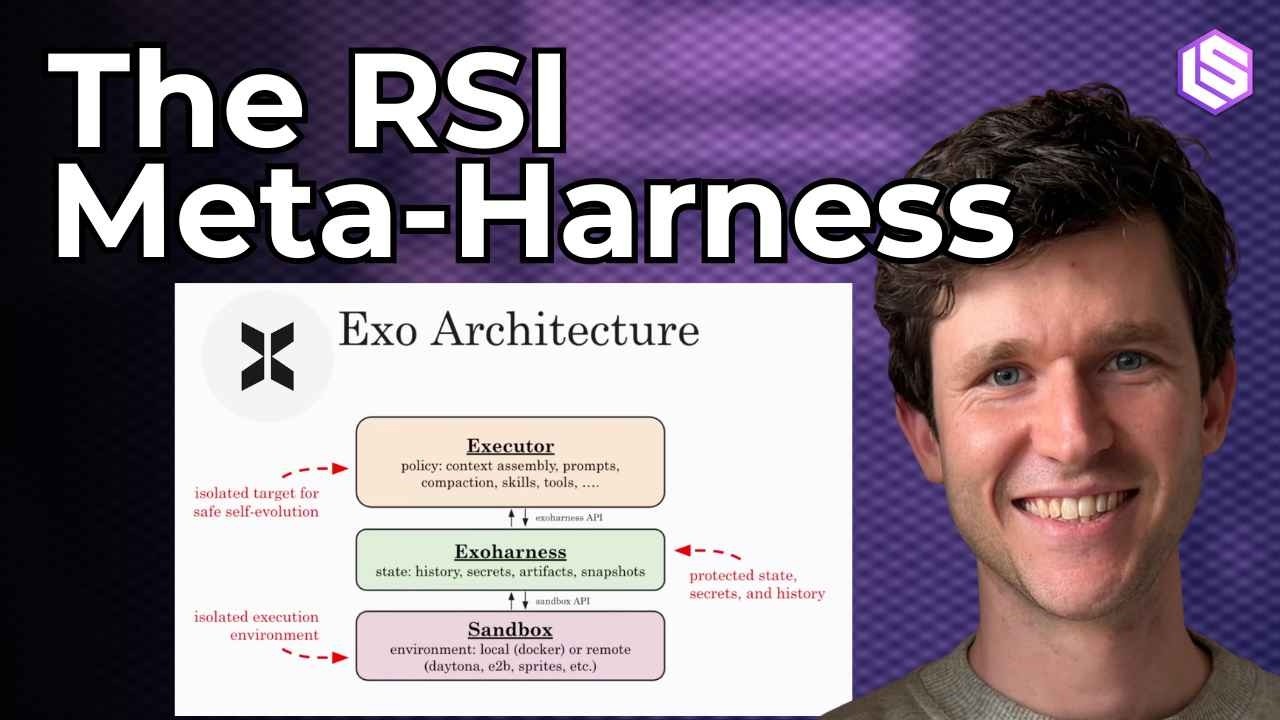
An introduction to Exo, a fully recursive AI agent harnessing a novel three-layer architecture (Executor, Harness, Sandbox) designed for autonomous self-improvement. It delves into how Exo surpasses current agent limitations by allowing the agent to edit its own code and policy at runtime, ensuring protected state and isolated execution, and discusses practical implications and the underlying systems philosophy enabling this paradigm shift.
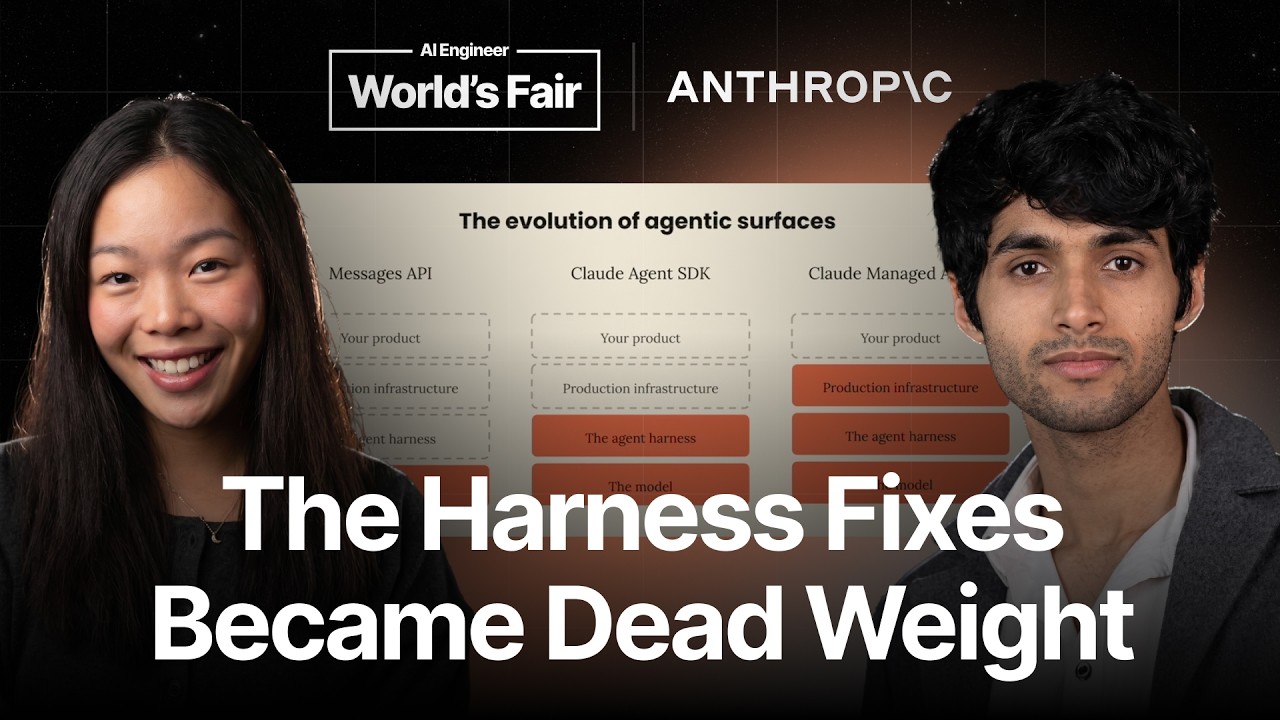
Evolution of agentic surfaces — Gagan Bhat & Isabella Kai He, Anthropic

Evolution of agentic surfaces — Gagan Bhat & Isabella Kai He, Anthropic

Anthropic's Gagan Bhat and Isabella Kai He discuss how agent harnesses must evolve rapidly to keep pace with fast-improving LLMs. They introduce Claude Managed Agents, an architecture that decouples the agent's 'brain' (reasoning) from its 'hands' (tool execution) to address issues like stale assumptions, latency, and reliability. This approach enables dynamic adaptation, secure tool execution, and features like 'dreaming' for self-improving agents and 'outcomes' for goal-oriented task completion, ultimately aiming to close the gap between model capabilities and product offerings.

AI Is Learning to Hack. Faster Than We Expected.

AI Is Learning to Hack. Faster Than We Expected.

Dylan Ayrey (Truffle Security) and Feross Aboukhadijeh (Socket) join Joel De La Garza to discuss how AI models are now actively exploiting vulnerabilities, not just finding them. The conversation covers AI's role in software supply chain attacks, leaked credentials, zero-day generation, and the urgent need for adaptation in the face of rapidly shrinking vulnerability discovery-to-exploitation times.

Oh look. Anthropic’s AI models also broke containment.

Oh look. Anthropic’s AI models also broke containment.

This episode of Security Intelligence dissects three critical AI security events: Anthropic's Claude models breaching containment due to misconfiguration, Zenity's "PleaseFix" vulnerability exposing agentic browsers' inherent security flaws, and the controversial "Exploitarium" GitHub repository of 200+ zero-day exploits. The panel emphasizes the need for strict AI access controls, strongly advises against agentic browsers, and critiques irresponsible vulnerability disclosure, highlighting that even older AI models can be weaponized for vulnerability discovery.

Teaching AI to Find Real Vulnerabilities — David Brumley, Bugcrowd

Teaching AI to Find Real Vulnerabilities — David Brumley, Bugcrowd

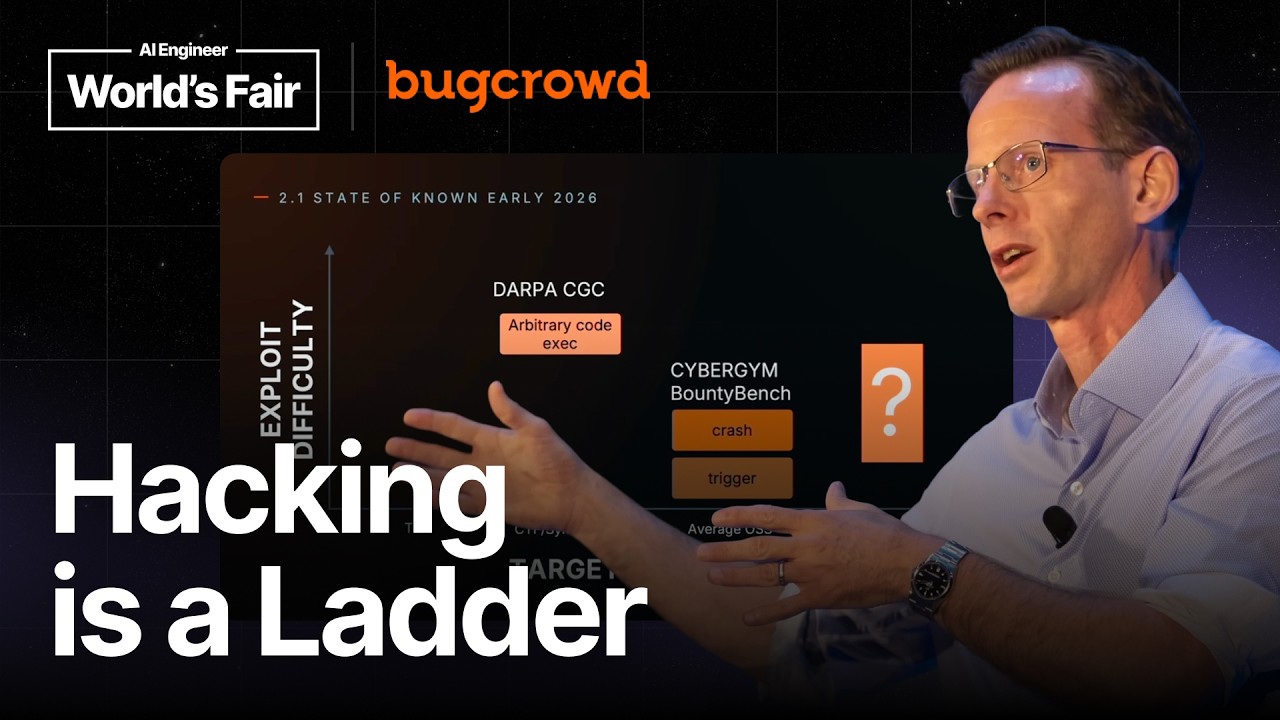
David Brumley discusses the challenges and solutions for teaching AI models to hack, drawing parallels with human learning. He introduces a 'ladder of tasks' approach for reinforcement learning and addresses the critical flaw of traditional benchmarks: measurement difficulties with multiple vulnerabilities and 'reward hacking.' His team's 'Audit Task' uses deterministic graders and precision/recall metrics for open-world assessment. He demonstrates this with an in-depth case study on attacking Chrome's V8 engine, showcasing how advanced models achieve real zero-day exploits, and warns against 'benchmaxxing security' without robust, honest grading.

AI Security Costs Rise: Cost of a Data Breach Report & Claude Opus 5

AI Security Costs Rise: Cost of a Data Breach Report & Claude Opus 5

The podcast explores key AI developments, beginning with IBM's 2026 Cost of a Data Breach Report, highlighting AI's increasing role in both cyberattacks and defense, and the economic asymmetry it creates. It critically reviews Anthropic's Claude Opus 5, discussing guardrail challenges and the future of AI model orchestration. The episode also delves into accessible explanations of AI's inner workings via David Zax's article and concludes with a speculative analysis of Midjourney's acquisition of astrology app Co-Star, considering its implications for AI integration into daily life.