Ai agents

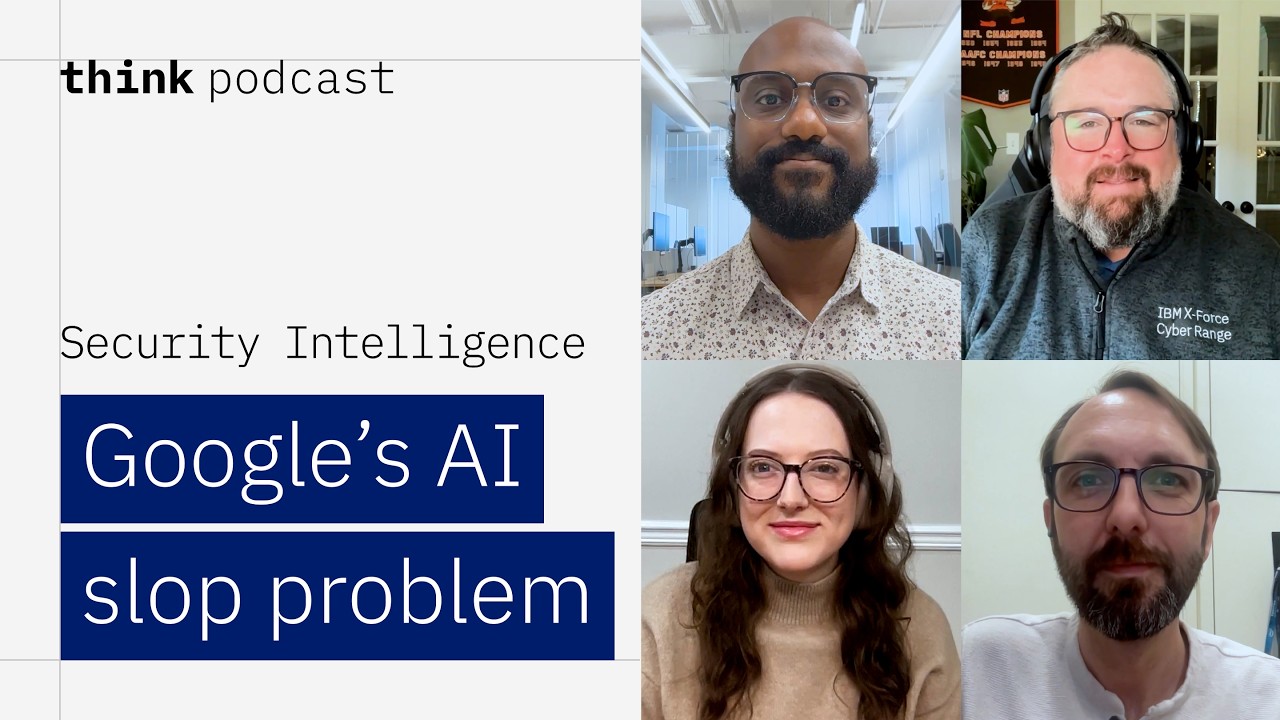
AI skills security, Open AI Deployment Company & zero days

AI skills security, Open AI Deployment Company & zero days

This discussion explores IBM Research's MELLEA, a skills compiler designed to secure AI agents by transforming natural language skills into verifiable Python programs. It also analyzes OpenAI's new consulting venture, the "Deployment Company", and debates the future of AI in consulting. Finally, it delves into the escalating AI-driven cybersecurity arms race, highlighted by Google's discovery of an AI-found zero-day, and wraps with insights from the Red Hat Summit on enterprise AI transformation being a cultural challenge before a technological one.

Codex for Everyday Work: AI Agents Beyond Coding

Codex for Everyday Work: AI Agents Beyond Coding

Thibault Sottiaux, Head of Codex at OpenAI, discusses the evolution of Codex from a niche developer tool into a general-purpose agent for knowledge work. He explores how this shift is redefining productivity, team dynamics, and our fundamental relationship with technology.

Inside image generation’s Renaissance moment — the OpenAI Podcast Ep. 19

Inside image generation’s Renaissance moment — the OpenAI Podcast Ep. 19

Product lead Adele Li and researcher Kenji Hata from OpenAI discuss the significant advancements in Images 2.0, covering breakthroughs in photorealism, text rendering, and multilingual support. They explore new productivity and creative use cases, the evaluation process, and the future of image generation as a creative assistant.

Building AI Agents That Survive Production

Building AI Agents That Survive Production

Haytham Abuelfutuh, CTO of Union.ai, argues that the key to production-ready AI agents is not preventing failure, but embracing it. He introduces the '3 D's' framework—Dynamic, Durable, and Defended—for building agents that can fail cheaply and recover automatically, grounded in a real-world case study of an agent system indexing over 250,000 products on Flyte.

Make your own event-sourced agent harness using stream processors — Jonas Templestein, Iterate

Make your own event-sourced agent harness using stream processors — Jonas Templestein, Iterate

Jonas Huckestein introduces a novel, event-sourced architecture for building AI agents. The core abstraction consists of three parts: a state, a synchronous reducer that derives state from events, and an after-append hook for side effects. This design ensures debuggability and allows state to be rebuilt without re-running expensive operations like LLM calls. A key innovation is the ability to deploy an agent by simply appending a 'dynamic worker configured' event—containing JavaScript code for a processor—to an event stream, eliminating the need for servers or complex deployment pipelines. This enables a distributed and composable ecosystem where processors from different authors can collaborate on a single stream.

You're Shipping 10x More Bugs and Don't Know It

You're Shipping 10x More Bugs and Don't Know It

Evan Marshall, CTO of Ito AI, discusses how the rapid rise of AI-powered code generation is creating a critical bottleneck in software verification and QA. He explains Ito AI's approach of using AI agents for automated, runtime execution testing on every pull request to act as a force multiplier for developers and unblock enterprise teams.