Ai agents

Why AI Agents Fail

Why AI Agents Fail

Abi Aryan discusses the shift from MLOps to LLMOps, framing generative AI deployment as a distributed systems challenge. She highlights the critical role of FinOps due to high model costs, the need for custom tooling over generic agent frameworks, and the importance of a 'decision layer' for agent autonomy. Observability is re-conceptualized as anomaly detection, and she points to dynamic RL environments and strong data engineering as future research priorities and essential skills for AI engineers.
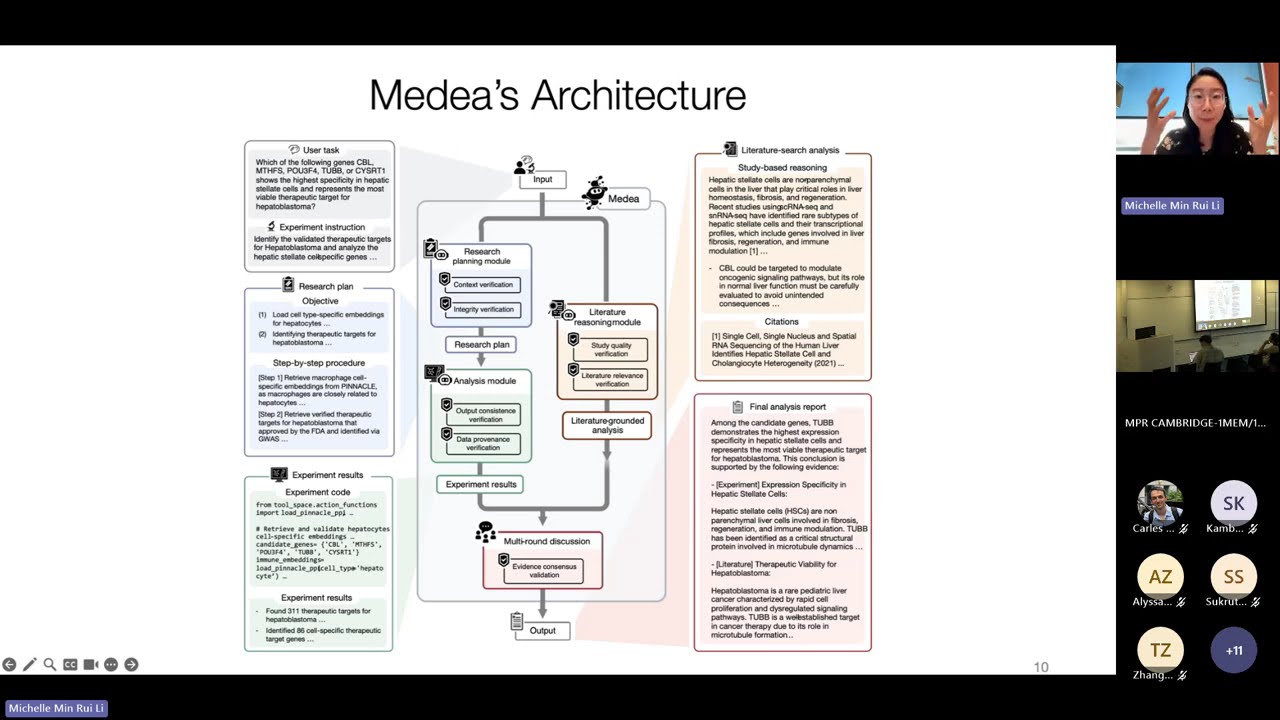
AI agents for therapeutic reasoning across biological contexts

AI agents for therapeutic reasoning across biological contexts

Medea is an AI agent for therapeutic reasoning designed to overcome limitations of existing AI in preserving biological context, verifying computational steps, and reconciling conflicting evidence. It employs a modular architecture with robust verification mechanisms for research planning, analysis, literature reasoning, and multi-round discussion, demonstrating superior performance in cell type-specific target nomination, synthetic lethality prediction, and immunotherapy response prediction across various biological contexts and data types.

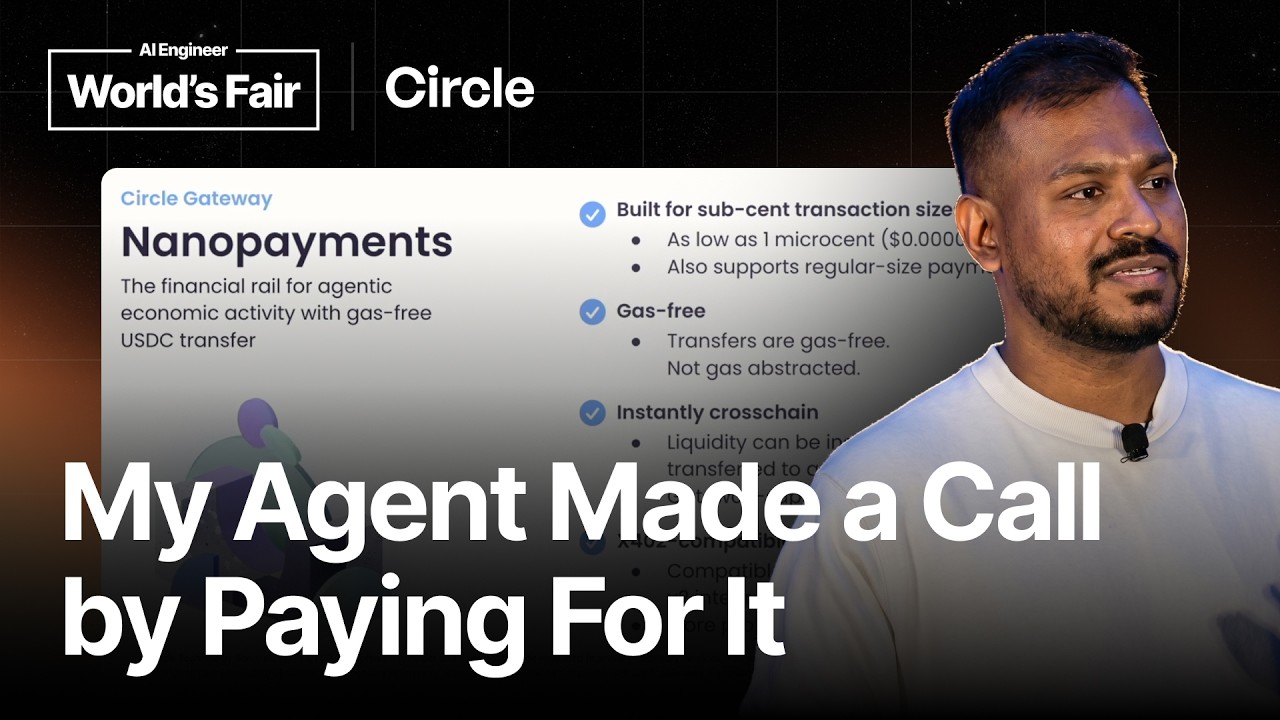
Why Your AI Agent Needs a Wallet: USDC and Nanopayments — Harshal Bhangale, Circle

Why Your AI Agent Needs a Wallet: USDC and Nanopayments — Harshal Bhangale, Circle

Harshal Bhangale from Circle demonstrates how AI agents equipped with a digital wallet, powered by USDC and Circle's Nanopayments, can autonomously pay for microtransactions at high frequency. He contrasts this with traditional payment methods and blockchain limitations, showing how funded agents successfully execute complex tasks (like trip planning with email and phone calls) that unfunded agents cannot, emphasizing the need for real-time, low-cost payment infrastructure for the agentic economy.

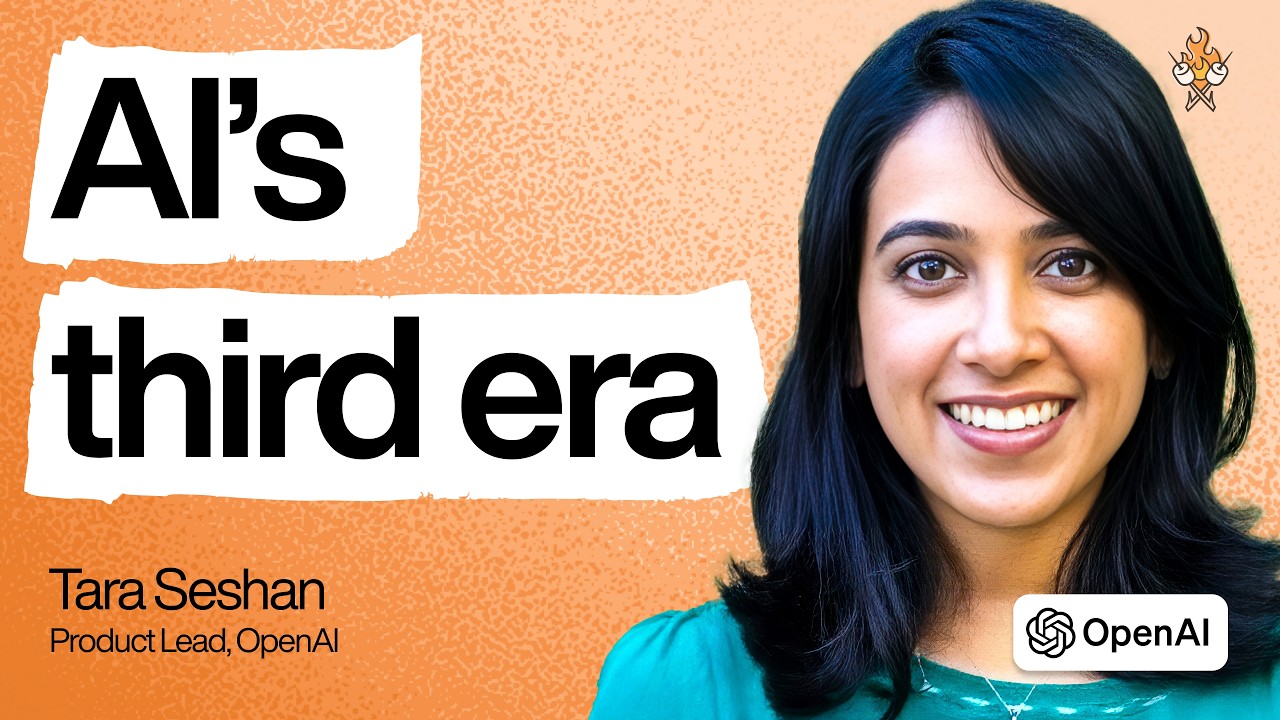
AI’s third era: the rise of persistent AI coworkers | Tara Seshan (OpenAI’s product lead)

AI’s third era: the rise of persistent AI coworkers | Tara Seshan (OpenAI’s product lead)

Tara Seshan, who leads product for Codex and ChatGPT Work at OpenAI, explores how AI is shifting knowledge work from rowing to steering, why ambition and human judgment are becoming key differentiators, how to build for models two to three months ahead, and how writing as thinking still matters. The conversation also covers OpenAI's founder-led culture, the design of Work mode, and practical uses like Sites and visualize.

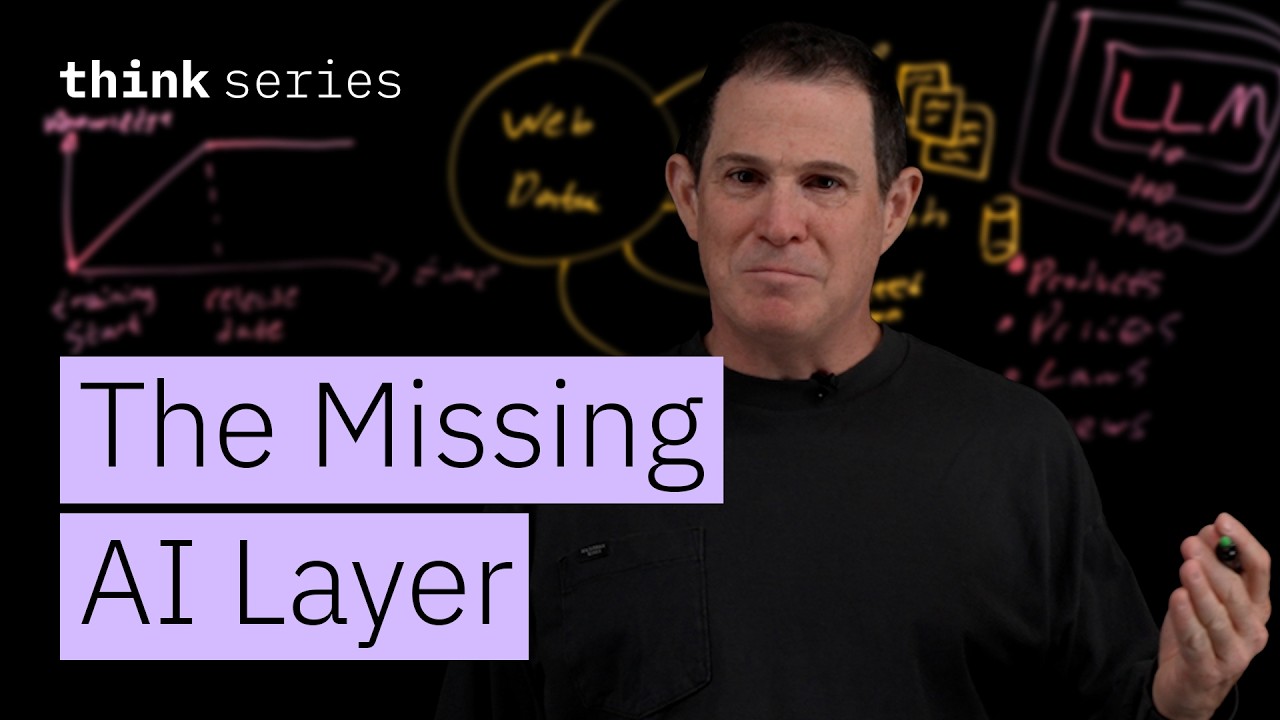
Why Does AI Need Access to the Web?

Why Does AI Need Access to the Web?

This video addresses the critical limitation of pre-trained LLMs: their static knowledge in a dynamic world, leading to hallucinations and costly mistakes for AI agents. It introduces the concept of 'knowledge layers' empowered by 'web data infrastructure' to provide AI with live, fresh, reliable, and properly formatted web data, thereby ensuring grounded and timely responses and eliminating the 'garbage in, garbage out' problem for real-world AI applications.

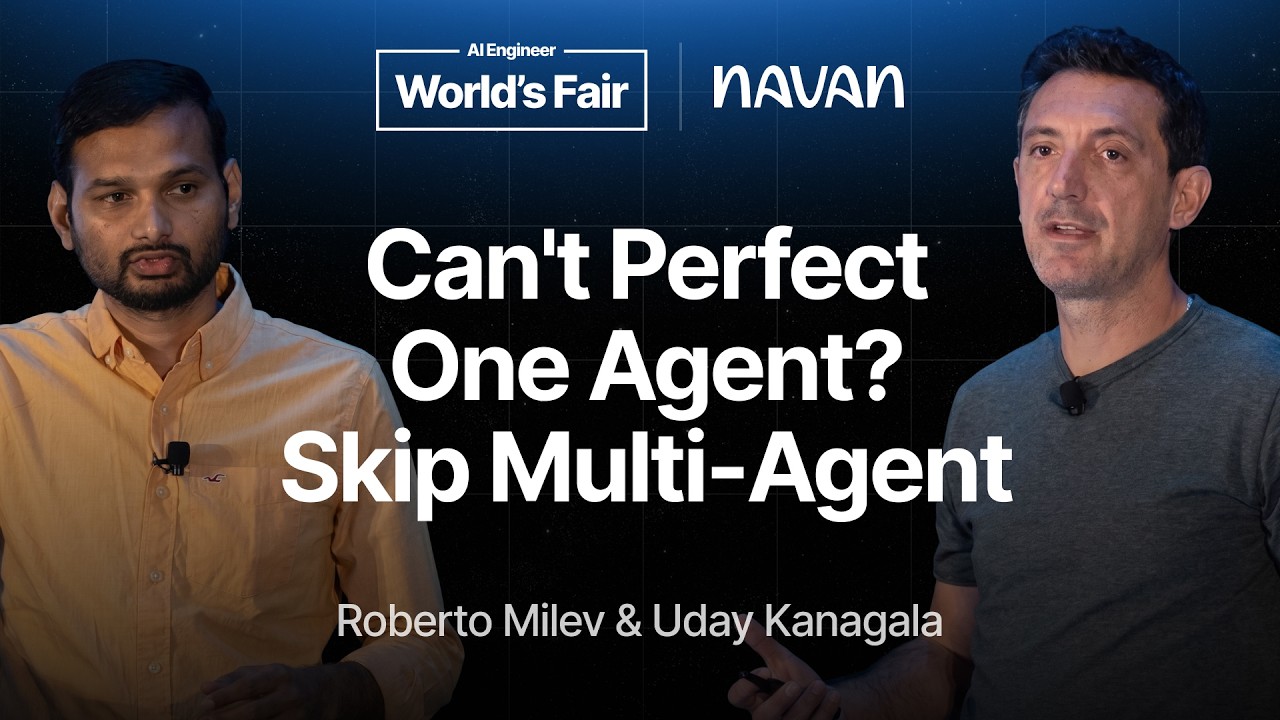
Agents Are Where Microservices Were in 2015 — Roberto Milev & Uday Kanagala, Navan

Agents Are Where Microservices Were in 2015 — Roberto Milev & Uday Kanagala, Navan

Roberto Milev and Uday Kanagala from Navan discuss the challenges and emerging best practices in building and operating AI agents, drawing parallels with microservices. They highlight the shift to stateful runtimes, innovative memory and context management using 'skills,' and crucial solutions for observability and testing non-deterministic systems. A central theme is the critical need for robust authorization and guardrails, given the blurring line of agentic action, and a preference for mastering single-agent loops before scaling to complex orchestrations. They conclude by outlining the solved and unsolved problems, with cost and debugging remaining significant hurdles.