Agent security

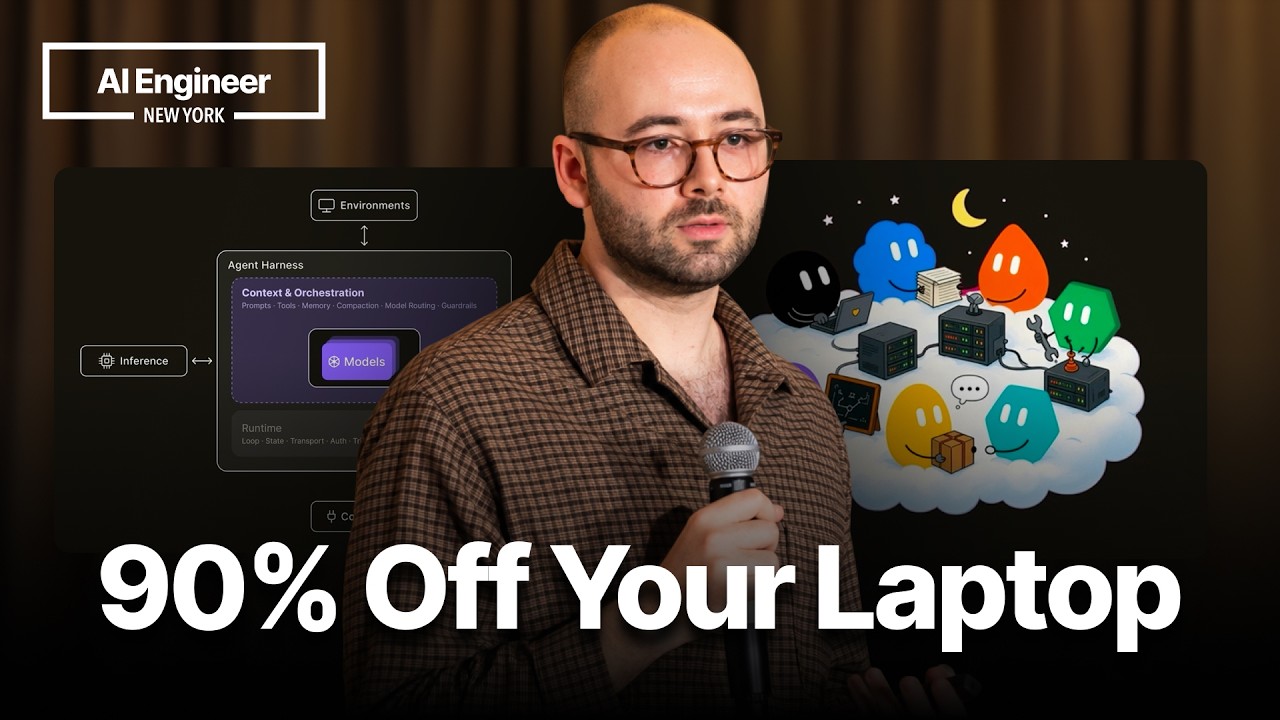
Smarter Models Killed the Harness. Here's What's Left — Jediah Katz, SpaceXAI

Smarter Models Killed the Harness. Here's What's Left — Jediah Katz, SpaceXAI

Jedidiah Katz, longtime agent-harness engineer at Cursor and now at SpaceX, argues that fancy harnesses no longer add coding intelligence because models absorb those skills through a data flywheel. He contends the harness matters more than ever: it unlocks new frontiers like Grokbot and owns infrastructure, trust and security, and efficiency. He closes with predictions, including that 90% of agent work will run off the laptop within six months.
The Watchdogs of AGI — Rune Kvist of AI Underwriting Company

The Watchdogs of AGI — Rune Kvist of AI Underwriting Company

AIUC co-founder Rune Kvist discusses their $40M Series A, emphasizing that AI adoption's biggest constraint is trust, not capability. He details AIUC-1, their quarterly-updated standard for agent security and reliability, and their expansion into model certification to bridge the trust gap between frontier labs and governments. Kvist highlights the critical role of standards and insurance (partnering with Lloyds of London) in quantifying and mitigating AI risks, from agent liability to national security concerns, and preparing for future challenges in robotics and multi-agent systems.

Give the Agent a Budget, Not a Token — Sachin Malhotra, Anthropic

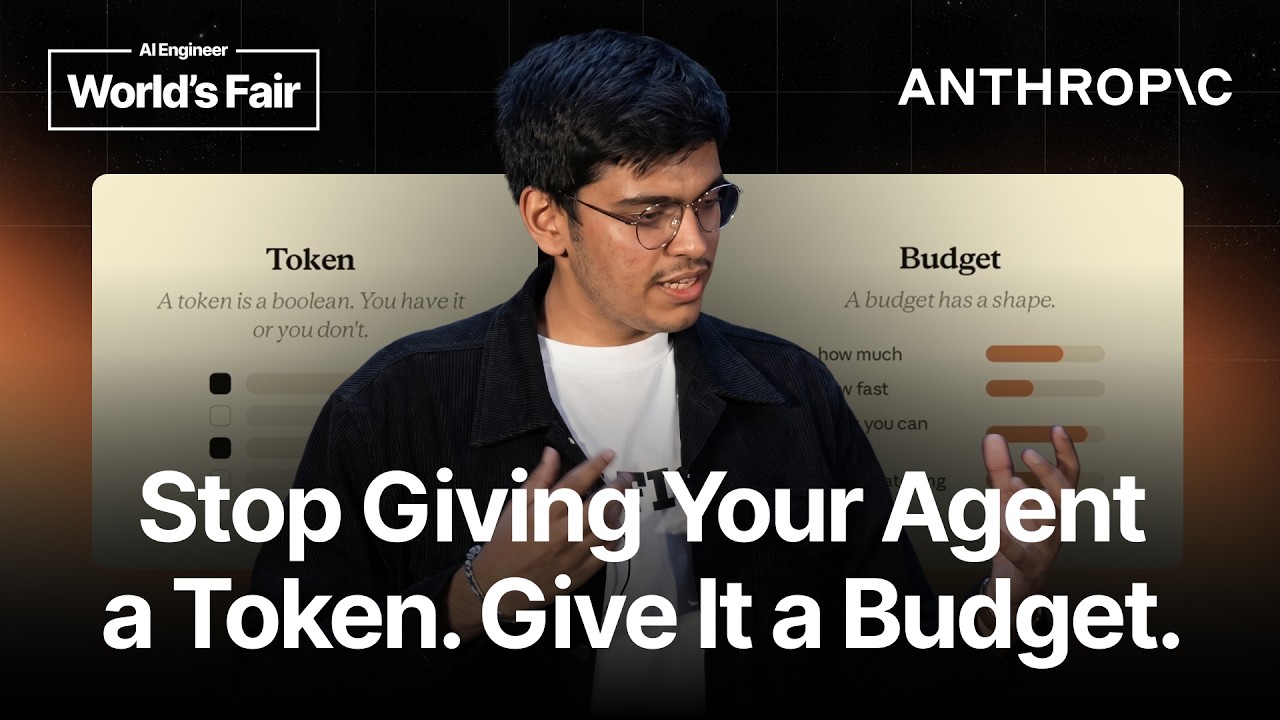
Give the Agent a Budget, Not a Token — Sachin Malhotra, Anthropic

Sachin Malhotra's talk outlines a critical framework for safely deploying autonomous agents in production, moving beyond simple token-based access. He introduces 'asymmetric verbs,' refilling 'rate limits,' 'trip wires' for aggregate monitoring, and the 'undo test' as a lens. A central tenet is that infrastructure (via a proxy) must stamp an agent's identity, preventing agents from circumventing controls and ensuring accountability, thus providing a "budget" instead of an unbounded "token."

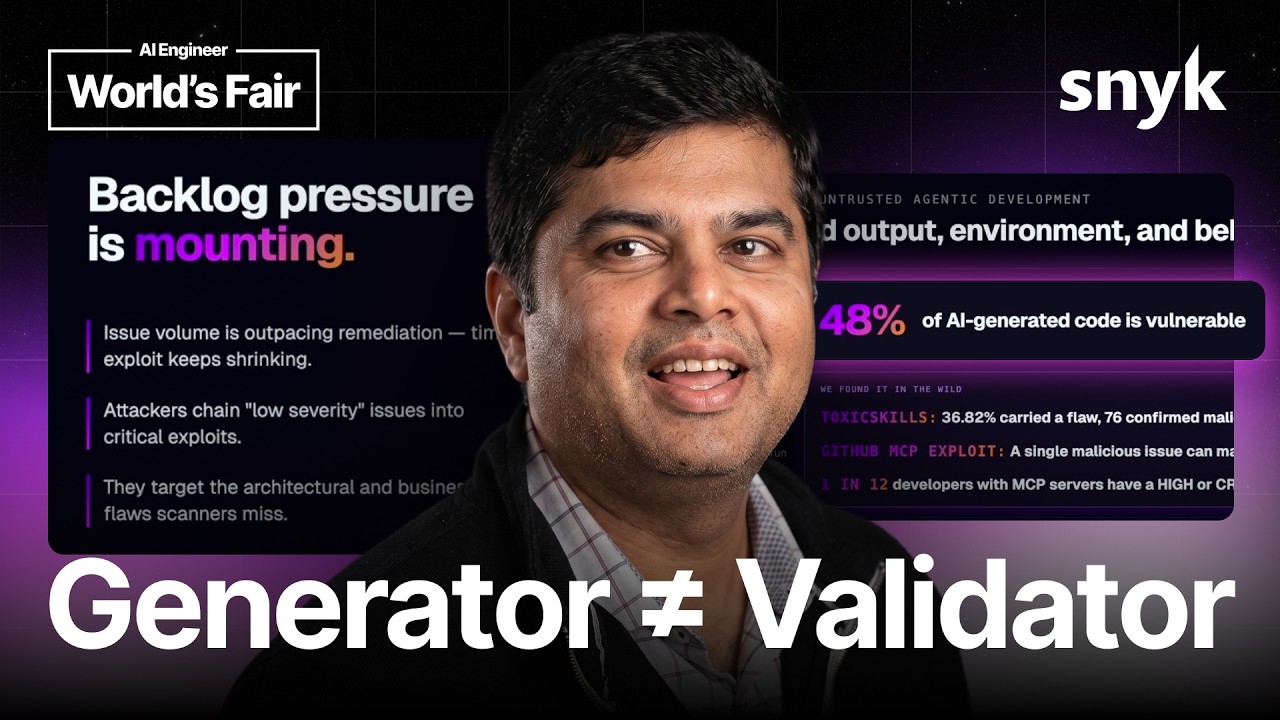
Through the AI Fog: The Architectural Decision Agentic Security Depends On — Manoj Nair, Snyk

Through the AI Fog: The Architectural Decision Agentic Security Depends On — Manoj Nair, Snyk

Manoj Nair of Snyk reveals alarming data on AI-driven security risks, emphasizing that generative AI and validation systems cannot be the same. He highlights issues like autonomous attacks, rampant vulnerabilities in AI-generated code and skills, and PII leakage. Snyk's solution, Evo, integrates deterministic prevention and remediation to secure the agentic development lifecycle.

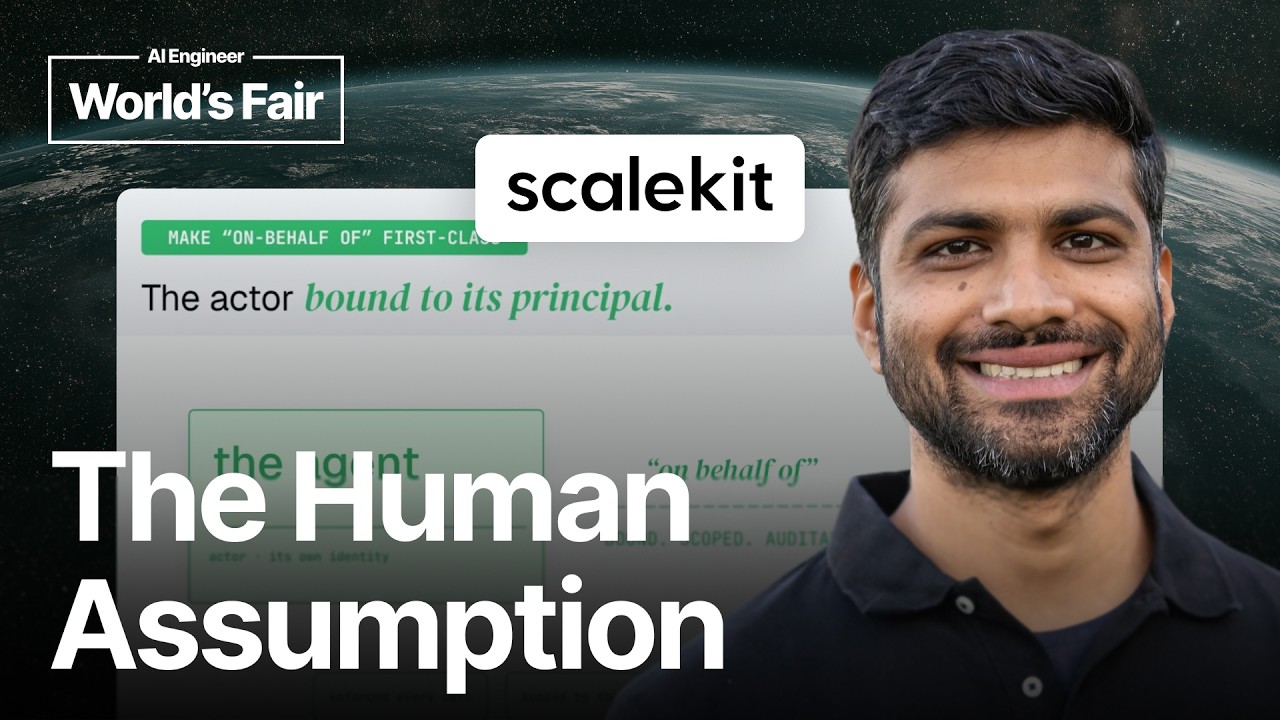
You Didn't Ship a Bug. You Just Wrote It for a Human. - Ravi Madabhushi, Scalekit

You Didn't Ship a Bug. You Just Wrote It for a Human. - Ravi Madabhushi, Scalekit

Ravi Madabhushi details how existing infrastructure, designed for human users, fails AI agents, leading to issues like rate limits and over-permissioning. He argues for treating agents as first-class principals with fine-grained, context-aware authorization and robust visibility to prevent non-deterministic and potentially rogue behaviors.

The Blueprint for Autonomous Work Agents | Gavriel Cohen, NanoClaw

The Blueprint for Autonomous Work Agents | Gavriel Cohen, NanoClaw

Kovid Goyal, founder of NanoClaw, discusses his journey from a serendipitous encounter with Singapore's Foreign Minister to evolving NanoClaw into an enterprise AI deployment company. He shares insights on personal vs. team-managed agents, the "second brain" as a killer use case, NanoClaw's security-first architecture, and the future challenges of managing open-source projects and enterprise AI deployments in an era of rapidly evolving agent technology.