This conversation explores how AI's mathematical progress challenges traditional computing assumptions. It examines the shift from engineering-bound problems to capital-bound problems, impacting startups, incumbents, and venture capital, and considers the unpredictable potential of massively funded AI models.
Parallel’s Parag Agrawal: Building a New Web for AI Agents
Parag Agrawal, CEO of Parallel Web Systems, outlines his vision for an agent-centric web where AI agents query the internet 1000x more than humans. He details how Parallel is reinventing search infrastructure, dismissing human click data as a "bug," and tackling the economic crisis of the ad-supported internet with a novel monetization model based on Shapley values to pay content creators.
The 12 KB File That Replaces Weeks of Training (with Tristan Handy)
Tristan Handy, founder and CEO of dbt Labs, details the evolution of analytics engineering from a 2016 study into a tool used by over 100,000 data teams. He explains his decision to use SQL over Spark for accessibility, the concept of "progressive complexity," and how dbt projects transform raw data into modeled tables using a Directed Acyclic Graph. Handy elaborates on the critical role of the semantic layer in ensuring consistent metric definitions for both human users and AI agents, especially in large organizations. He introduces the dbt Fusion Engine, aiming to bring type safety and universal SQL understanding, and discusses how 12-kilobyte skill files can revolutionize large-scale dbt migrations, reducing them from years to weeks by enabling AI agents to absorb vast amounts of expert knowledge.
Stealing Reasoning Traces from Proprietary LLM APIs — Ilia Shumailov & Alexander Panfilov
A paper by Ilia Shumailov and Alexander Panfilov exposes a critical vulnerability in proprietary LLM APIs: encrypted reasoning traces, returned for conversation state management, can be extracted and replayed. This enables universal jailbreaking, privacy leaks of sensitive user data, and poisoning of AI agent traces. The study highlights significant implications for AI safety, model monitorability due to opaque internal reasoning, and even subtle forms of "distillation" where smaller models mimic frontier ones. The discussion covers architectural and system-level defenses, advocating for rigorous scientific inquiry in AI safety research.
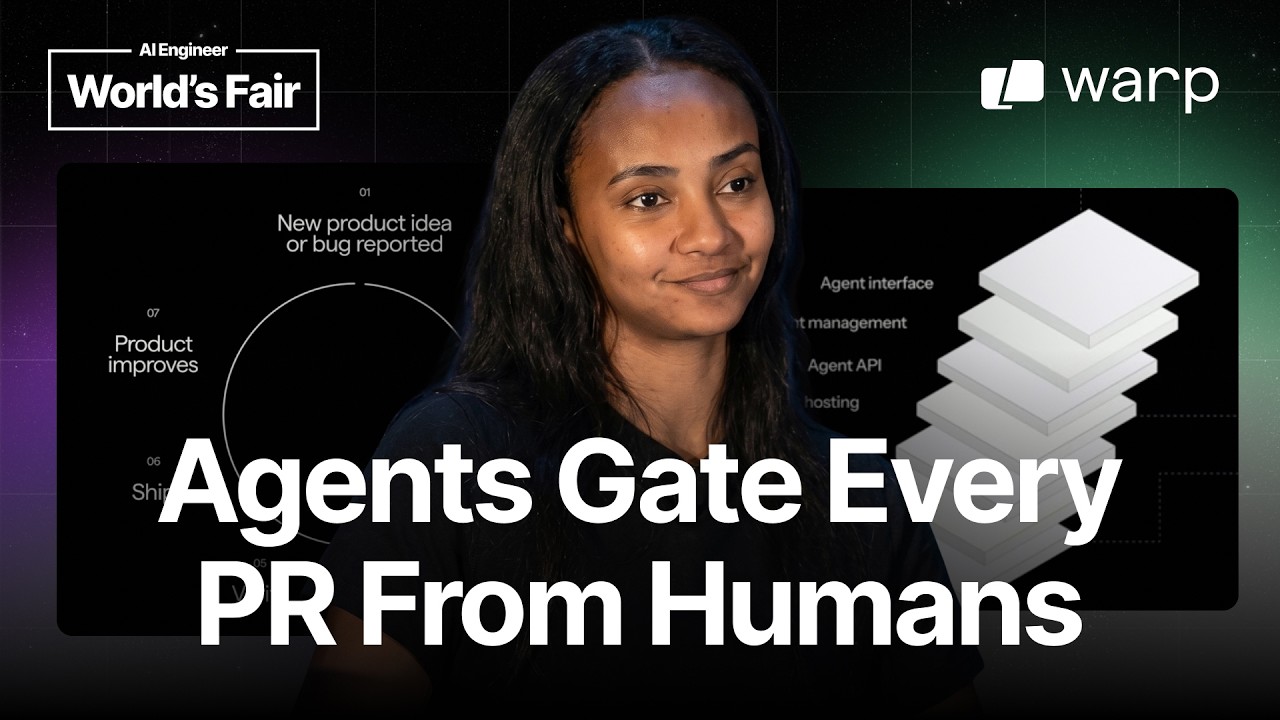
The Agent Behind the Curtain: Building the Oz Cloud Agent Platform — Safia Abdalla, Warp
Safia Abdalla discusses Warp's cloud agent platform, emphasizing its core principle of absorbing complexity from the user. She details features like flexible sandboxes, multi-harness support, and API-driven agent orchestration. The talk highlights how agents manage Warp's open-source repository—from issue triage to PR review—and introduces the "potter's workshop" analogy as a superior model to the "software factory" for modern, human-centric software development.
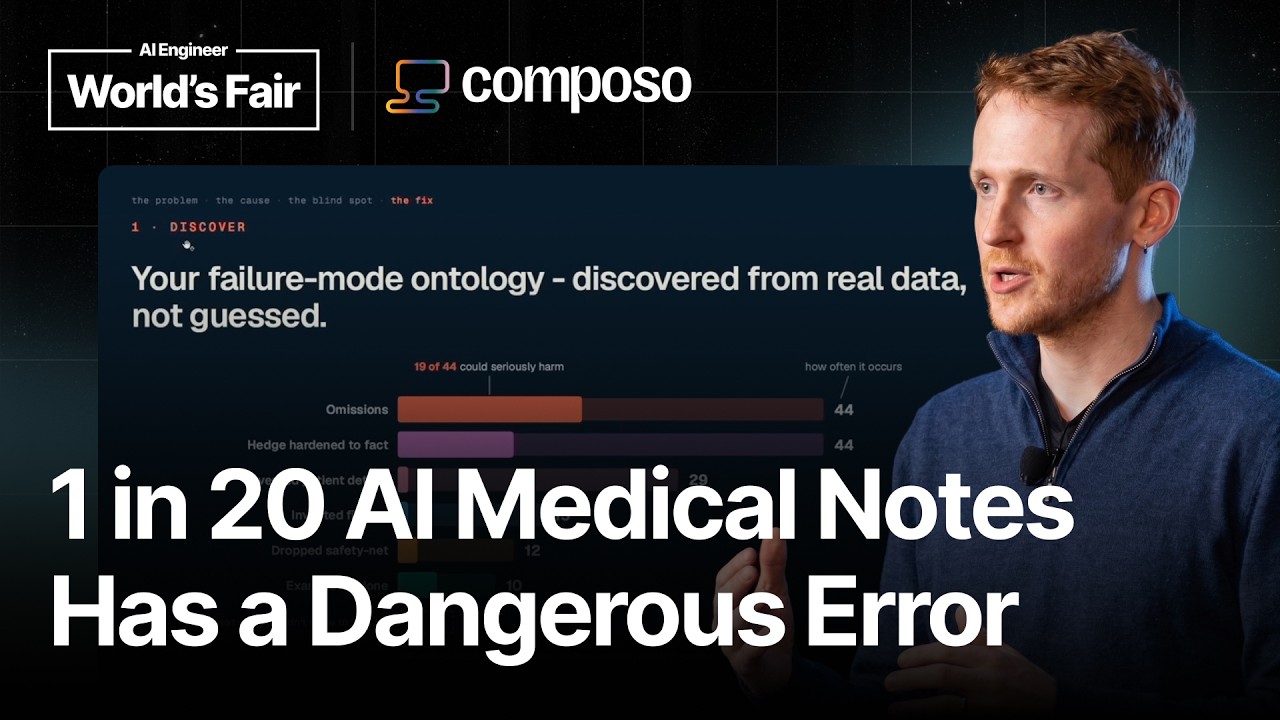
Inside 847 Production Clinical AI Notes — Sebastian Fox, Composo
Sebastian Fox, a medical doctor and AI evaluation expert, dissects the critical problem of subtle yet dangerous errors in AI-generated clinical notes within high-stakes healthcare. He reveals why conventional AI verification methods fail to grasp the nuanced concept of "what matters" and introduces a novel, adaptive evaluation framework that continuously learns from real outputs and expert judgment to build a dynamic, case-specific standard for AI reliability.