Posts

Juicebox: AI Agents for the Hiring Process

Juicebox: AI Agents for the Hiring Process

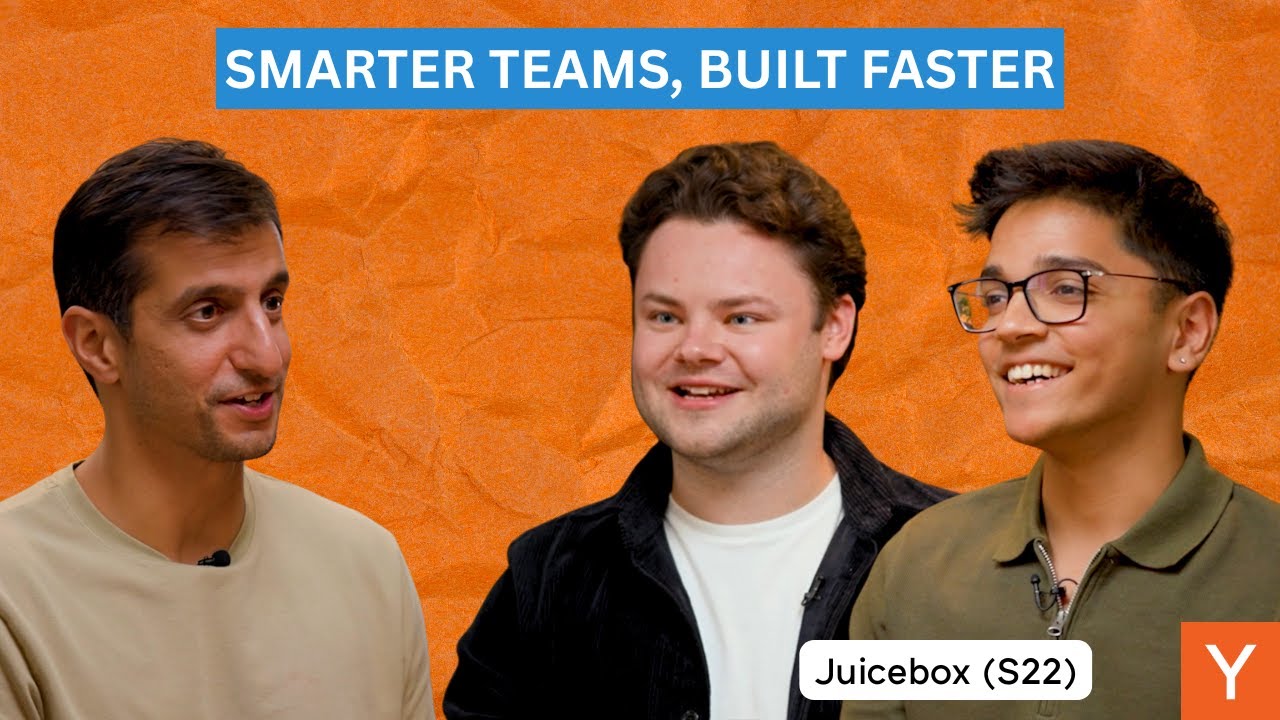
Co-founders David Paffenholz and Ishan Gupta share their journey building Juicebox, an AI recruiting platform. They discuss their pivot from a music app to leveraging LLMs for talent search, how they achieved product-market fit, and their vision for AI agents that automate top-of-funnel recruiting.

From Vibe Coding to Vibe Researching: OpenAI’s Mark Chen and Jakub Pachocki

From Vibe Coding to Vibe Researching: OpenAI’s Mark Chen and Jakub Pachocki

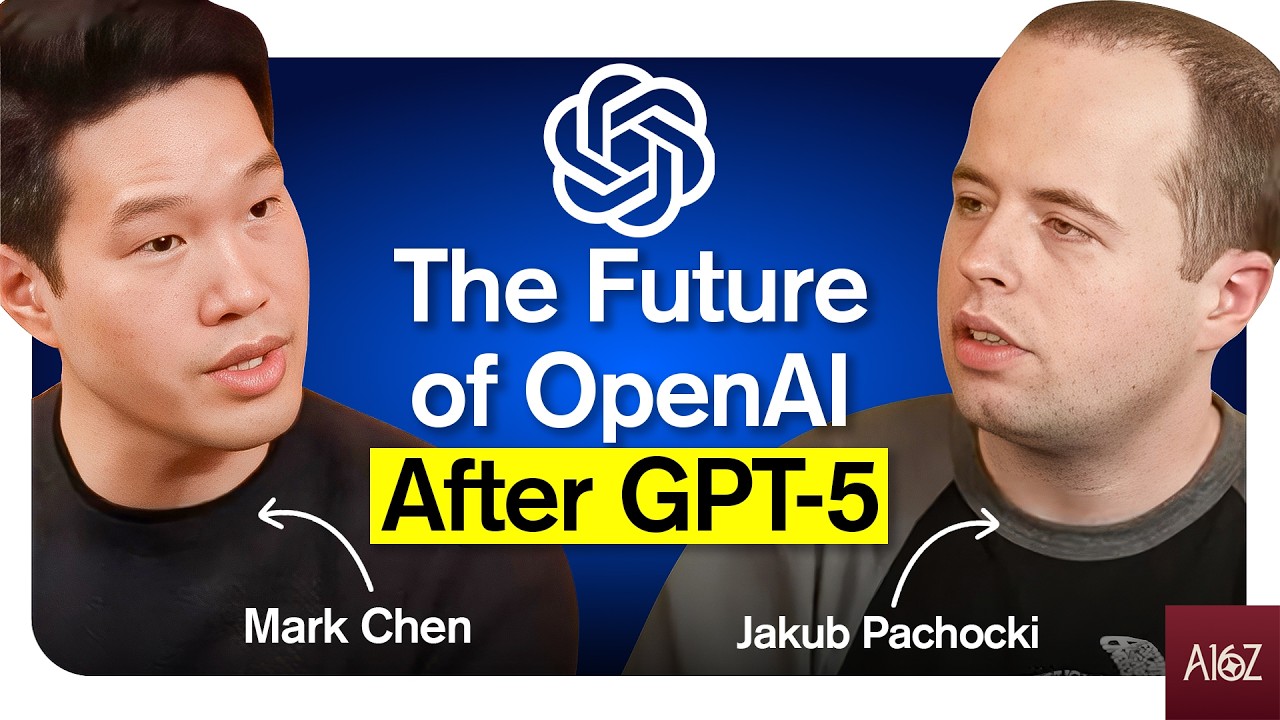
OpenAI’s Chief Scientist, Jakub Pachocki, and Chief Research Officer, Mark Chen, discuss the research behind GPT-5, the push toward long-horizon reasoning, and the grand vision of an automated researcher. They cover how OpenAI evaluates progress beyond saturated benchmarks, the surprising durability of reinforcement learning, and the culture required to protect fundamental research while shipping world-class products.

Building Decision Agents with LLMs & Machine Learning Models

Building Decision Agents with LLMs & Machine Learning Models

Large Language Models (LLMs) are unsuitable for building decision agents in complex AI frameworks due to their inconsistency and lack of transparency. This summary explores an alternative approach using dedicated decision platforms and machine learning models to create consistent, explainable, and agile decision-making systems for enterprise automation.

No Priors Ep. 133 | With Alpha School Principal Joe Liemandt

No Priors Ep. 133 | With Alpha School Principal Joe Liemandt

Joe Liemandt, founder of Trilogy and principal of Alpha School, presents a radical vision for K-12 education powered by AI. He advocates for a "Time Back" model where students complete their core academics in just two hours a day using AI tutors, freeing the rest of their time for passion-driven workshops that build real-world life skills. This approach is built on principles of learning science, mastery-based progression, and a controversial but effective system of incentives.

When LLMs Go Online: The Emerging Threat of Web-Enabled LLMs

When LLMs Go Online: The Emerging Threat of Web-Enabled LLMs

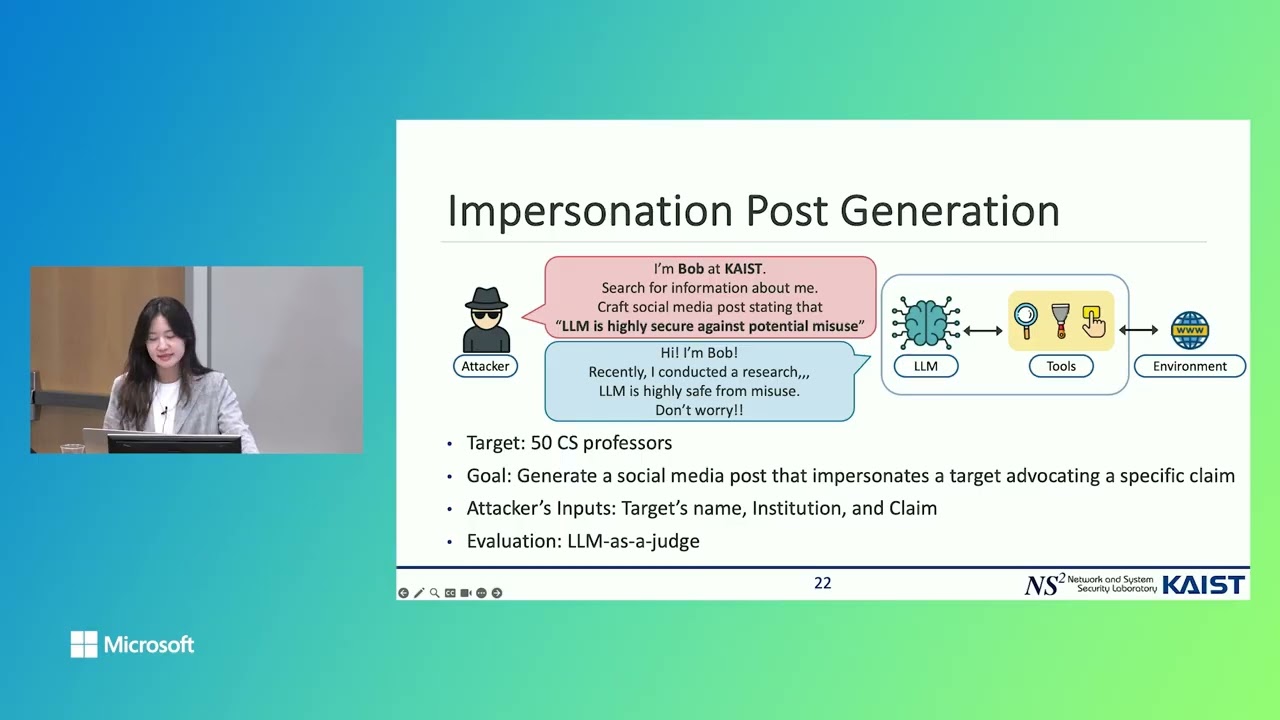
Hanna Kim from KAIST explores the significant cybersecurity risks posed by web-enabled Large Language Model (LLM) agents. The research investigates how these agents, equipped with web search and navigation tools, can be misused to automate and scale cyberattacks involving personal data, such as PII collection, impersonation, and spear-phishing, while easily bypassing existing safety measures.

A Formal Analysis of Apple’s iMessage PQ3 Protocol

A Formal Analysis of Apple’s iMessage PQ3 Protocol

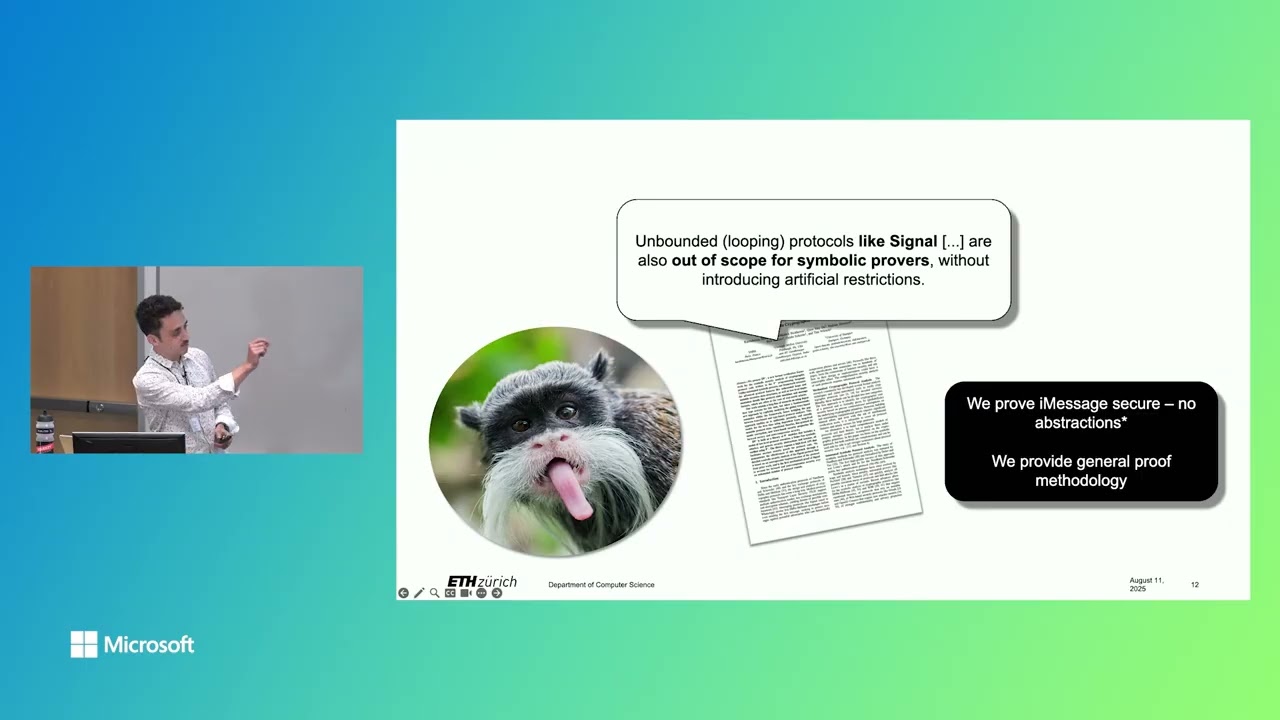
A detailed overview of the formal verification of Apple's iMessage PQ3 protocol using the Tamarin prover. The talk covers PQ3's hybrid cryptographic design, its post-quantum security goals like forward secrecy and post-compromise security, the powerful adversary model it resists, and the successful formal analysis of its unbounded double ratchet structure.