Posts

The State of Frontier Post-Training Recipes | Conversation with Finbarr Timbers

The State of Frontier Post-Training Recipes | Conversation with Finbarr Timbers

This discussion with Finbarr Timbers reviews the evolution of frontier post-training recipes, highlighting the shift from simpler SFT-DPO-RL to complex multi-teacher on-policy distillation (MOPD). It covers the organizational challenges of building models like Olmo, the rise of synthetic data and reasoning-focused RL in DeepSeek, and the complexities of integrating expert teachers, while also exploring open questions on environments, specialized APIs, and career strategies in the rapidly changing AI landscape.
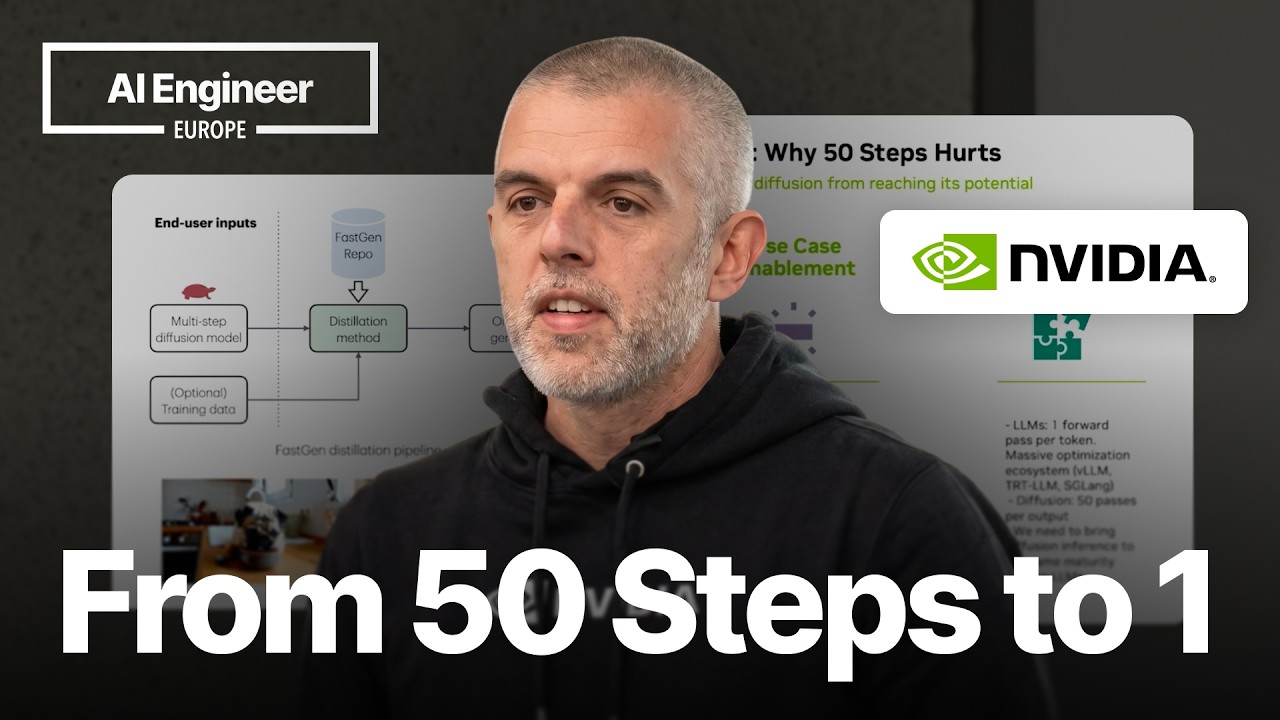
You Might Not Need 50 Diffusion Steps — Ziv Ilan, Nvidia

You Might Not Need 50 Diffusion Steps — Ziv Ilan, Nvidia

Ziv Ilan from NVIDIA details how latency in video diffusion models can be drastically reduced to achieve real-time generation. He presents a layered approach combining dynamic quantization for memory and speed, chunk-based caching to skip redundant denoising computations, and, most critically, step distillation—training models to achieve high-quality output in significantly fewer steps. These techniques, packaged in the open-source FastGen repository, offer additive performance gains, enabling real-time video on a single Blackwell B200 GPU.

Simulating Humans at Scale: Simile's Joon Sung Park

Simulating Humans at Scale: Simile's Joon Sung Park

Joon Sung Park, founder and CEO of Simile and creator of Stanford's "Smallville" generative agents study, explains how Simile is building the "GPU of intelligence" to simulate human society, diverging from frontier models that act as the "CPU of intelligence." He details Simile's approach of grounding simulations with real human behavioral data, its diverse corporate applications, and its long-term vision to create a "CERN of human society" to solve fundamental societal challenges.

Context Engineering for Coding Agents

Context Engineering for Coding Agents

A deep dive into advanced engineering techniques for coding agents, focusing on effective context management in LLMs like Claude. The talk introduces a practical framework using a brain-inspired analogy, proposing a Markdown-based 'wiki' as a long-term memory system to augment the agent's limited context window. This approach is demonstrated through a real-world challenge of extracting structured data from technical drawings.

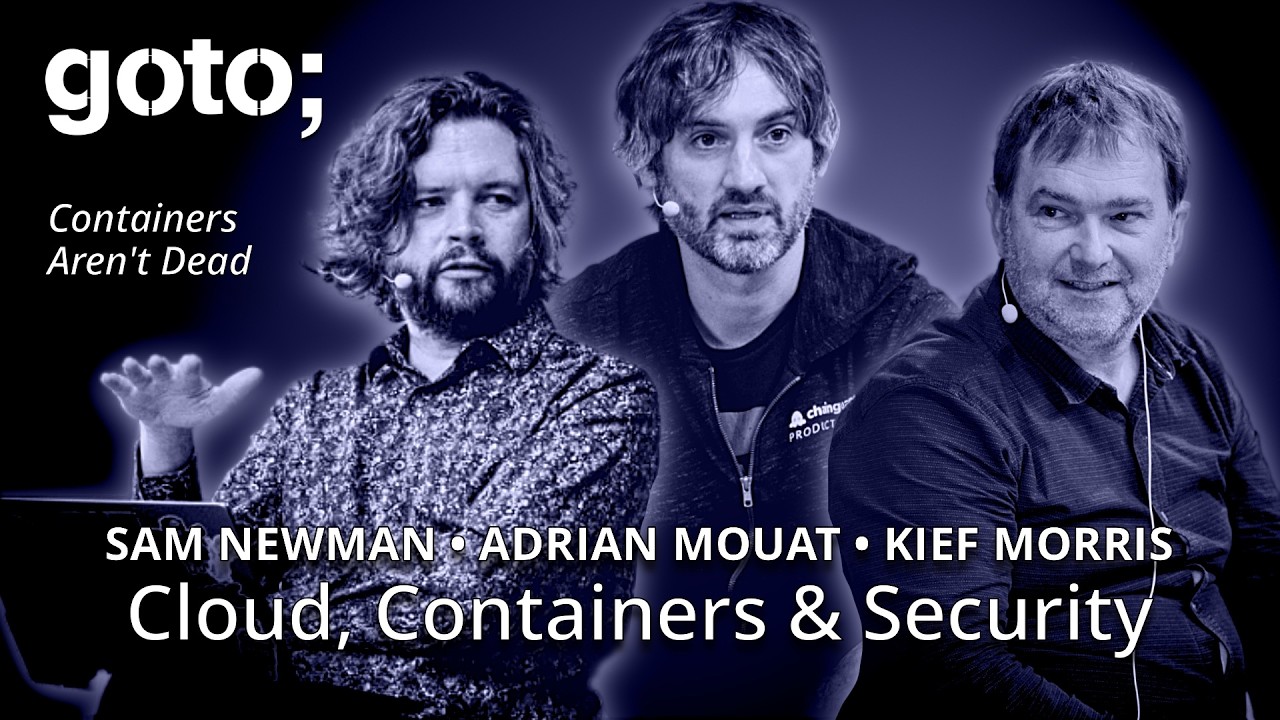
Cloud, Containers & Security • Adrian Mouat, Kief Morris & Sam Newman • GOTO 2025

Cloud, Containers & Security • Adrian Mouat, Kief Morris & Sam Newman • GOTO 2025

In this panel discussion, experts Adrian Mouat, Kief Morris, and Sam Newman delve into the current landscape of cloud technology, container security, and infrastructure automation. They cover key topics such as supply chain security with Sigstore and SBOMs, the practical impact of AI on deterministic systems, the ongoing debate about cloud repatriation, and advanced Infrastructure as Code practices like TDD and managing configuration drift.

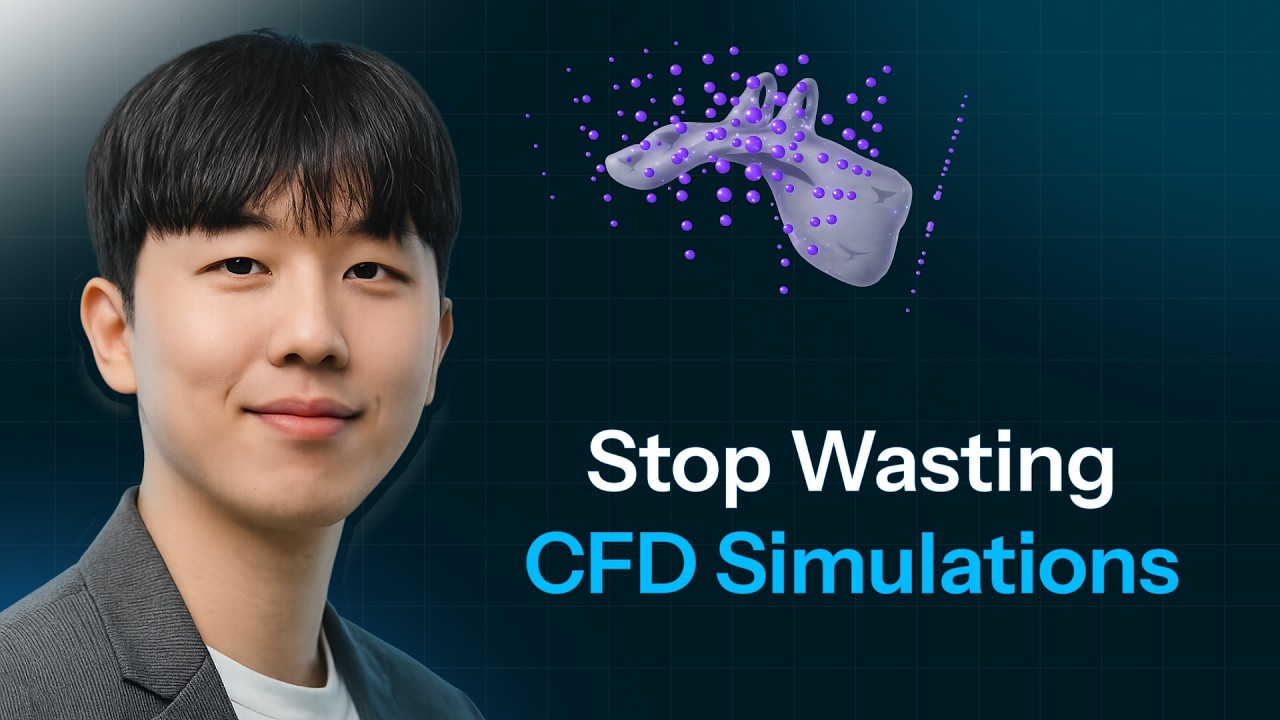
Uncertainty-Guided Data Augmentation for Engineers | Deep Dive - Yongmin Kwon

Uncertainty-Guided Data Augmentation for Engineers | Deep Dive - Yongmin Kwon

This session details a data-efficient method for training engineering surrogate models by using uncertainty quantification (UQ) to guide geometric data augmentation. Instead of random deformations, the approach lets the deep ensemble model identify its own knowledge gaps (epistemic uncertainty), then uses Free-Form Deformation (FFD) to generate new shapes specifically in those uncertain regions. This ensures every expensive simulation run yields maximally informative data, significantly improving model accuracy for a fixed computational budget across domains like structural mechanics and aerodynamics.