
Tokenless

Machine Learning

View All
Post-training best-in-class models in 2025

Post-training best-in-class models in 2025

An expert overview of post-training techniques for language models, covering the entire workflow from data generation and curation to advanced algorithms like Supervised Fine-Tuning (SFT), Direct Preference Optimization (DPO), and Reinforcement Learning (RL), along with practical advice on evaluation and iteration.
Anaximander: Interactive Orchestration and Evaluation of Geospatial Foundation Models

Anaximander: Interactive Orchestration and Evaluation of Geospatial Foundation Models

This talk introduces Anaximander, a system designed to bridge the gap between traditional, GUI-driven Geographic Information System (GIS) workflows and modern, code-heavy machine learning practices. Anaximander integrates geospatial foundation models directly into QGIS, allowing experts to interactively orchestrate, run, and evaluate models for tasks like semantic segmentation and object detection on satellite imagery.

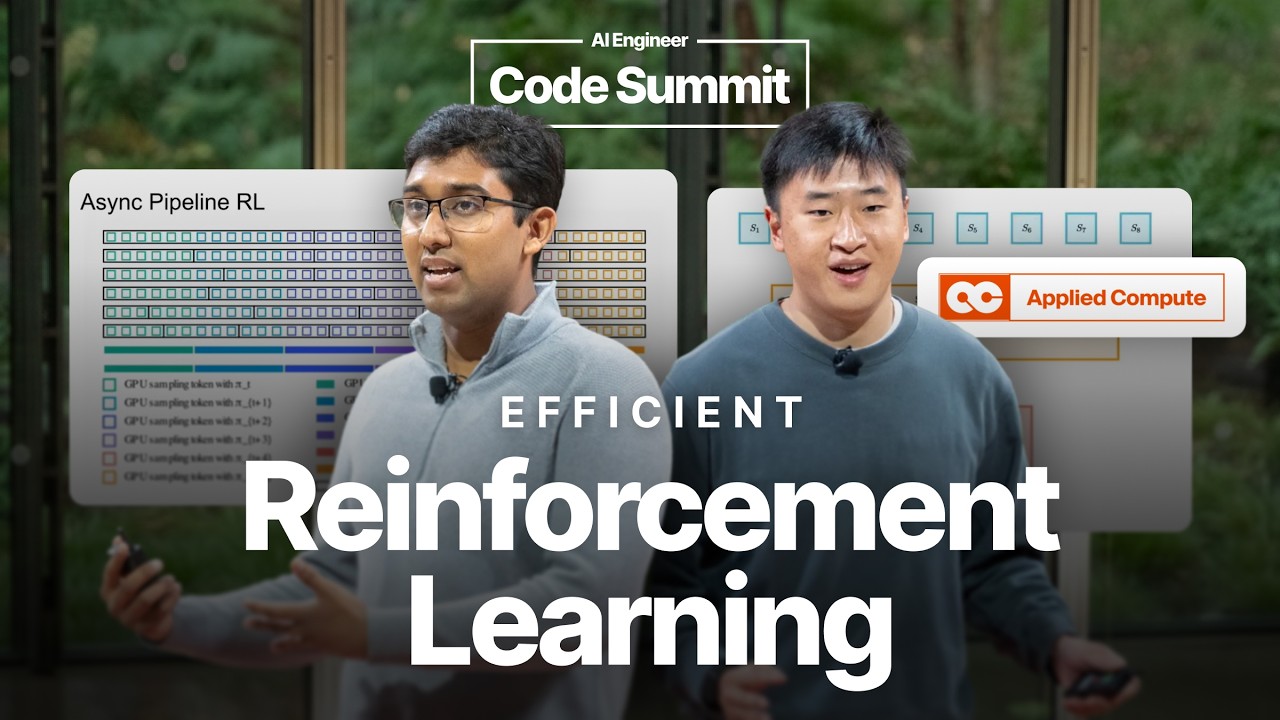
Efficient Reinforcement Learning – Rhythm Garg & Linden Li, Applied Compute

Efficient Reinforcement Learning – Rhythm Garg & Linden Li, Applied Compute

At Applied Compute, efficient Reinforcement Learning is critical for delivering business value. This talk explores the transition from inefficient synchronous RL to a high-throughput asynchronous 'Pipeline RL' system. The core challenge is managing 'staleness'—a side effect of in-flight weight updates that can destabilize training. The speakers detail their first-principles systems model, based on the Roofline model, used to simulate and find the optimal allocation of GPU resources between sampling and training, balancing throughput with algorithmic stability and achieving significant speedups.

Artificial Intelligence

View All
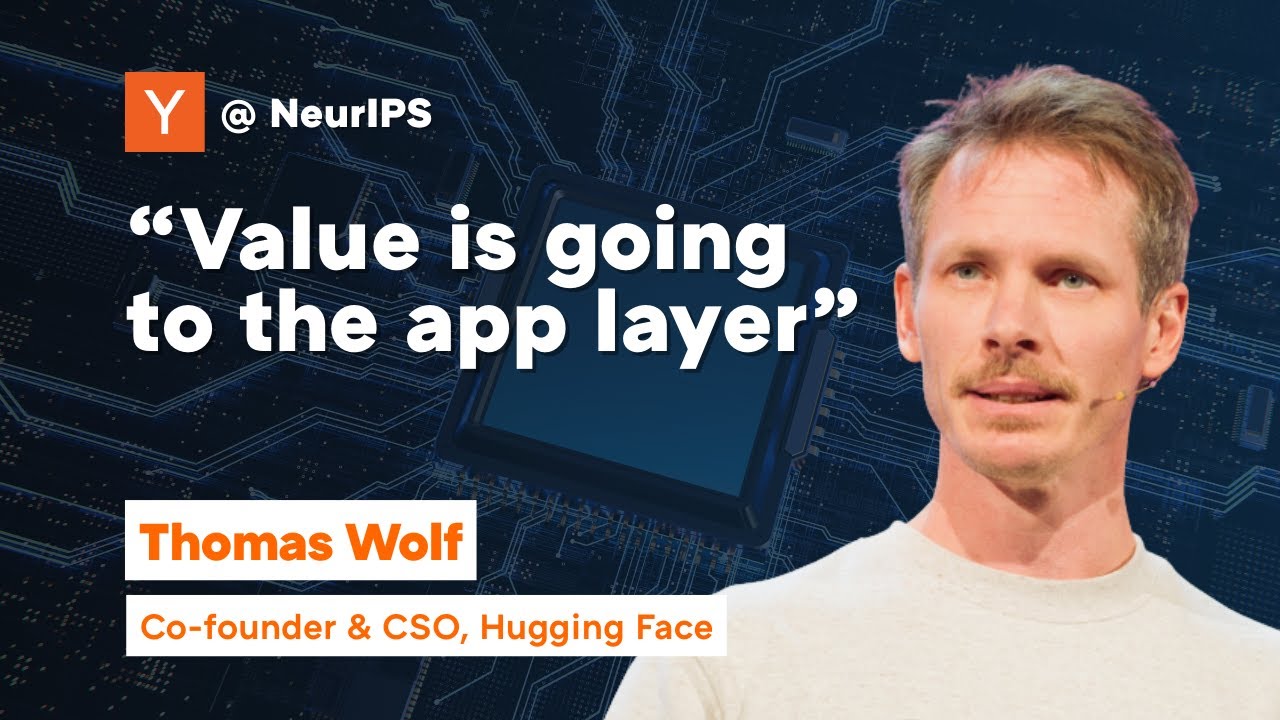
Lessons from Building Open Source Libraries

Lessons from Building Open Source Libraries

Thomas Wolf, co-founder of Hugging Face, discusses his journey from physics to AI, the power of open-source models to accelerate innovation, the practical challenges of productionalizing AI demos, and why the biggest opportunities for founders now lie in the application layer on top of powerful foundation models.

Modernizing Manufacturing: AI + Robots + Humans | Daren Fields | Founder & CEO | Virtual Select | 4K

Modernizing Manufacturing: AI + Robots + Humans | Daren Fields | Founder & CEO | Virtual Select | 4K

Daren Fields, Co-Founder & CEO of Virtual Select, discusses the future of manufacturing, emphasizing the role of AI as a tool for human augmentation, not replacement. He explores how to modernize manufacturing by combining a carbon-based workforce with silicon-based systems to prevent defects, reduce costs, and de-risk execution.

Claude Cowork analysis & Apple picks Gemini

Claude Cowork analysis & Apple picks Gemini

The panel discusses Anthropic's Claude Cowork and the challenge of user trust in AI agents for everyday tasks. They then analyze the Apple-Google partnership to integrate Gemini into Siri, debating its implications for edge AI, privacy, and hardware limitations. Finally, they explore Linus Torvalds' use of AI for "vibe coding," considering its impact on hobbyist programming and entrepreneurship versus the current limitations in producing production-ready software.

Technology

View All
Ethical Hacking War Stories: Zero Trust, IAM & Advanced C2 Tactics

Ethical Hacking War Stories: Zero Trust, IAM & Advanced C2 Tactics

Jeff Crume and Patrick Fussell from IBM's X-Force team share a real-world ethical hacking war story, demonstrating an attack from an 'assume breach' perspective. They break down how vulnerabilities in Identity and Access Management (IAM) and legacy systems can lead to a full compromise, starting from an insider threat and escalating to domain administrator privileges through advanced C2 attacks and lateral movement.

Palo Alto Networks CEO Nikesh Arora on the Virtues of Being an Outsider

Palo Alto Networks CEO Nikesh Arora on the Virtues of Being an Outsider

Nikesh Arora, CEO of Palo Alto Networks, shares his unconventional journey and leadership philosophy. He provides a masterclass in building a multi-platform company through strategic M&A, explains why founders should sometimes ignore customers, and reveals how to lead with conviction while managing imposter syndrome.

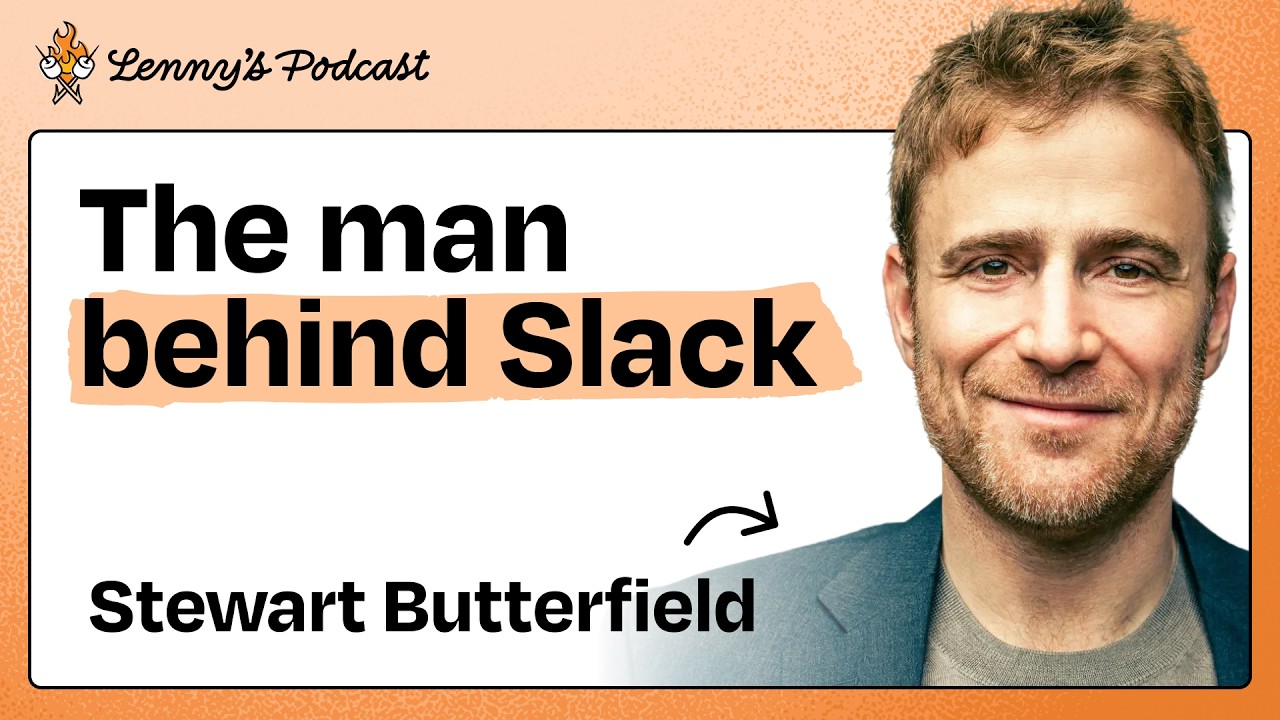
Mental models for building products people love ft. Stewart Butterfield

Mental models for building products people love ft. Stewart Butterfield

Stewart Butterfield, co-founder of Slack and Flickr, shares the product frameworks and leadership principles that guided his success. He delves into concepts like "utility curves" for feature investment, the "owner's delusion" in product design, and why focusing on "comprehension" is often more important than reducing friction. He also introduces powerful mental models for organizational effectiveness, such as combating "hyper-realistic work-like activities" and applying Parkinson's Law to team growth.


Recent Post

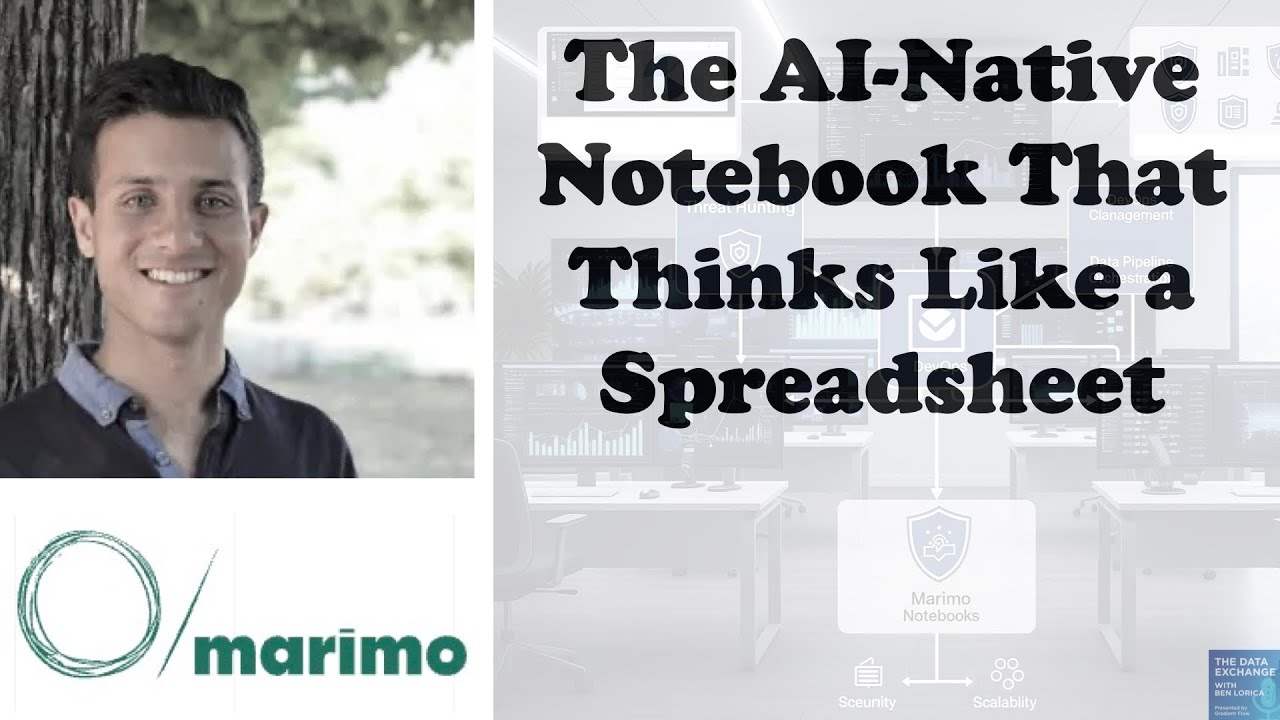
The AI-Native Notebook That Thinks Like a Spreadsheet

The AI-Native Notebook That Thinks Like a Spreadsheet

Akshay Agrawal, CEO of Marimo, discusses how Marimo addresses the critical flaws of traditional notebooks like Jupyter. He explains its reactive architecture, the benefits of storing notebooks as pure Python files for version control and reusability, and its AI-native features that leverage runtime context for more intelligent LLM-assisted coding.

Gpt-oss, Genie 3, Personal Superintelligence and Claude pricing

Gpt-oss, Genie 3, Personal Superintelligence and Claude pricing

The panel discusses OpenAI's strategic release of open-weight models (`gpt-oss`), the implications of Google DeepMind's immersive 3D world generator (`Genie 3`), the economic realities behind Anthropic's `Claude Code` rate-limiting, and the competing visions of "Personal Superintelligence" from major players like Meta, OpenAI, and Anthropic.

How to look at your data — Jeff Huber (Choma) + Jason Liu (567)

How to look at your data — Jeff Huber (Choma) + Jason Liu (567)

A detailed summary of a talk by Jeff Huber (Chroma) and Jason Liu on systematically improving AI applications. The talk covers using fast, inexpensive evaluations for retrieval systems (inputs) and applying structured data analysis and clustering to conversational logs (outputs) to derive actionable product insights.

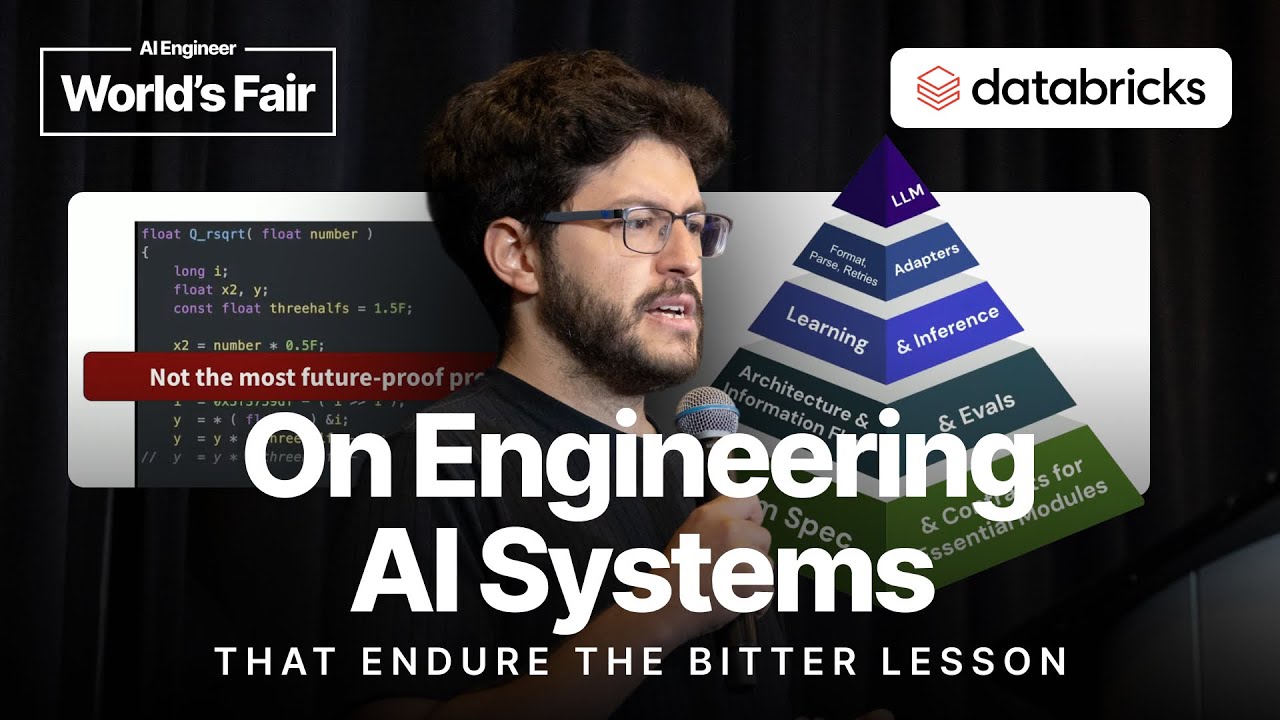
On Engineering AI Systems that Endure The Bitter Lesson - Omar Khattab, DSPy & Databricks

On Engineering AI Systems that Endure The Bitter Lesson - Omar Khattab, DSPy & Databricks

Omar Khattab, creator of DSPy, reinterprets the 'Bitter Lesson' for AI engineering, arguing that the key to building robust and enduring AI systems is to move beyond brittle prompt engineering. He advocates for a declarative, modular approach that separates the fundamental program logic from the rapidly changing landscape of LLMs, optimizers, and inference techniques.

Evals Are Not Unit Tests — Ido Pesok, Vercel v0

Evals Are Not Unit Tests — Ido Pesok, Vercel v0

Ido Pesok from Vercel explains why LLM-based applications often fail in production despite successful demos, and presents a systematic framework for building reliable AI systems using application-layer evaluations ("evals").

2025 is the Year of Evals! Just like 2024, and 2023, and … — John Dickerson, CEO Mozilla AI

2025 is the Year of Evals! Just like 2024, and 2023, and … — John Dickerson, CEO Mozilla AI

A deep dive into why 2025 is poised to be the 'Year of Evals' for AI. The speaker argues that a confluence of factors—the C-suite's post-ChatGPT awakening, budget dynamics, and the rise of autonomous agentic systems—has finally made AI evaluation a critical, top-of-mind issue for enterprise leaders.

Stay In The Loop! Subscribe to Our Newsletter.

Get updates straight to your inbox. No spam, just useful content.