Tokenless

How to Make AI Forget

Machine Learning

View All
Post-training best-in-class models in 2025

Post-training best-in-class models in 2025

An expert overview of post-training techniques for language models, covering the entire workflow from data generation and curation to advanced algorithms like Supervised Fine-Tuning (SFT), Direct Preference Optimization (DPO), and Reinforcement Learning (RL), along with practical advice on evaluation and iteration.
Anaximander: Interactive Orchestration and Evaluation of Geospatial Foundation Models

Anaximander: Interactive Orchestration and Evaluation of Geospatial Foundation Models

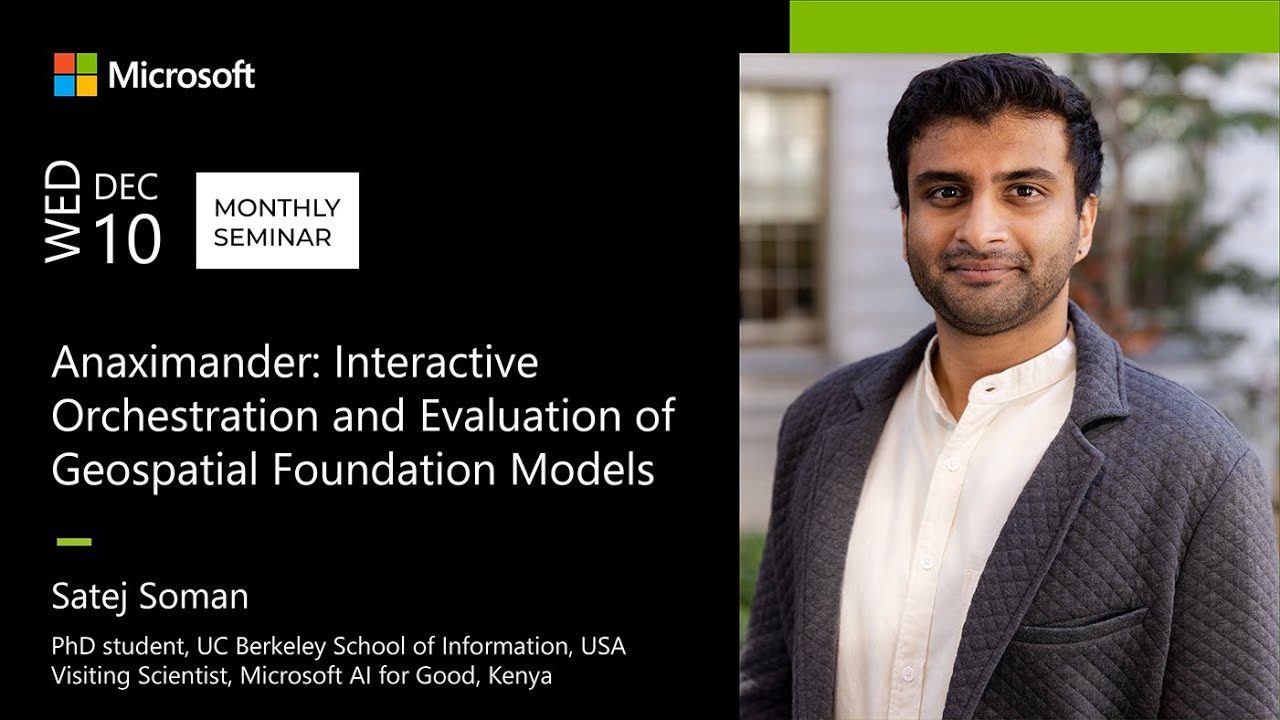
This talk introduces Anaximander, a system designed to bridge the gap between traditional, GUI-driven Geographic Information System (GIS) workflows and modern, code-heavy machine learning practices. Anaximander integrates geospatial foundation models directly into QGIS, allowing experts to interactively orchestrate, run, and evaluate models for tasks like semantic segmentation and object detection on satellite imagery.

Efficient Reinforcement Learning – Rhythm Garg & Linden Li, Applied Compute

Efficient Reinforcement Learning – Rhythm Garg & Linden Li, Applied Compute

At Applied Compute, efficient Reinforcement Learning is critical for delivering business value. This talk explores the transition from inefficient synchronous RL to a high-throughput asynchronous 'Pipeline RL' system. The core challenge is managing 'staleness'—a side effect of in-flight weight updates that can destabilize training. The speakers detail their first-principles systems model, based on the Roofline model, used to simulate and find the optimal allocation of GPU resources between sampling and training, balancing throughput with algorithmic stability and achieving significant speedups.

Artificial Intelligence

View All
Ben & Marc: Why Everything Is About to Get 10x Bigger

Ben & Marc: Why Everything Is About to Get 10x Bigger

a16z co-founders Marc Andreessen and Ben Horowitz discuss the shift to a decentralized media ecosystem, their investment thesis on supply-driven markets, and the transformative impact of AI. They detail the a16z model of leveraging reputation as a core asset to turn inventors into CEOs and explain why AI represents a fundamental reinvention of computing that will unlock unprecedented growth.

How to Make AI Forget

How to Make AI Forget

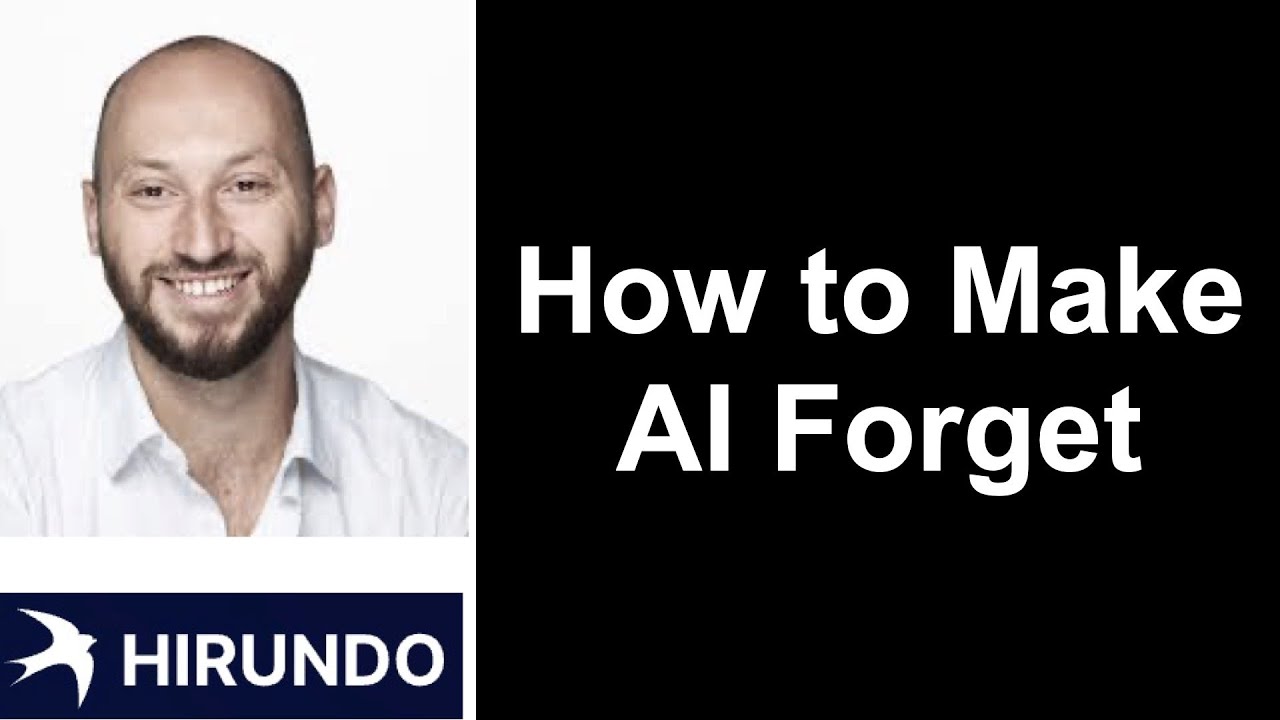
Ben Luria, CEO of Hirundo, discusses the critical need for machine unlearning, framing it as a form of "AI neuro-surgery" for enterprise AI. He explains how this technique directly modifies model weights to remove unwanted data and behaviors, addressing core risks that superficial solutions like guardrails cannot solve.

What are State Space Models? Redefining AI & Machine Learning with Data

What are State Space Models? Redefining AI & Machine Learning with Data

State Space Models (SSMs) are emerging as a powerful and efficient alternative to Transformers for handling sequential data. Aaron Baughman explains the core concepts of SSMs, their mathematical foundations, and how architectures like S4 and Mamba address the memory and scalability challenges inherent in Transformers, leading to a new generation of faster, more intelligent hybrid AI models.

Technology

View All
Palo Alto Networks CEO Nikesh Arora on the Virtues of Being an Outsider

Palo Alto Networks CEO Nikesh Arora on the Virtues of Being an Outsider

Nikesh Arora, CEO of Palo Alto Networks, shares his unconventional journey and leadership philosophy. He provides a masterclass in building a multi-platform company through strategic M&A, explains why founders should sometimes ignore customers, and reveals how to lead with conviction while managing imposter syndrome.

Mental models for building products people love ft. Stewart Butterfield

Mental models for building products people love ft. Stewart Butterfield

Stewart Butterfield, co-founder of Slack and Flickr, shares the product frameworks and leadership principles that guided his success. He delves into concepts like "utility curves" for feature investment, the "owner's delusion" in product design, and why focusing on "comprehension" is often more important than reducing friction. He also introduces powerful mental models for organizational effectiveness, such as combating "hyper-realistic work-like activities" and applying Parkinson's Law to team growth.

Intuit CEO Sasan Goodarzi’s Grown-Up CEO Playbook

Intuit CEO Sasan Goodarzi’s Grown-Up CEO Playbook

Intuit CEO Sasan Goodarzi discusses the operational playbook for reinventing a 40-year-old company, from its slow transition to SaaS to its early adoption of AI. He shares insights on winning the SMB market by treating small businesses like consumers, building effective channel partnerships, and developing a platform strategy. Goodarzi also details his leadership philosophy, emphasizing that grit and curiosity are more critical than raw talent.


Recent Post

Predictability Beats Accuracy in Enterprise AI

Predictability Beats Accuracy in Enterprise AI

Anant Bhardwaj, CEO of Instabase, presents a pragmatic guide for building enterprise AI. He argues that AI agents are best used during the 'design-time' to create predictable workflows, rather than for autonomous 'runtime' operations. Bhardwaj also debunks the hype around RAG, highlighting its dependency on data quality, and explains why trust in AI systems stems from predictability, not just accuracy.

No Priors Ep. 130 | With OpenEvidence Founder Daniel Nadler

No Priors Ep. 130 | With OpenEvidence Founder Daniel Nadler

Daniel Nadler, founder of OpenEvidence, discusses the platform's rapid adoption by 40% of US physicians. He explains how OpenEvidence solves the semantic search problem in high-stakes clinical decision-making, its growth strategy of treating doctors as consumers, and how AI will reshape medical education and the role of the physician.

Catastrophic agent failure and how to avoid it // Edward Upton // Agents in Production 2025

Catastrophic agent failure and how to avoid it // Edward Upton // Agents in Production 2025

Edward, a founding engineer at Asteroid, discusses the critical challenge of managing catastrophic failures in agentic browser solutions, particularly in high-stakes domains like healthcare and insurance. He shares real-world examples of agent failures and outlines a practical framework for building more reliable, predictable, and accountable agents by scoping their capabilities, implementing robust human-in-the-loop tooling, and employing independent evaluation systems.

Zero Trust for Multi-Agent Systems // Surendra Narang | Venkata Gopi Kolla

Zero Trust for Multi-Agent Systems // Surendra Narang | Venkata Gopi Kolla

Explore the security challenges of Multi-Agent Systems (MAS) and learn how to apply Zero Trust principles to mitigate risks like prompt injection, privilege escalation, and data leakage. This summary details a reference architecture and practical strategies for building secure, autonomous systems.

Jack Altman & Martin Casado on the Future of VC

Jack Altman & Martin Casado on the Future of VC

Martin Casado, General Partner at a16z, discusses the evolution of venture capital in the age of AI, covering the firm's shift to specialization, the critical value of AI infrastructure, the fierce competition for talent, and the strategic importance of media and open source.

Exa: Organizing the World’s Knowledge

Exa: Organizing the World’s Knowledge

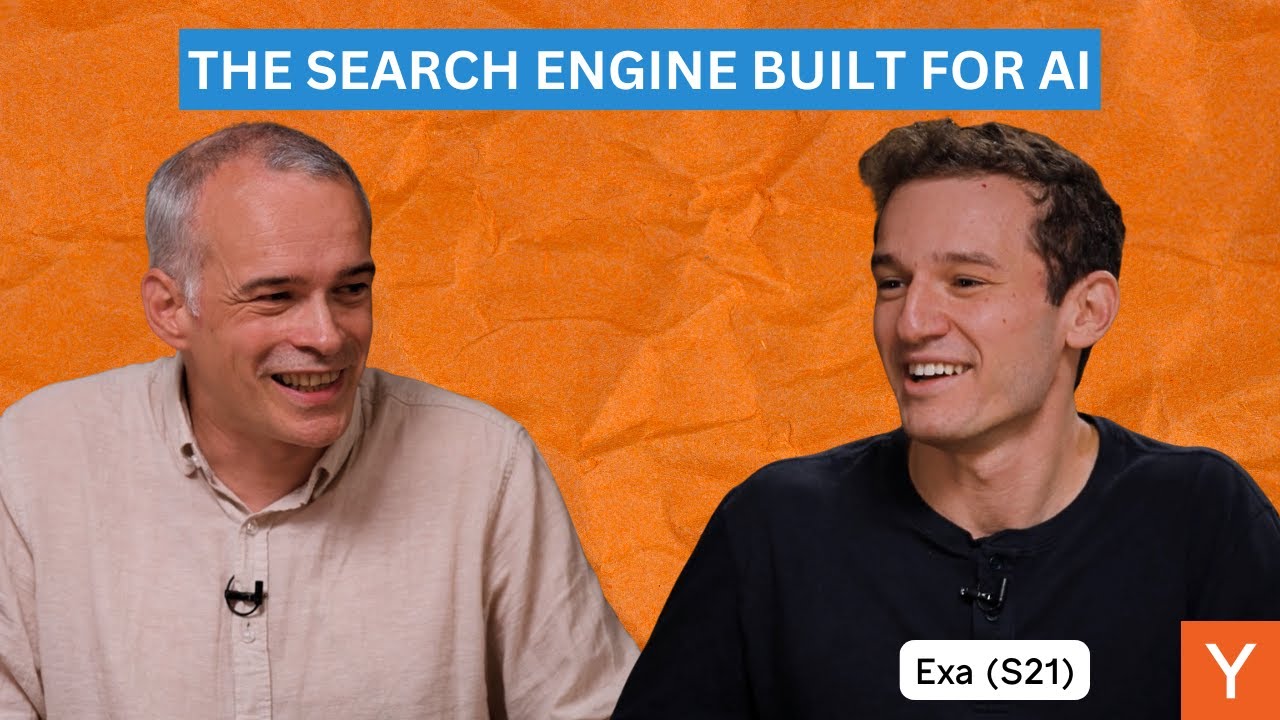
Will Bryk, co-founder and CEO of Exa, discusses the journey and technology behind building a search engine from scratch, specifically designed for AI systems. He explains why traditional search engines fail in an AI-first world and how Exa's full-stack, compute-heavy approach aims to solve the world's "information blocker" problems.

Stay In The Loop! Subscribe to Our Newsletter.

Get updates straight to your inbox. No spam, just useful content.