Tokenless

Machine Learning

View All
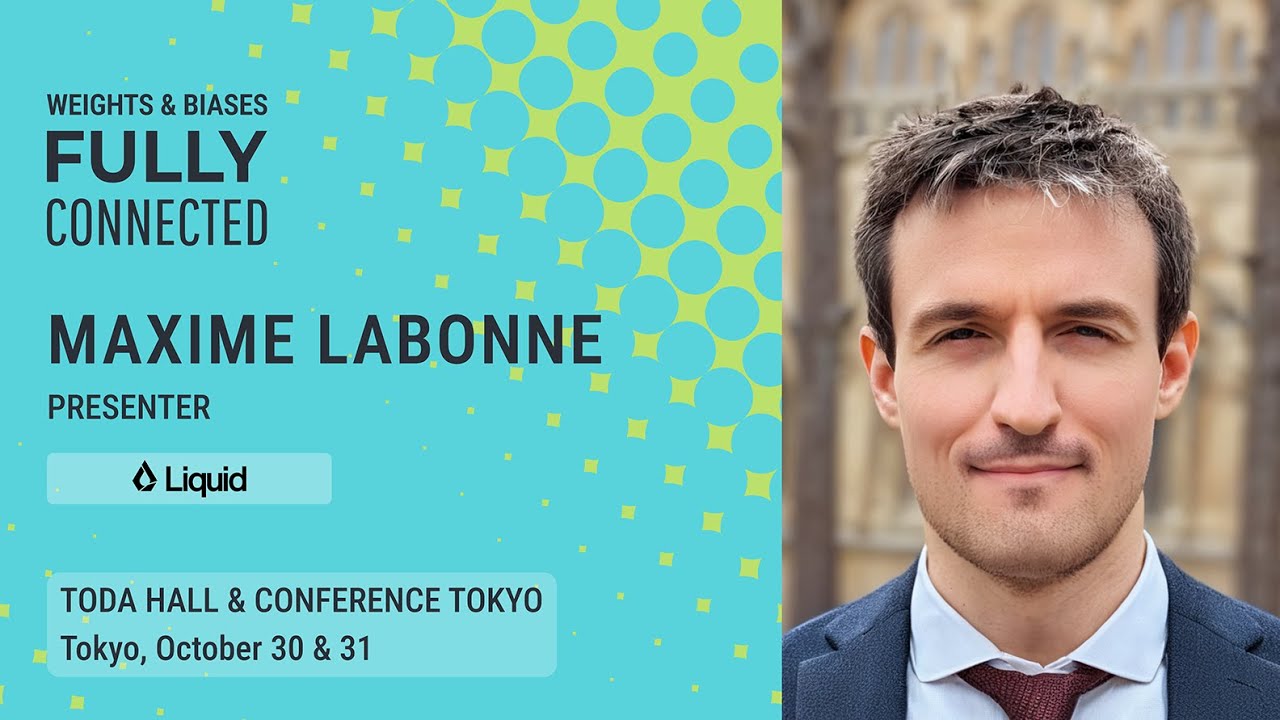
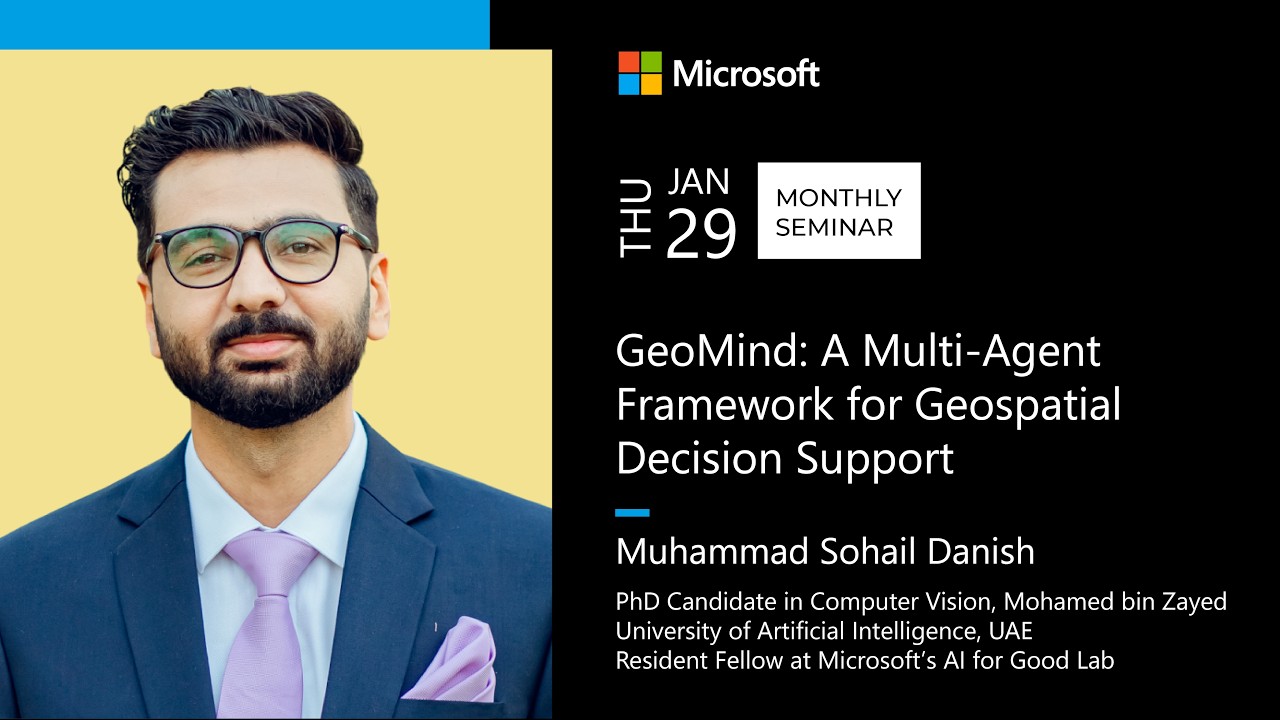
Anaximander: Interactive Orchestration and Evaluation of Geospatial Foundation Models

Anaximander: Interactive Orchestration and Evaluation of Geospatial Foundation Models

This talk introduces Anaximander, a system designed to bridge the gap between traditional, GUI-driven Geographic Information System (GIS) workflows and modern, code-heavy machine learning practices. Anaximander integrates geospatial foundation models directly into QGIS, allowing experts to interactively orchestrate, run, and evaluate models for tasks like semantic segmentation and object detection on satellite imagery.

Efficient Reinforcement Learning – Rhythm Garg & Linden Li, Applied Compute

Efficient Reinforcement Learning – Rhythm Garg & Linden Li, Applied Compute

At Applied Compute, efficient Reinforcement Learning is critical for delivering business value. This talk explores the transition from inefficient synchronous RL to a high-throughput asynchronous 'Pipeline RL' system. The core challenge is managing 'staleness'—a side effect of in-flight weight updates that can destabilize training. The speakers detail their first-principles systems model, based on the Roofline model, used to simulate and find the optimal allocation of GPU resources between sampling and training, balancing throughput with algorithmic stability and achieving significant speedups.

The GPU Uptime Battle

The GPU Uptime Battle

Andy Pernsteiner, Field CTO of VAST Data, discusses the immense challenges of transitioning AI projects from prototype to production. He highlights the critical role of data infrastructure, the high cost of GPU downtime, and the necessity of building resilient, scalable platforms that can withstand real-world failures like power outages in massive data centers. The conversation emphasizes a shift in mindset towards empathy, better requirement gathering, and closer collaboration between data scientists and platform engineers to bridge the gap between development and operations.

Artificial Intelligence

View All
NVIDIA’s Jensen Huang on Reasoning Models, Robotics, and Refuting the “AI Bubble” Narrative

NVIDIA’s Jensen Huang on Reasoning Models, Robotics, and Refuting the “AI Bubble” Narrative

NVIDIA CEO Jensen Huang discusses the state of AI as we begin 2026, covering rapid improvements in reasoning, the profitability of inference, why AI will increase productivity without taking jobs, the future of robotics, the importance of open source, and which sectors are poised for their 'ChatGPT moment'.

Building Agentic Tools for Production // Sam Partee

Building Agentic Tools for Production // Sam Partee

Sam Partee, CTO of Arcade AI, explains that building production-grade agentic systems requires moving beyond simple chatbots. He details the critical components for creating reliable, secure, and scalable tools, including rigorous schema management, the principle of least privilege, continuous evaluation, and a crucial distinction between 'exploratory' and 'operational' tools.

A new take on bug bounties, AI red teams and our New Year’s resolutions

A new take on bug bounties, AI red teams and our New Year’s resolutions

IBM's Security Intelligence podcast discusses key cybersecurity trends for 2026, including the shift to operational resilience, Microsoft's expanded bug bounty for third-party code, the long-tail impact of the LastPass breach, OpenAI's use of AI for automated red teaming against prompt injections, and the commercialization of ClickFix attacks.

Technology

View All
Palo Alto Networks CEO Nikesh Arora on the Virtues of Being an Outsider

Palo Alto Networks CEO Nikesh Arora on the Virtues of Being an Outsider

Nikesh Arora, CEO of Palo Alto Networks, shares his unconventional journey and leadership philosophy. He provides a masterclass in building a multi-platform company through strategic M&A, explains why founders should sometimes ignore customers, and reveals how to lead with conviction while managing imposter syndrome.

Mental models for building products people love ft. Stewart Butterfield

Mental models for building products people love ft. Stewart Butterfield

Stewart Butterfield, co-founder of Slack and Flickr, shares the product frameworks and leadership principles that guided his success. He delves into concepts like "utility curves" for feature investment, the "owner's delusion" in product design, and why focusing on "comprehension" is often more important than reducing friction. He also introduces powerful mental models for organizational effectiveness, such as combating "hyper-realistic work-like activities" and applying Parkinson's Law to team growth.

Intuit CEO Sasan Goodarzi’s Grown-Up CEO Playbook

Intuit CEO Sasan Goodarzi’s Grown-Up CEO Playbook

Intuit CEO Sasan Goodarzi discusses the operational playbook for reinventing a 40-year-old company, from its slow transition to SaaS to its early adoption of AI. He shares insights on winning the SMB market by treating small businesses like consumers, building effective channel partnerships, and developing a platform strategy. Goodarzi also details his leadership philosophy, emphasizing that grit and curiosity are more critical than raw talent.


Recent Post

The arrival of AGI | Shane Legg (co-founder of DeepMind)

The arrival of AGI | Shane Legg (co-founder of DeepMind)

Shane Legg, Chief AGI Scientist at Google DeepMind, outlines his framework for AGI, predicting 'minimal AGI' within years and 'full AGI' within a decade. He details a path to more reliable systems and introduces 'System 2 Safety' for building ethical AI. Legg issues an urgent call for society to prepare for the massive economic and structural transformations that advanced AI will inevitably bring.

The arrival of AGI | Shane Legg (co-founder of DeepMind)

The arrival of AGI | Shane Legg (co-founder of DeepMind)

Shane Legg, Chief AGI Scientist at Google DeepMind, outlines his framework for AGI levels, predicts a 50% chance of minimal AGI by 2028, and discusses the profound societal and economic transformations that will follow.

Efficient Reinforcement Learning – Rhythm Garg & Linden Li, Applied Compute

Efficient Reinforcement Learning – Rhythm Garg & Linden Li, Applied Compute

At Applied Compute, efficient Reinforcement Learning is critical for delivering business value. This talk explores the transition from inefficient synchronous RL to a high-throughput asynchronous 'Pipeline RL' system. The core challenge is managing 'staleness'—a side effect of in-flight weight updates that can destabilize training. The speakers detail their first-principles systems model, based on the Roofline model, used to simulate and find the optimal allocation of GPU resources between sampling and training, balancing throughput with algorithmic stability and achieving significant speedups.

Efficient Reinforcement Learning – Rhythm Garg & Linden Li, Applied Compute

Efficient Reinforcement Learning – Rhythm Garg & Linden Li, Applied Compute

A deep dive into the challenges and solutions for efficient Reinforcement Learning (RL) in enterprise settings. The talk contrasts synchronous and asynchronous RL, explains the critical trade-off of "staleness" versus stability, and details a first-principles system model used to optimize GPU allocation for maximum throughput.

Tensor Logic "Unifies" AI Paradigms [Pedro Domingos]

Tensor Logic "Unifies" AI Paradigms [Pedro Domingos]

Pedro Domingos introduces Tensor Logic, a new programming language designed to be the fundamental language for AI. It unifies the two major paradigms: the learning capabilities of deep learning (neural networks) and the transparent, verifiable reasoning of symbolic AI (logic programming), aiming to solve critical issues like hallucination and the opacity of current models.

Tensor Logic "Unifies" AI Paradigms [Pedro Domingos]

Tensor Logic "Unifies" AI Paradigms [Pedro Domingos]

Pedro Domingos introduces Tensor Logic, a new programming language designed to be the fundamental language for AI. It unifies the two major paradigms: the data-driven learning of deep learning and the verifiable reasoning of symbolic AI. By treating logical rules and tensor operations as the same underlying construct, Tensor Logic enables systems that can learn logical structures and perform transparent, deductive reasoning, directly addressing critical issues like model opacity and hallucination.

Stay In The Loop! Subscribe to Our Newsletter.

Get updates straight to your inbox. No spam, just useful content.