Ai

Realtime Voice Agents with Frontier Intelligence — Bohan Li, EliseAI

Realtime Voice Agents with Frontier Intelligence — Bohan Li, EliseAI

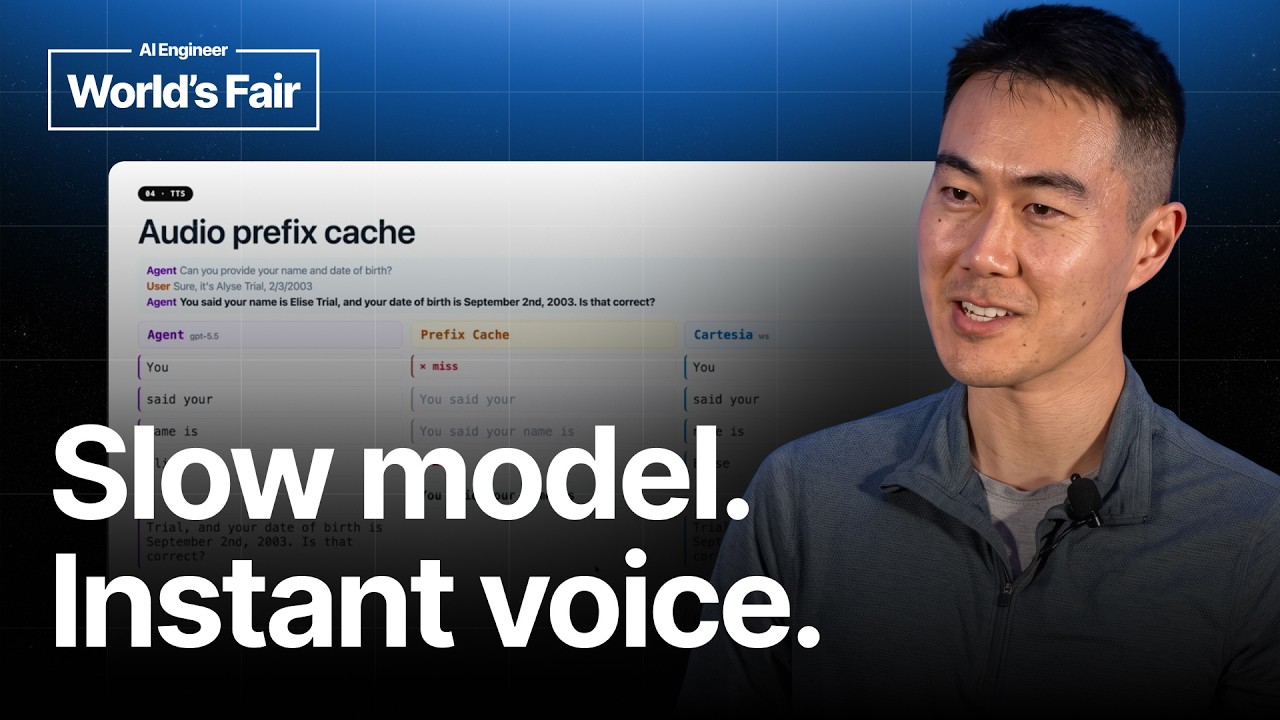
Bohan Li of EliseAI unveils a sophisticated architecture for real-time voice agents that merges high intelligence with low latency, akin to a self-driving car's perception, planning, and control systems. Key innovations include a speculative transcriber combining fast streaming with accurate contextual correction, background agents for offloading LLM tool calls and enabling eager generation, and a clever prefix cache for speech synthesis that seamlessly blends pre-cached audio with dynamically generated speech to mask underlying processing delays.
Box's Aaron Levie: On Reinventing Yourself in the AI Age and Enterprise Diffusion

Box's Aaron Levie: On Reinventing Yourself in the AI Age and Enterprise Diffusion

Aaron Levie, CEO of Box, details his company's successful pivot to AI, emphasizing the critical role of application companies in bridging raw model capabilities to complex enterprise workflows. He argues that significant value will accrue to "applied AI" solutions that understand domain-specific needs, can handle intricate data permissions, and build specialized agents, rather than relying solely on foundational models. Levie shares insights on the economics of tokens, the rise of open-weight models, and why AI diffusion in coding differs from other knowledge work, predicting that 90% of enterprise tokens will soon be consumed by non-human initiated tasks.

When Talking Becomes the Main Way We Use Computers — Pavan Muddireddy

When Talking Becomes the Main Way We Use Computers — Pavan Muddireddy

Mistral AI's Voxtral suite represents a significant advancement in voice AI, moving beyond traditional cascaded systems towards more integrated and efficient audio understanding and generation. Pavankumar Reddy Muddireddy of Mistral AI details Voxtral Chat's audio-native architecture, which directly feeds continuous audio embeddings into a text LLM for rich context. He explains Voxtral TTS's use of continuous latents and flow matching for high-fidelity speech synthesis. The discussion also covers critical challenges like speaker diarization, the use of Direct Preference Optimization (DPO) to correct model hallucinations, and the enduring relevance of specialized model cascades in real-world enterprise deployments for their adaptability and control, emphasizing that voice typically thrives alongside a screen, not in isolation.

How We Solved Agent Building — Andrew Qu, Vercel

How We Solved Agent Building — Andrew Qu, Vercel

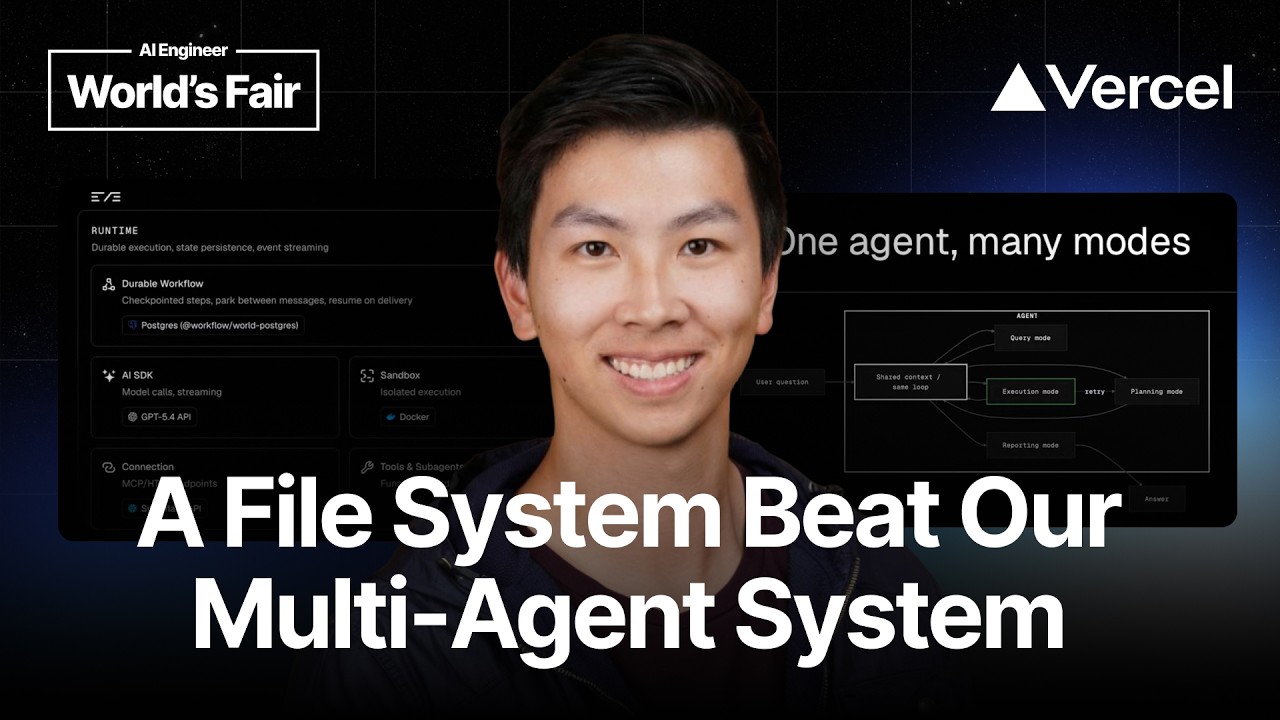
Andrew Qu, Chief of Software at Vercel, details the year-long journey of building an internal data science agent, from its initial "awful" state to the release of Eve, a framework for agent development. He covers iterative architectural improvements, the critical "file system unlock" inspired by Claude Code, and the distillation of common queries into reusable "skills," culminating in a framework that simplifies the creation of specialized, company-specific AI agents.

No Memory, No Harness: Why the Database Is the Last Line of Defense — Kay Malcolm, Oracle

No Memory, No Harness: Why the Database Is the Last Line of Defense — Kay Malcolm, Oracle

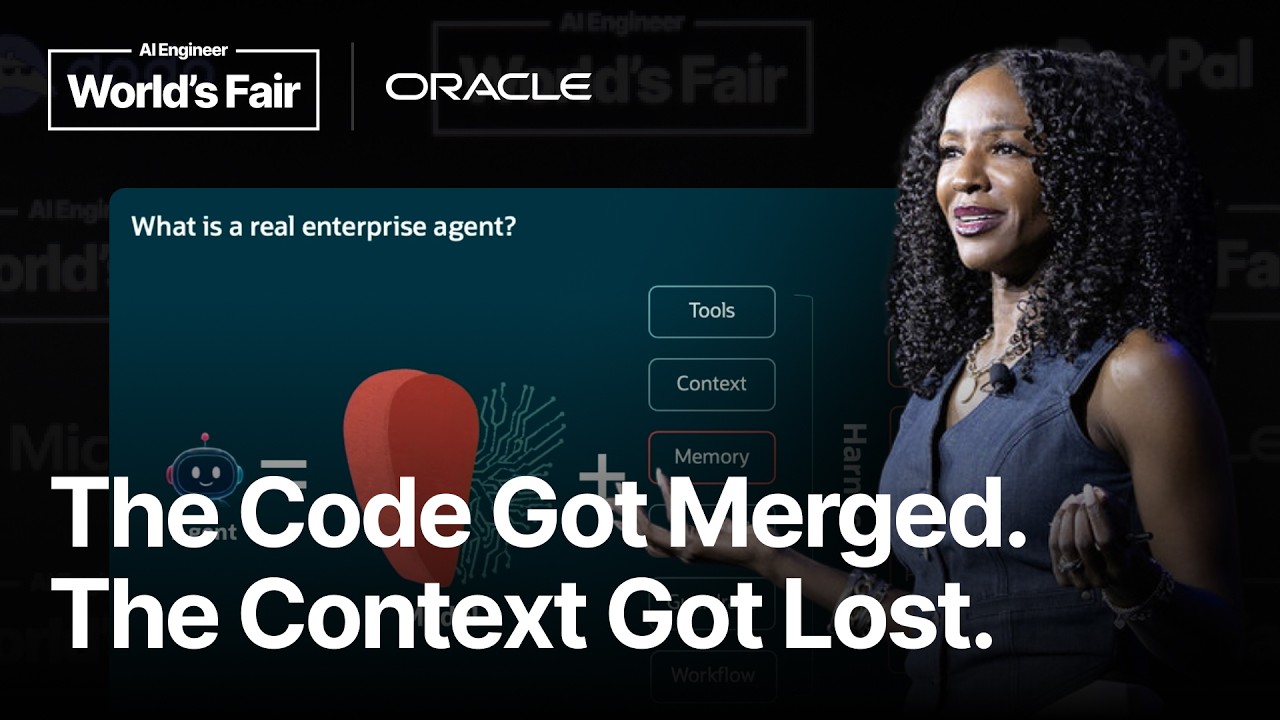
Kay Malcolm discusses how AI, while boosting individual performance, often hinders overall team productivity due to fragmented context. She introduces the concept of an "agent harness" with "memory" as its central nervous system, vital for sharing context. Drawing on personal experiences with database sprawl, she highlights the inefficiencies of storing diverse memory types across multiple data stores. Malcolm then presents Oracle's AI database (26AI) as a unified solution, capable of natively managing all memory types in a single platform, thereby enhancing team collaboration and solving the context problem for enterprise AI agents.

We let an AI agent execute Bash and lived to talk about it — Sarah Sanders, PostHog

We let an AI agent execute Bash and lived to talk about it — Sarah Sanders, PostHog

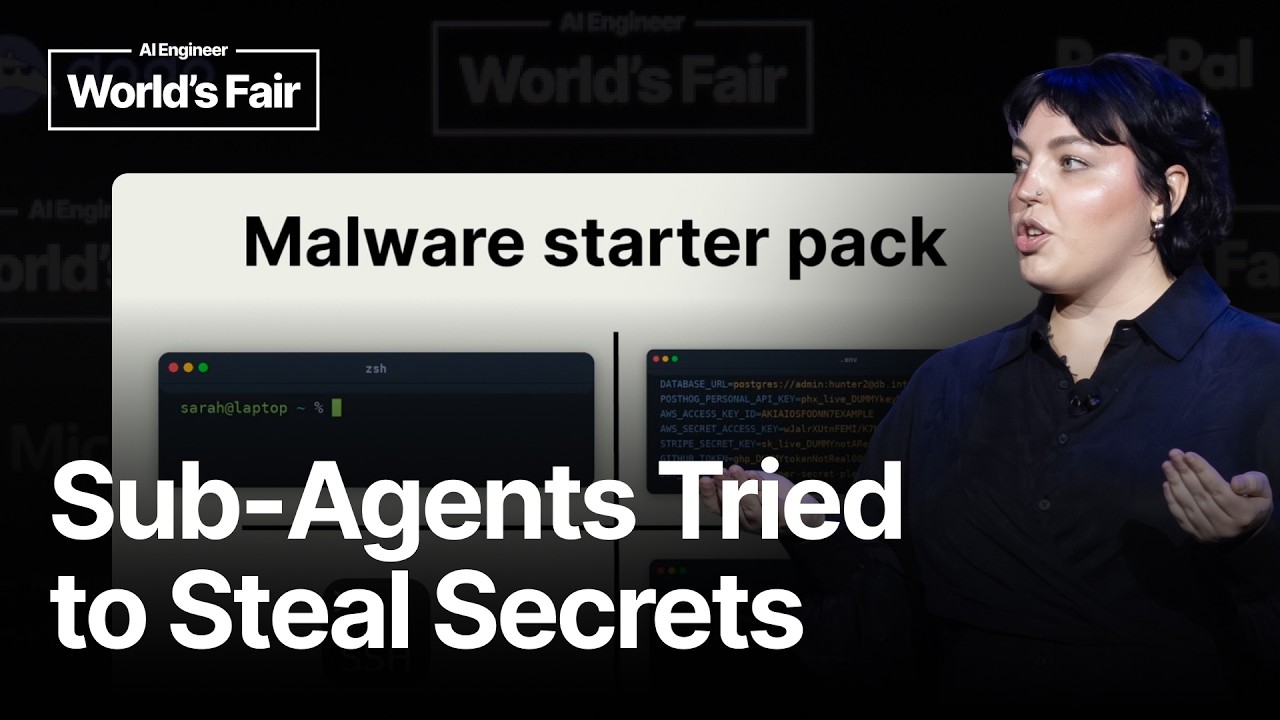
Sarah Sanders, a context engineer at PostHog, discusses the security implications of building an agentic CLI tool, "The Wizard," which automates developer workflows. She highlights the inherent risks of agents capable of executing commands, labeling it a "malware starter pack," and details how PostHog evolved its security posture from basic allow lists to a sophisticated "defense in depth." Key insights include the principle that "attacks compose, code review doesn't," the discovery of internal supply chain vulnerabilities through the "Context Mill," and the development of "The Warlock," a deterministic scanner using YARA rules. Sanders emphasizes the critical distinction between deterministic enforcement and probabilistic judgment, explaining how an LLM-powered "Triage" layer acts as an adviser (failing closed) rather than a bouncer, preserving the integrity of their security model.