Ai

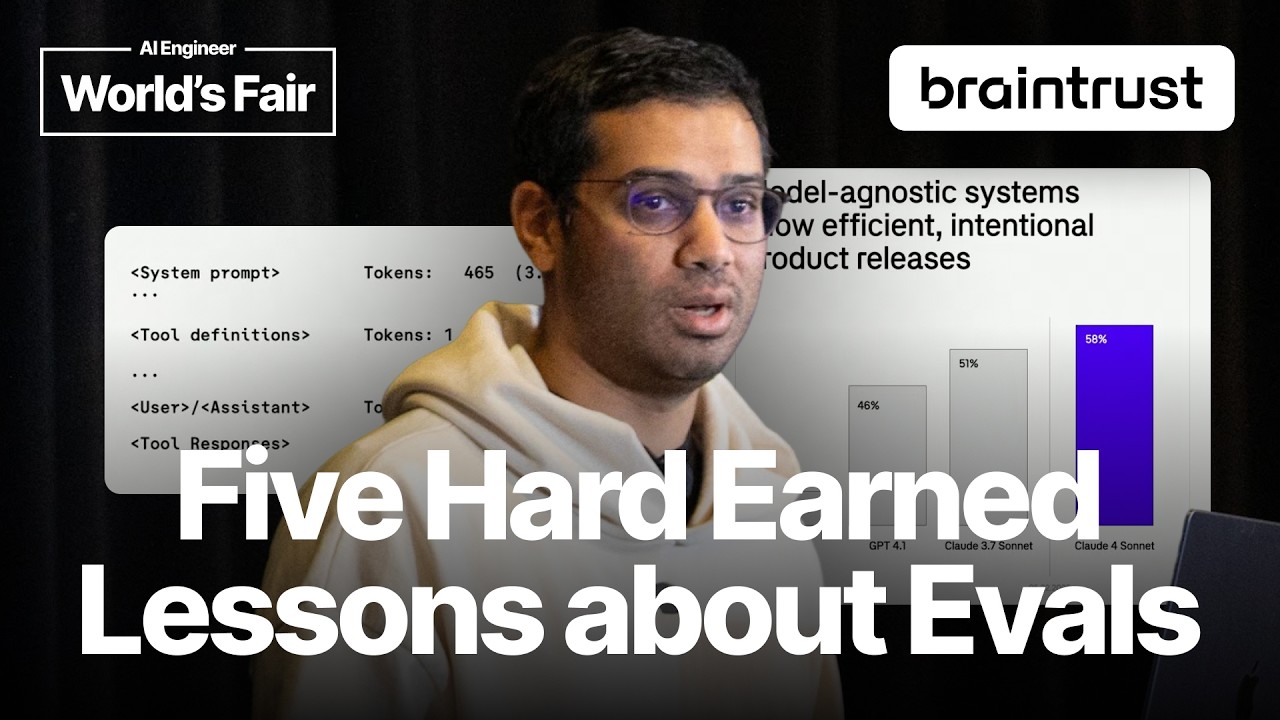
Five hard earned lessons about Evals — Ankur Goyal, Braintrust

Five hard earned lessons about Evals — Ankur Goyal, Braintrust

Building successful AI applications requires a sophisticated engineering approach that goes beyond prompt engineering. This involves creating intentionally engineered evaluations (evals) that reflect user feedback, focusing on "context engineering" to optimize tool definitions and outputs, and maintaining a flexible, model-agnostic architecture to adapt to the rapidly evolving AI landscape.
Perceptual Evaluations: Evals for Aesthetics — Diego Rodriguez, Krea.ai

Perceptual Evaluations: Evals for Aesthetics — Diego Rodriguez, Krea.ai

KREA.ai's cofounder Diego Rodriguez discusses the critical failure of current AI evaluation metrics in understanding human perception and aesthetics, advocating for a new paradigm of personalized, perceptually-aware evals.

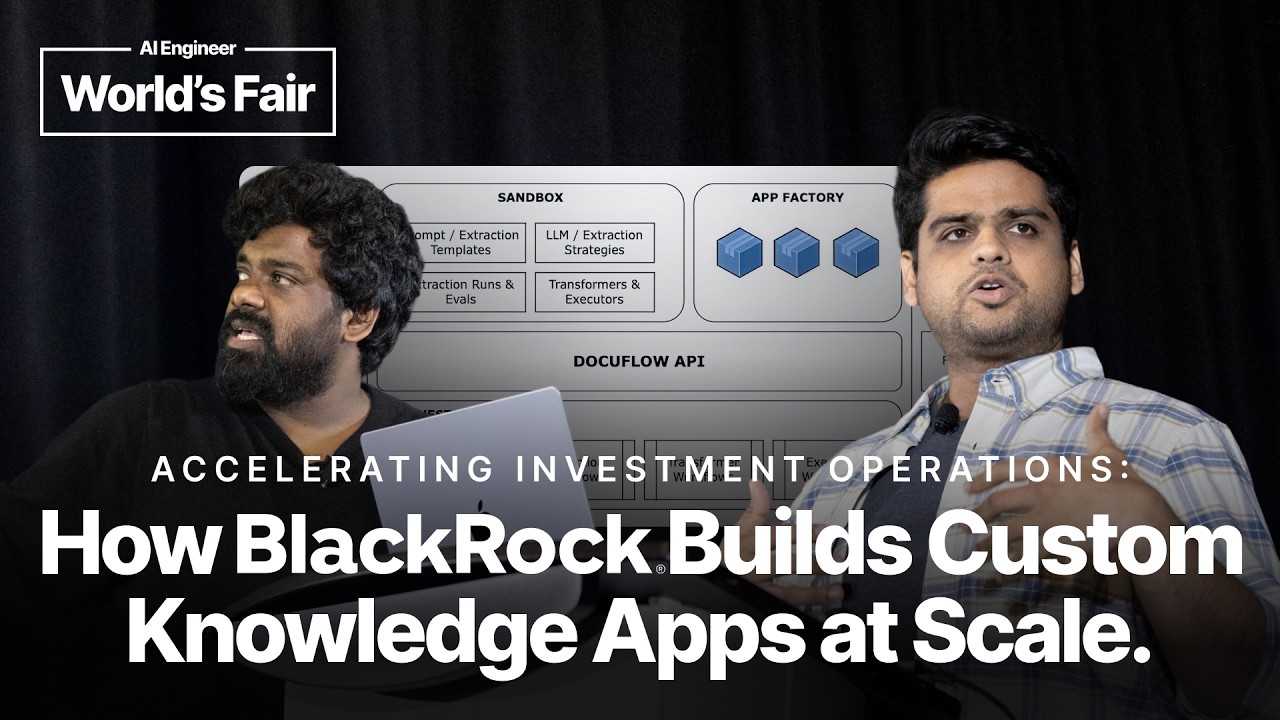
How BlackRock Builds Custom Knowledge Apps at Scale — Vaibhav Page & Infant Vasanth, BlackRock

How BlackRock Builds Custom Knowledge Apps at Scale — Vaibhav Page & Infant Vasanth, BlackRock

BlackRock engineers Vaibhav Page and Infant Vasanth introduce a modular, Kubernetes-native AI framework designed to accelerate the development of custom knowledge applications for investment operations, reducing deployment time from months to days.

Form factors for your new AI coworkers — Craig Wattrus, Flatfile

Form factors for your new AI coworkers — Craig Wattrus, Flatfile

An exploration of designing AI-native user experiences by treating AI systems as "coworkers." This summary covers a framework for AI interaction (invisible, ambient, inline, conversational), a design philosophy based on "feeling the material" and "courting emergence," and novel UX patterns for collaborative AI tools.

How Agents Changed Vibe Coding Forever

How Agents Changed Vibe Coding Forever

Sourcegraph CTO Beyang Liu discusses the evolution from chat-based coding assistants to autonomous AI agents like AMP. He explains how new models with tool-use and reasoning capabilities are creating a paradigm shift, moving developers from micromanaging AI to instructing it at a high level, dramatically increasing productivity by automating complex coding tasks.

The State of AI: Growth, Fragmentation, and the Next Wave

The State of AI: Growth, Fragmentation, and the Next Wave

General Partners from a16z analyze the current AI landscape, revealing that AI companies are growing faster and larger than anticipated. They discuss the fragmentation of the market, the innovator's dilemma facing SaaS incumbents, and the emergence of new moats like brand. The conversation emphasizes a shift from hype to tangible ROI, citing examples like Cursor, and outlines a nuanced investment strategy for a market defined by both unprecedented growth and rapid wipeouts.