
Tokenless

Machine Learning

View All
The GPU Uptime Battle

The GPU Uptime Battle

Andy Pernsteiner, Field CTO of VAST Data, discusses the immense challenges of transitioning AI projects from prototype to production. He highlights the critical role of data infrastructure, the high cost of GPU downtime, and the necessity of building resilient, scalable platforms that can withstand real-world failures like power outages in massive data centers. The conversation emphasizes a shift in mindset towards empathy, better requirement gathering, and closer collaboration between data scientists and platform engineers to bridge the gap between development and operations.
Big updates to mlflow 3.0

Big updates to mlflow 3.0

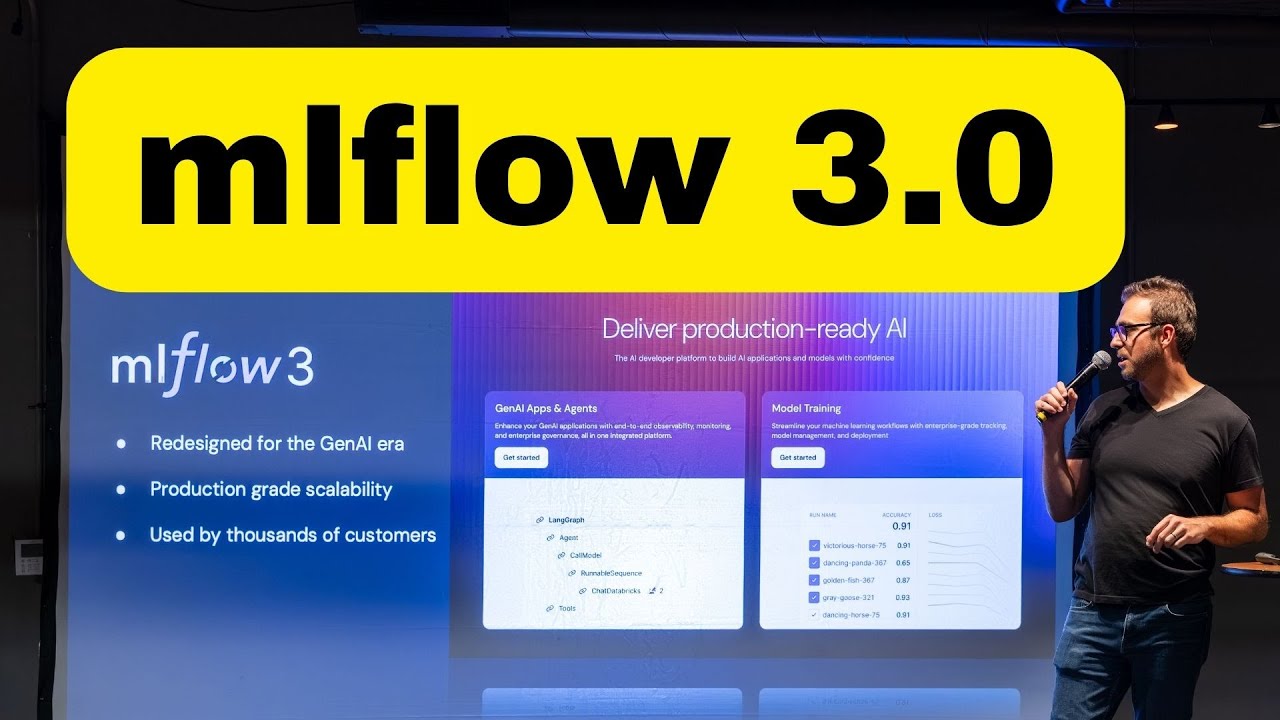
Databricks’ Eric Peter and Corey Zumar introduce MLflow 3.0, focusing on its new "Agentic Insights" capabilities. They demonstrate how MLflow is evolving from providing tools for manual quality assurance in Generative AI to using intelligent agents to automatically find, diagnose, and prioritize issues, significantly speeding up the development lifecycle.

Introducing serverless reinforcement learning: Train reliable AI agents without worrying about GPUs

Introducing serverless reinforcement learning: Train reliable AI agents without worrying about GPUs

Kyle Corbett and Daniel from CoreWeave (formerly Openpipe) discuss the practical advantages of Reinforcement Learning (RL) over Supervised Fine-Tuning (SFT) for building reliable and efficient AI agents. They introduce Serverless RL, a new platform designed to eliminate the infrastructure complexities of RL training, and share a playbook for teams looking to get started.

Artificial Intelligence

View All
Agents are Robots Too: What Self-Driving Taught Me About Building Agents — Jesse Hu, Abundant

Agents are Robots Too: What Self-Driving Taught Me About Building Agents — Jesse Hu, Abundant

Drawing surprising parallels between AI agents and robotics, this talk argues that the agent development community is repeating a key mistake from the self-driving industry: underestimating the difficulty of action and over-focusing on reasoning. It covers essential robotics concepts like DAgger, MDPs, simulation, and the critical importance of a robust offline infrastructure, explaining why perfect reasoning doesn't guarantee successful execution in the real world.

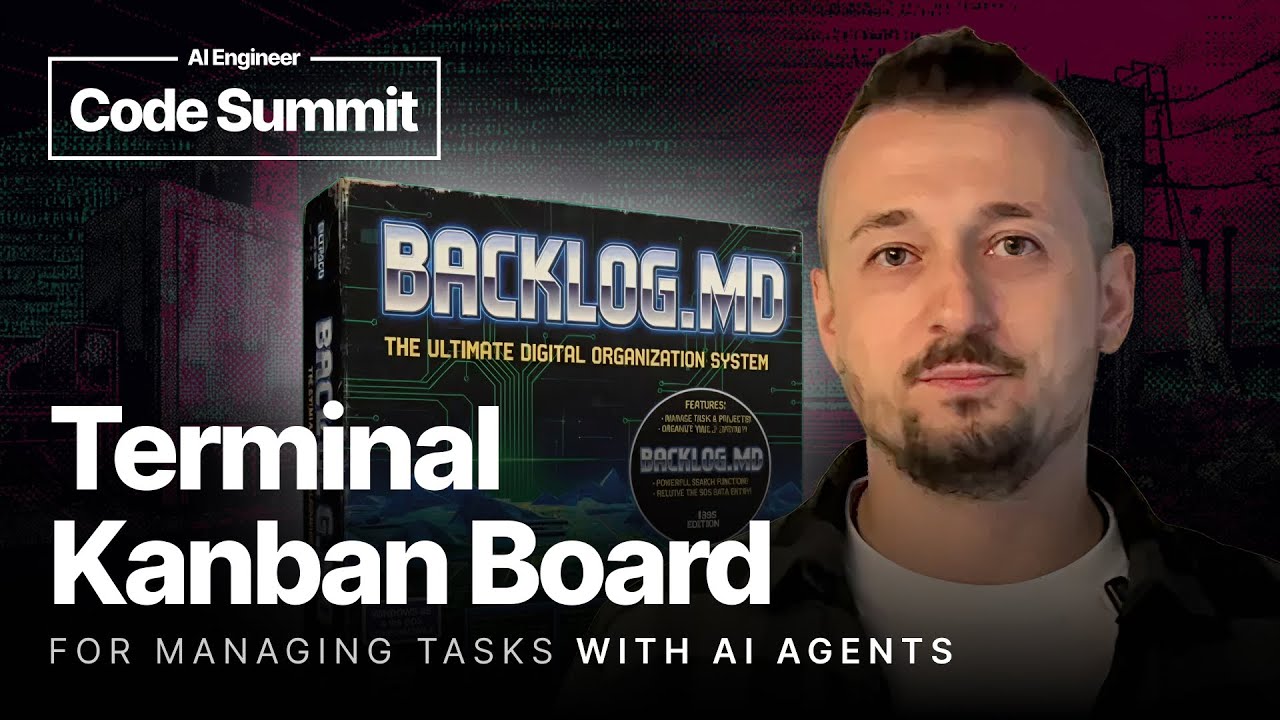
Backlog.md: Terminal Kanban Board for Managing Tasks with AI Agents — Alex Gavrilescu, Funstage

Backlog.md: Terminal Kanban Board for Managing Tasks with AI Agents — Alex Gavrilescu, Funstage

Alex Gavrilescu introduces Backlog.md, a Git-based project management tool designed to structure AI-driven development. By breaking down features into Markdown tasks and using a multi-step review process, it helps prevent AI agents from running out of context or deviating from requirements, enabling a more predictable and efficient workflow.

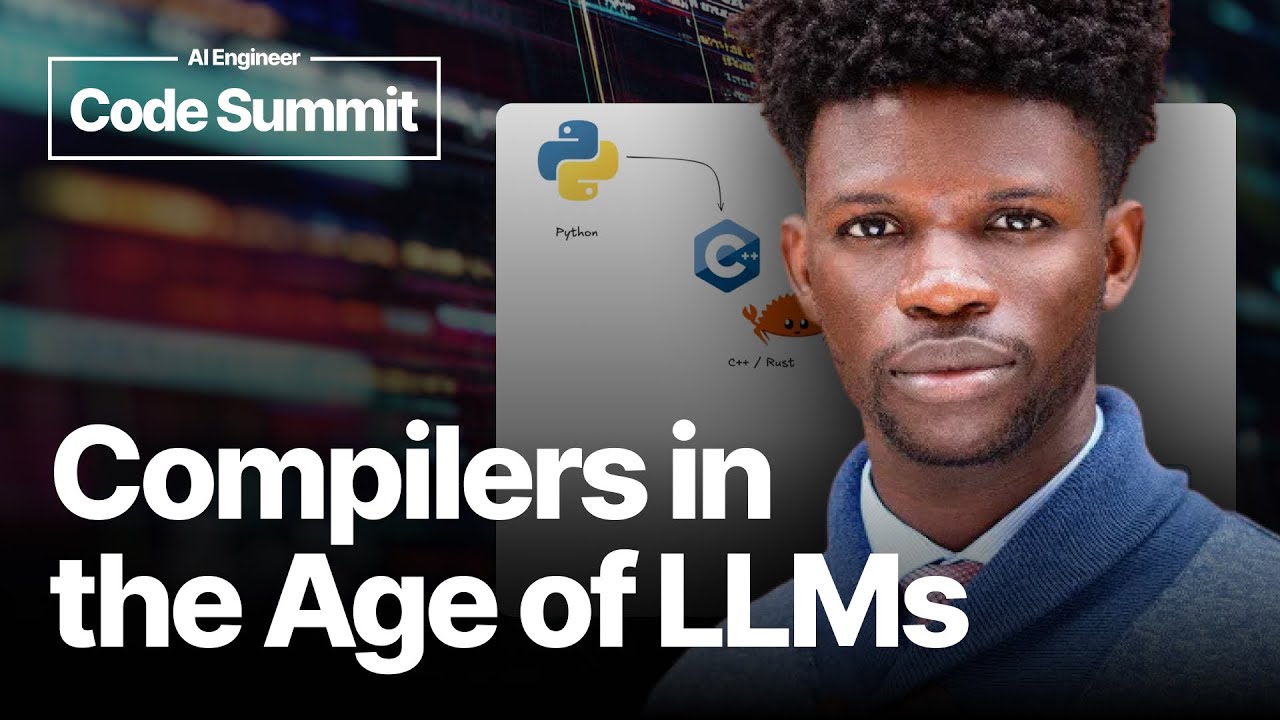
Compilers in the Age of LLMs — Yusuf Olokoba, Muna

Compilers in the Age of LLMs — Yusuf Olokoba, Muna

Yusuf Olokoba, founder of Muna, details a compiler-based approach to transform Python AI functions into self-contained native binaries. This talk explores the technical pipeline, including custom AST-based tracing, type propagation, and the strategic use of LLMs for code generation, enabling a universal, OpenAI-style client for running any model on any platform.

Technology

View All
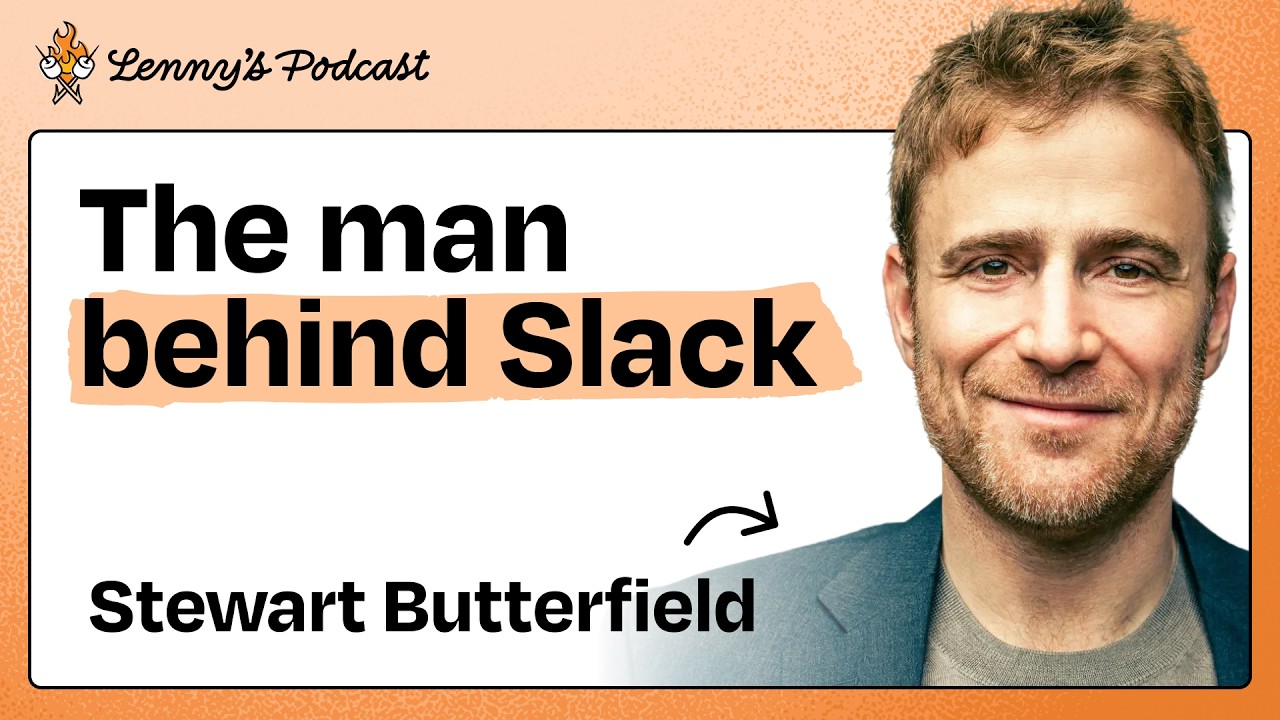
Mental models for building products people love ft. Stewart Butterfield

Mental models for building products people love ft. Stewart Butterfield

Stewart Butterfield, co-founder of Slack and Flickr, shares the product frameworks and leadership principles that guided his success. He delves into concepts like "utility curves" for feature investment, the "owner's delusion" in product design, and why focusing on "comprehension" is often more important than reducing friction. He also introduces powerful mental models for organizational effectiveness, such as combating "hyper-realistic work-like activities" and applying Parkinson's Law to team growth.

Intuit CEO Sasan Goodarzi’s Grown-Up CEO Playbook

Intuit CEO Sasan Goodarzi’s Grown-Up CEO Playbook

Intuit CEO Sasan Goodarzi discusses the operational playbook for reinventing a 40-year-old company, from its slow transition to SaaS to its early adoption of AI. He shares insights on winning the SMB market by treating small businesses like consumers, building effective channel partnerships, and developing a platform strategy. Goodarzi also details his leadership philosophy, emphasizing that grit and curiosity are more critical than raw talent.

From Hardware Hacker to CTO: Building Teams That Scale • Meri Williams & Charles Humble

From Hardware Hacker to CTO: Building Teams That Scale • Meri Williams & Charles Humble

Experienced CTO Meri Williams shares hard-won insights on scaling technology teams, moving from a reluctant manager to a seasoned leader. The discussion covers practical wisdom on avoiding the 'Google trap' of inappropriately copying big tech, the high-leverage impact of investing in onboarding, and the critical importance of diversity in building products that serve everyone.


Recent Post

Agents are Robots Too: What Self-Driving Taught Me About Building Agents — Jesse Hu, Abundant

Agents are Robots Too: What Self-Driving Taught Me About Building Agents — Jesse Hu, Abundant

Drawing surprising parallels between AI agents and robotics, this talk argues that the agent development community is repeating a key mistake from the self-driving industry: underestimating the difficulty of action and over-focusing on reasoning. It covers essential robotics concepts like DAgger, MDPs, simulation, and the critical importance of a robust offline infrastructure, explaining why perfect reasoning doesn't guarantee successful execution in the real world.

Backlog.md: Terminal Kanban Board for Managing Tasks with AI Agents — Alex Gavrilescu, Funstage

Backlog.md: Terminal Kanban Board for Managing Tasks with AI Agents — Alex Gavrilescu, Funstage

Alex Gavrilescu introduces Backlog.md, a Git-based project management tool designed to structure AI-driven development. By breaking down features into Markdown tasks and using a multi-step review process, it helps prevent AI agents from running out of context or deviating from requirements, enabling a more predictable and efficient workflow.

Compilers in the Age of LLMs — Yusuf Olokoba, Muna

Compilers in the Age of LLMs — Yusuf Olokoba, Muna

Yusuf Olokoba, founder of Muna, details a compiler-based approach to transform Python AI functions into self-contained native binaries. This talk explores the technical pipeline, including custom AST-based tracing, type propagation, and the strategic use of LLMs for code generation, enabling a universal, OpenAI-style client for running any model on any platform.

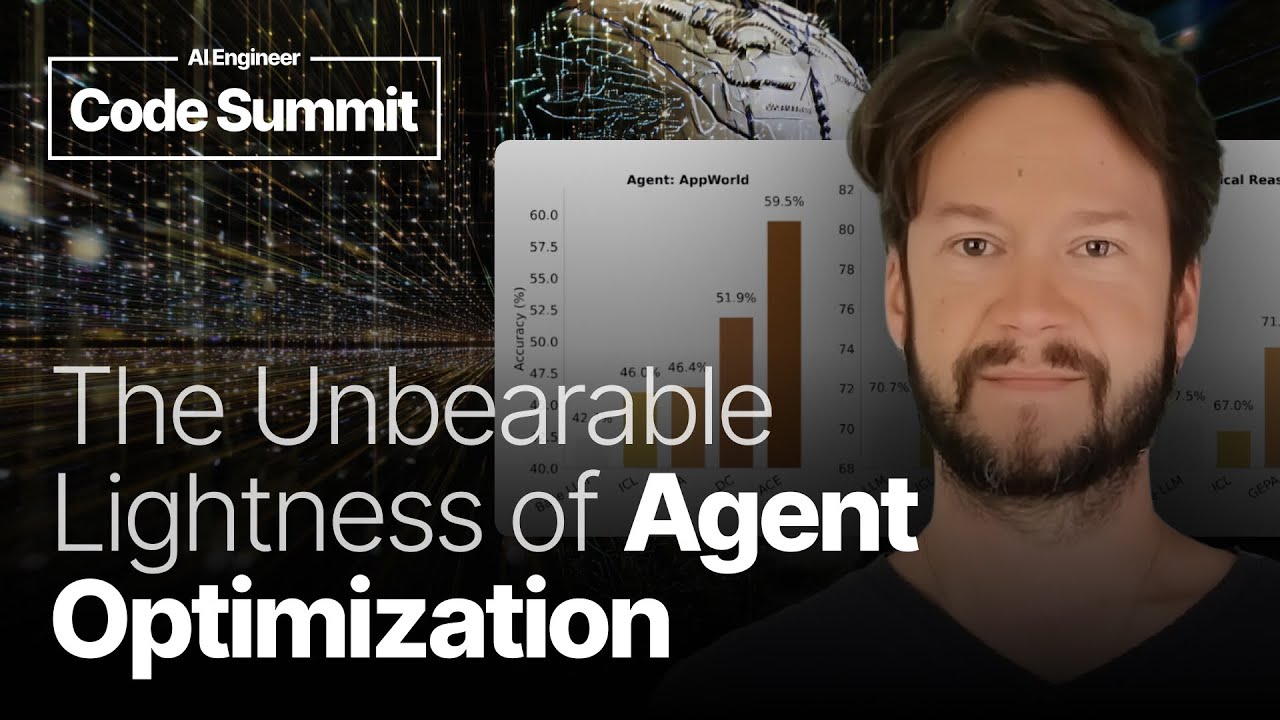
The Unbearable Lightness of Agent Optimization — Alberto Romero, Jointly

The Unbearable Lightness of Agent Optimization — Alberto Romero, Jointly

This talk introduces Meta-ACE, a learned meta-optimization framework that dynamically orchestrates multiple strategies (context evolution, adaptive compute, hierarchical verification, and more) to maximize AI agent performance. The framework profiles each task to select an optimal strategy bundle, overcoming the single-dimension limitations of previous methods.

Vision: Zero Bugs — Johann Schleier-Smith, Temporal

Vision: Zero Bugs — Johann Schleier-Smith, Temporal

This talk explores the history of high-assurance software, from the near-perfect code of the NASA Space Shuttle to the Airbus A320. It argues that while these rigorous engineering and formal verification practices were once too expensive for mainstream use, the economic shift brought by AI and agentic coding can make aerospace-level reliability a practical reality for a wide range of applications, solving the key quality limitations of current AI-generated code.

Fully Connected 2025 kickoff: The rise (and the challenges) of the agentic era

Fully Connected 2025 kickoff: The rise (and the challenges) of the agentic era

Robin Bordoli of Weights & Biases explores AI's exponential growth, from past achievements to the current agentic landscape. He discusses the rise of reinforcement learning, the challenge of productionizing reliable agents, and highlights how foundational issues in AI development persist even as model capabilities soar.

Stay In The Loop! Subscribe to Our Newsletter.

Get updates straight to your inbox. No spam, just useful content.